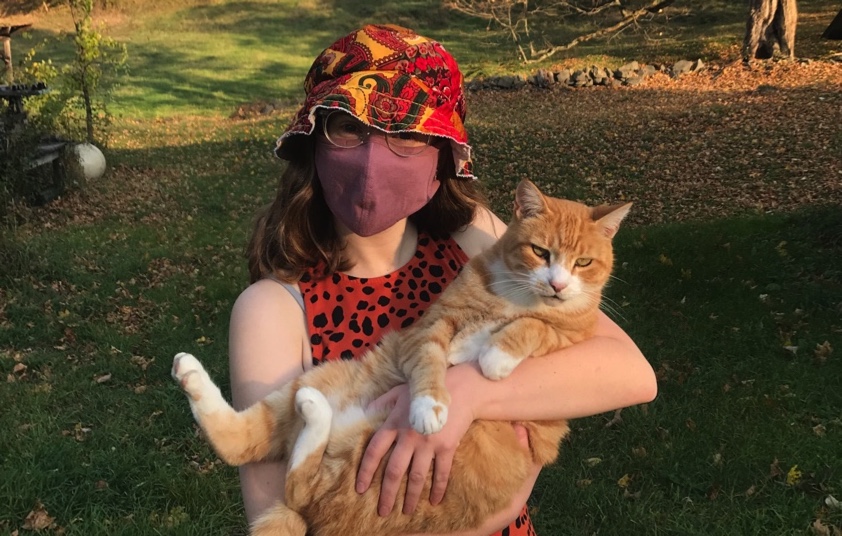
Last week, my friend Kathy made me a bucket hat out of her grandmother’s old shirt, and I’ve been wearing it around the house ever since. I love bucket hats. I think they make everyone look like a baby, regardless of who they are. Before the pandemic, I saw plenty a bucket hat walking through the 19th Ward on Friday and Saturday nights. In lieu of wearing my new bucket hat to a party, though, I’ll contemplate the history of the headwear and its reemergence in culture.
Before they became frat party fashion, the hat first emerged for purely practical purposes — in the 1900s, Irish fishermen started wearing them to keep them dry. Originally, the hats were made from raw wool and contained a waterproof element known as “wool yolk,” perfect for wet days on fishing boats. The sloping brim also helped keep rain out of their eyes.
Soon, though, the bucket hat started gaining traction in women’s fashion of Ireland and England, then America, as popularized by Audrey Hepburn and Jackie Kennedy. They were still made from stiff materials — no longer wool, but tweed or felt — but now held an elongated shape.
Twenty years later, the flimsier, more casual bucket hat we know and love today made an appearance in the hip hop industry. A 2014 article by Wendy Heisler in MTV News cited LL Cool J’s iconic red bucket hat from Kangol, an Australian clothing company, as the most important hat that he ever wore. “It was LL Cool J who brought the Kangol to massive mainstream heights — and, decades later, the hat represents an era in rap history,” Heisler says.
During the 80s, as rap and hip hop evolved and flourished, so did the bucket hat. After LL Cool J, it continued to be popularized by the members of Run DMC. While the hat faded in popularity during the 90s, as the early 2000s approached, Jay Z was known to keep it in the public eye. It became popular again with white women after characters on HBO’s Sex and the City were seen wearing bucket hats, and a Cosmopolitan article published earlier this year says, “Who knew fishermen chic would actually become a thing?”
Bucket hats have always been a thing, but their popularity has ebbed and flowed for years. Now, bucket hats can be purchased on every fast fashion website for under ten dollars. They make fuzzy bucket hats, cotton bucket hats, bucket hats in every imaginable pattern, size, and color. Of all trends, bucket hats seem to be one of the few that maintain their popularity with their original target audience — the old man — while gaining traction in other younger groups. Bucket hats are everywhere. Whatever your taste, there’s a bucket hat out there, somewhere, for you.