With the start of the new school year comes the need for new skills. Some of those skills are helpful for surviving college life, like learning to navigate around campus, figuring out class schedules, and knowing how to break into the dining halls when necessary.
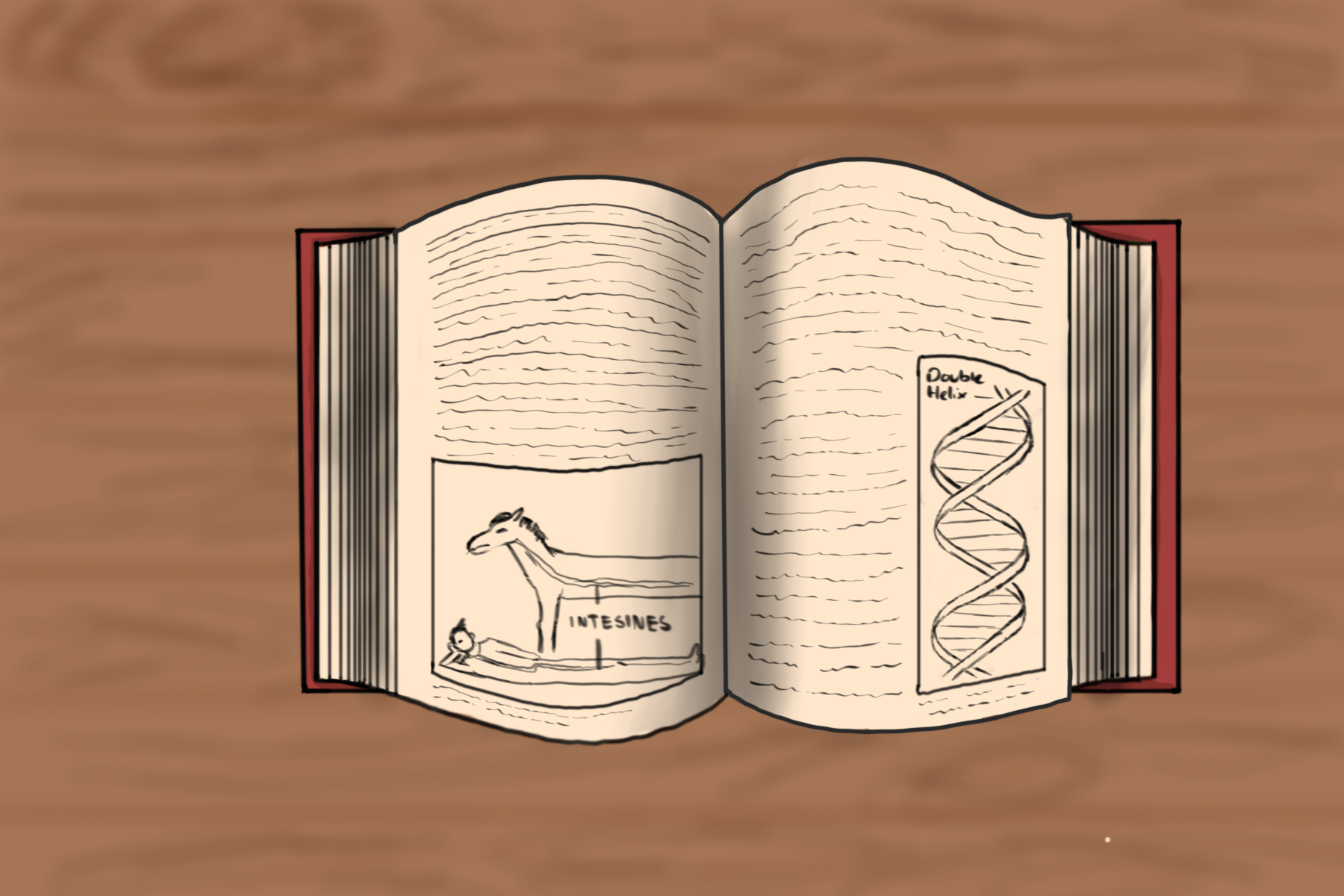
Now, it’s okay if someone doesn’t know these skills. They’ll most likely survive. However, there is one skill that no one can live without: using slightly-maybe-not-so-legal illegal means of obtaining materials necessary for class. There are many ways students tackle this task. Notably, they’ve started writing, editing, and publishing their own textbooks to use in classes — fully furnished with the most up-to-date information all from their brains.
This trend of writing, editing, and publishing their own textbooks was started by Gilbert Gibbison ’76, President of the SACRC (Student’s Association for Class Resources Club), and was popularized by Markobius Marcithy ’83, Vice President of SAPT (Students Against Paying for Textbooks). It incorporated all the benefits of getting textbooks through possibly questionable means with none of the drawbacks. It continues to protect everyone on the Wi-Fi since users are now able to avoid going onto sketchy websites that try to sell them free socks for their entire browser history or even worse.
We’ve taken a moment to interview some students to find out what they had to say about it. Based on the general opinion of this system on campus, it probably won’t be changing anytime soon.
“It’s so relaxing to dump all the information you ever need in your class from your head onto a piece of paper — or several hundred pieces of paper,” said one student.
Another student said, “I love that I can save money and don’t have to use a very-totally-legal form of illegal activities to get my textbooks.”
“It’s a life-changing experience when you finally arrive on campus and start making textbooks at your home-for-the-next-year’s desk,” a third student said, “Just imagine it: you, at your desk, writing away under your desk light which is the only light lighting up the room while your roommate sleeps … best college experience.”
Unlike big brand textbooks, student textbooks don’t have to worry about being out of date. Just as the University’s motto “Meliora” means “ever better,” they — as students — strive everyday to improve and update their textbooks to the most accurate and current information — off the top of their head, of course.
Additionally, they all write their own textbooks to avoid any problems with The College Board on Academic Honesty: plagiarism. All the work that goes into the writing, editing, and publishing of their own textbooks is their own responsible effort and no AI or generative software are used — 100% guaranteed.