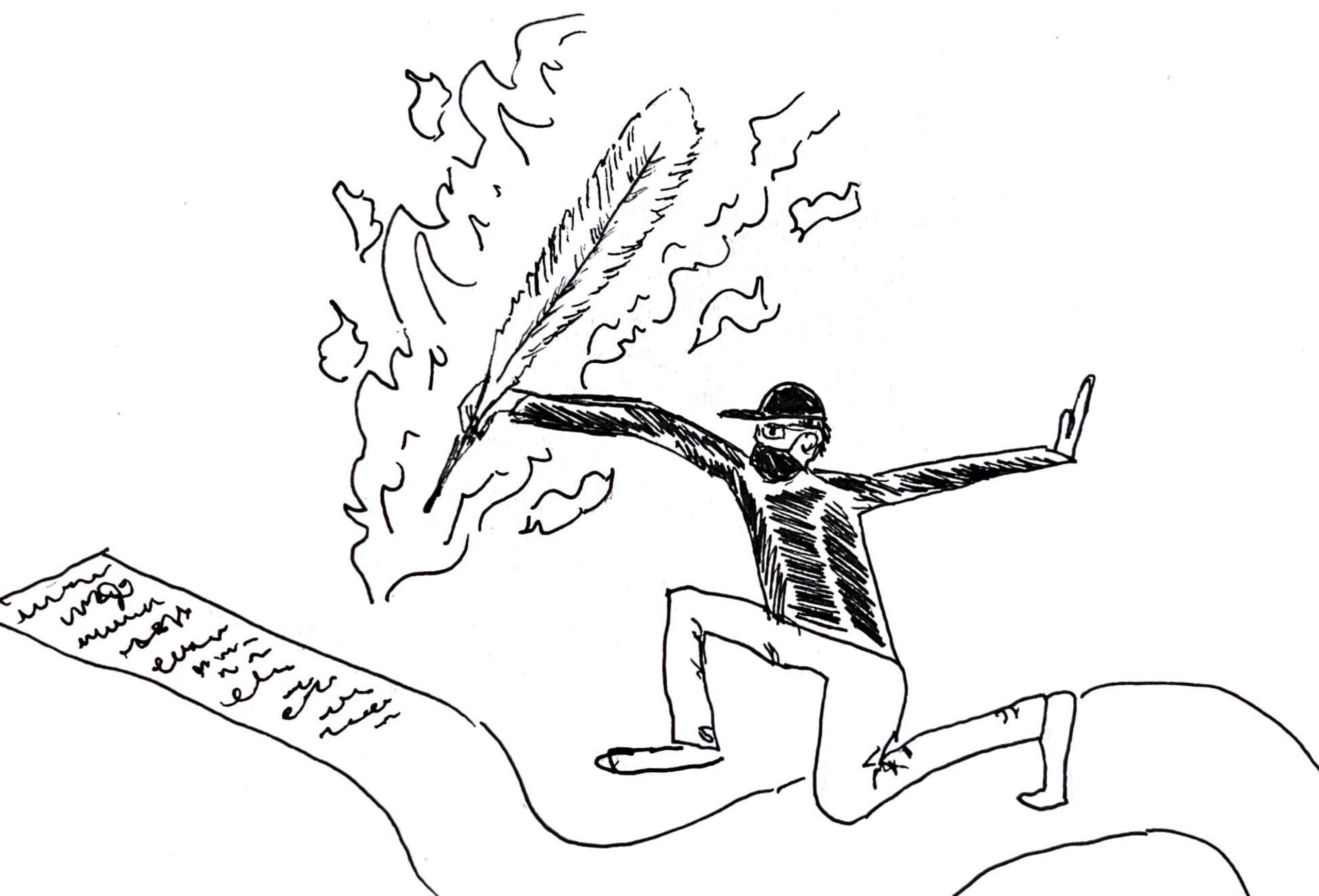
It’s a very strange time to be a writer. Really, all creative jobs feel more like a lost dream than a career some days: The influx of AI “art” shows a portion of society is willing to devalue musicians, visual artists, and writers more than ever before. I also personally struggle sometimes wondering what unique value my writing brings to the table. It’s hard to feel like I have individual takes or impressive writing when the world is so saturated with art. I sometimes hyperbolically joke with my STEM major friends about how my major (creative writing) means I will live on the street after college. I certainly don’t believe that, but I do wonder if a creative writing degree is going to have much meaning. What will I do after college, and will I find success at all?
It’s a concern that I can’t ask my loved ones about, because of course they will encourage me regardless of the reality of the situation. Granted, I’m glad that they do, I’m happy that people think I have talent in writing, but it also makes me wonder if they really believe it. I’m not worried that pursuing creative works will lead me to become a “starving artist” — I’m lucky to be financially privileged enough that this isn’t a problem for me. That said, I do want to move out of my mom’s house. I do want to be able to rely on a stable income. And while working menial jobs is an inevitable part of the grind today, I’d like to not work in retail services for the rest of my life.
Those who know me or have read my work know I love to write music criticism, surreal short stories, and essays about topics I’m passionate about. But is this art essential? Would its absence be felt were I to turn away from writing and focus on coding, engineering, or construction? More importantly: Does all art contribute value to society? Not to get existential here, but we have limited time on this earth. I am a rabid fan of music and movies but I will never be able to appreciate each song or every film that’s ever been made. Is my work really worth wasting time on?
I recently read “The Friend” by Sigrid Nunez (who recently visited the University for the Plutzik Reading Series), which is a phenomenal novel that powerfully explores grief, friendship, and death, but also focuses heavily on questions of what it means to be a writer. Specifically, the novel toys with the idea of whether or not the creation of art is selfish, and the value that art really holds (and so, so much more — go read it for yourself). We certainly all consume art, and I think everyone has some work of art that has personal value to them, but it’s hard to argue for the merits of art against those of farmers, paramedics, or construction workers, for instance. These are careers that provide direct, tangible aid to real people, whereas potential benefits of art are more murky. Can any piece of art really be worth a fraction of what people do in “real” lines of work?
I think we could argue all day about it, but I’d rather argue about how it doesn’t matter. If creation is selfish — if to indulge in our own writings, films, and music is inherently self-serving — I still think we should play on. It is human nature to create, to dream, to strive, and while I may feel silly sometimes talking to friends in “loftier” or more stable career paths, I still feel the drive to write, to sing, to scream, to learn. Maybe no art I make will matter to anyone except my friends and family. Maybe just me. Maybe no one. But art is what has defined humans across our existence. My writing, wherever it ends up taking me, has value in its creation. All the millions of short films unwatched, songs unlistened to, and stories unread have value because someone took the time to make them. Someone poured out part of themselves into a little vessel that just stays around after they die. That has to be worth something. So I keep writing.