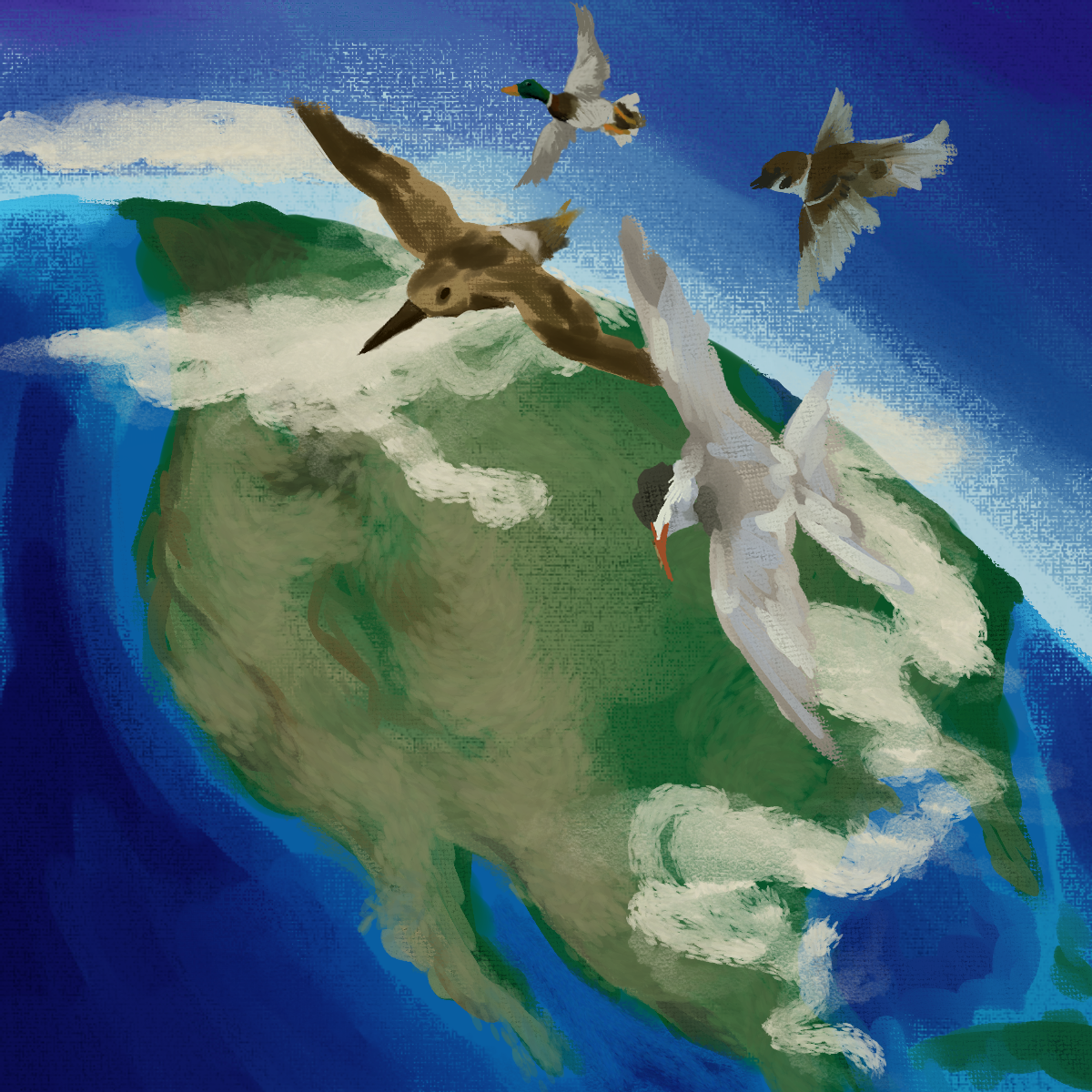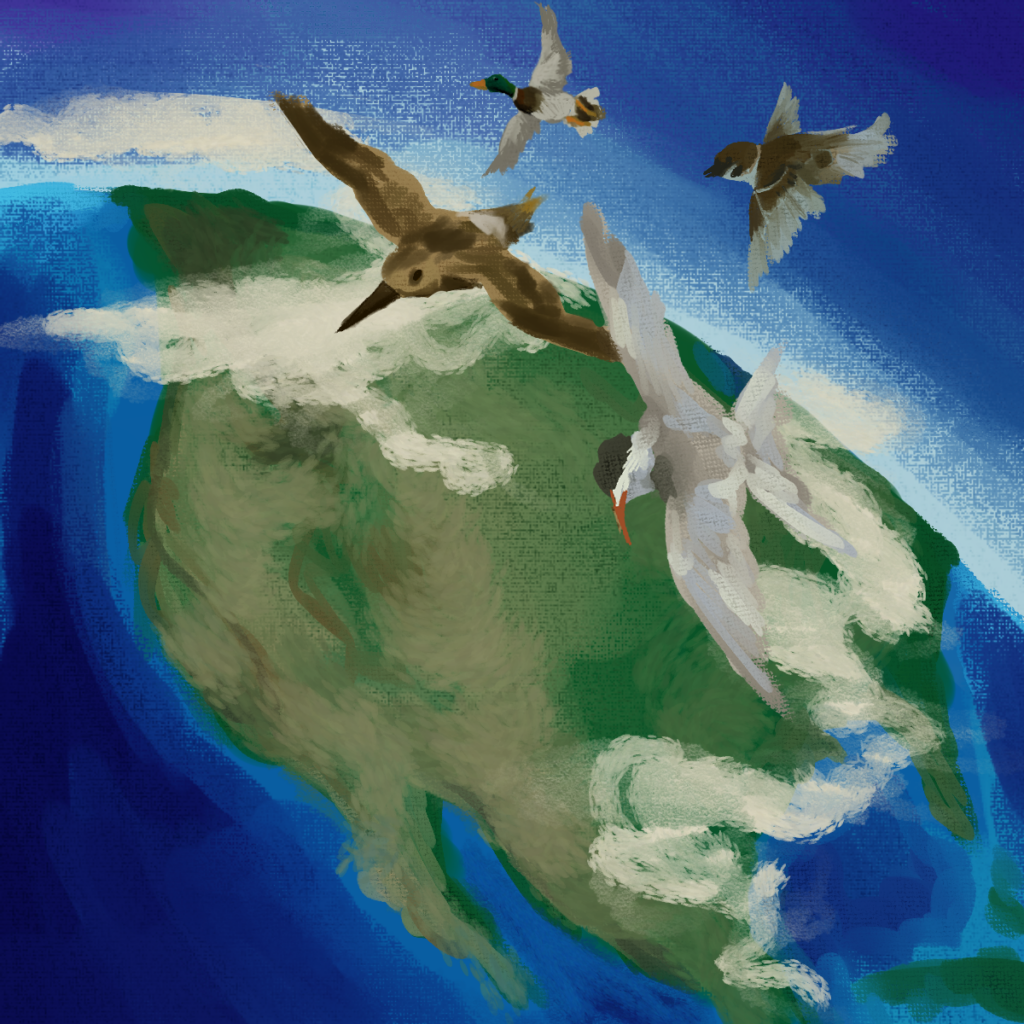
Fall has officially arrived this September, which means countless highlights to look forward to: the crisp weather, the colorful fall foliage, all things pumpkin- or apple-themed, the holidays, and sweaters, to name a few. But one thing that we birders look forward to is the fall migration season. Starting as early as August, with its peak activity throughout September–October in the northeastern U.S., billions of birds leave their northern breeding grounds and journey toward tropical zones for the winter. This article is about migration in many species of birds and how humans can mitigate the harms caused to this journey south by climate change.
In a broad sense, migration is the general term for the regular and usually seasonal movement of parts of or all animal populations. Species include but are not limited to insects such as butterflies, fishes such as salmon, mammals such as caribou and whales, and multiple species of birds. For birds, the cycle of migration occurs annually and is linked with the changing of the seasons as well as the abundance of food.
In the summer, migratory birds reach their northern breeding grounds, singing, foraging, nesting, and raising their young. Over the course of the summer, food availability begins to shift as they prepare for their journeys south. Their diets change as well from late summer to early fall: they eat foods rich in sugar and fat as a long-term energy source for their trips. By early winter, birds will have arrived in their wintering grounds, which are often tropical, but can sometimes be more subtropical or even temperate for some waterfowl and sparrow species. The climates are relatively mild and the habitats are rich in food sources with plenty of sugar and fat as well as shelter to avoid predators. Eventually spring begins to approach and the wintering birds become restless. They will begin to forage later in the day and gain enough weight to fly back up north to their breeding grounds, and the cycle begins anew. Migration patterns can vary across different bird groups. However, the migration patterns remain similar, as birds change their environments from north to south due to seasonal changes in environmental conditions, plus the abundance of food sources.
Songbirds are notable examples of migratory bird groups. Songbirds such as the colorful and lively warblers breed in the northern forests and other temperate regions throughout the summer and travel thousands of miles to tropical zones during the winter. They can be as close as the Southern United States to as far as areas of the Caribbean, Central America, and South America.
Shorebirds are also a large, diverse group of birds with remarkably long migration journeys. As early as late March or April, different kinds of shorebirds from avocets to godwits and sandpipers to plovers fly nonstop to their breeding grounds in the Arctic Circle. After a short window for breeding season, they fly back down south to parts of the Southern U.S. or the Southern Hemisphere for winter.
Another diverse group of migratory birds worth learning about is waterfowl. Each species of duck has their own unique migratory patterns. Most duck species breed near the Arctic Circle or throughout Canada. Many especially settle in the Prairie Pothole Region in the prairie provinces of Canada and parts of the Midwestern U.S., a habitat characterized by wide grasslands with large pools of shallow water making up productive wetlands. In the winter, many dabblers (ducks that feed at or just below the surface) travel to temperate and subtropical parts of North America. For divers (ducks that dive or swim underwater), including sea ducks that breed in the Arctic, they only travel to temperate zones throughout the winter and are hardy enough to withstand the low temperatures of the Northern U.S.
Seabirds, especially terns, are no strangers to migration. The Arctic tern is the bird that holds the record of the longest migration route from the Arctic to the Antarctic, flying around a whopping 25,000 miles every year. The tiny hummingbirds can withstand traveling long distances, stopping in different places to sip nectar from flowers and feeders. Birds of prey, or raptors, such as hawks, falcons, and ospreys, stand out as they migrate during the day, while most birds migrate at night. While most woodpeckers in the Northern U.S. opt to stay in the same place year-round, the yellow-bellied sapsucker stands out for being the only woodpecker that migrates.
No matter what species or when and where they travel every fall and spring, migration is the way of life for many birds in North America. Migration is an important and rewarding part of their lifetimes, but it can also be a perilous journey, and it has become more perilous due to various factors from human impact.
To start off, rising temperatures have interfered with when and how birds can start preparing for each journey. Birds rely on cues such as temperature, rainfall, length of day, and plant abundance. When winter shortens and spring arrives earlier than usual, it can cause food sources to become abundant earlier than what birds are used to; this ultimately affects how birds properly prepare for each migration. They may not be able to survive if they can’t keep up with these sudden changes.
Other human impacts, such as excess development, deforestation, runoff from chemical fertilizers and pesticides, and habitat loss, affect migratory birds by also reducing the availability of food or shelter. Migratory birds rely on food sources such as insects, aquatic invertebrates, and the fruits and seeds from native plants. When these important sources of food and shelter are destroyed by deforestation and replaced with non-native plant species or when insects are harmed by pesticides, migratory birds will not be able to survive.
Another prominent factor that impacts the survival of migratory birds is collisions. Most birds migrate at night, relying on landmarks such as the moon and stars to guide them in the direction of their routes. When excess lights are switched on at night, the birds become disoriented and crash into the lit structures. During the day, these birds are also susceptible to strikes from untreated windows. To a bird, a window is not a barrier but an illusion of natural markers such as trees, reflected in the background. This confusion causes them to collide with the windows and die from their injuries.
Fortunately, there are plenty of actions that nature lovers of all backgrounds can take to help these birds travel safely to their destinations. Since most of the birds’ travel occurs at night, turning off excess light sources can prevent the birds from crashing into the light sources. To reduce these collisions, outdoor light sources can be turned off, dimmed, or aimed closer to walking surfaces right after sundown. To prevent window collisions, another key solution is placing patterns on any untreated windows. When birds spot basic patterns such as spaced-apart dots or even fancier, more colorful decals on these solid windows, they will not collide with them thinking they are another blockage in their routes and travel more safely.
Birds rely heavily on native plants for habitat, protection, and a source of food. Gardeners and plant enthusiasts can plant native plants as a food source for birds stopping in their hometowns during their migrations. Native plants provide shelter and protection from harsh weather or predators for songbirds. They are also a key food source, as they attract insects, which are the favored prey of birds like warblers and swallows, and provide other food sources such as fruits, seeds, and nectar specifically for hummingbirds. When summer turns to fall, seed-bearing plants such as thistles and coneflowers should be left as is without the tops pruned so birds such as goldfinches can eat the seeds to fuel up for migration.
Participating in citizen science helps keep track of migrating bird populations across different areas of the U.S. When bird lovers count and log their bird sightings in programs such as the Cornell Lab of Ornithology’s eBird or other programs such as iNaturalist, biologists and the general public can see the states of bird populations as they migrate and know when they need help.
With fall officially here, bird migration is one of the key events that we birders and nature lovers of all experience levels look forward to. No matter what type of bird, how far of a distance they travel, or when they kick off their journeys north and south, migration is one of the most important tasks to handle, as they travel far and wide when the seasons, environmental conditions, and food abundance change. Because bird migration has become increasingly riskier due to climate change and development, it is important that we do our part to help these magnificent creatures have a safe journey down south for this coming winter and ultimately, live full lives now and in the future.