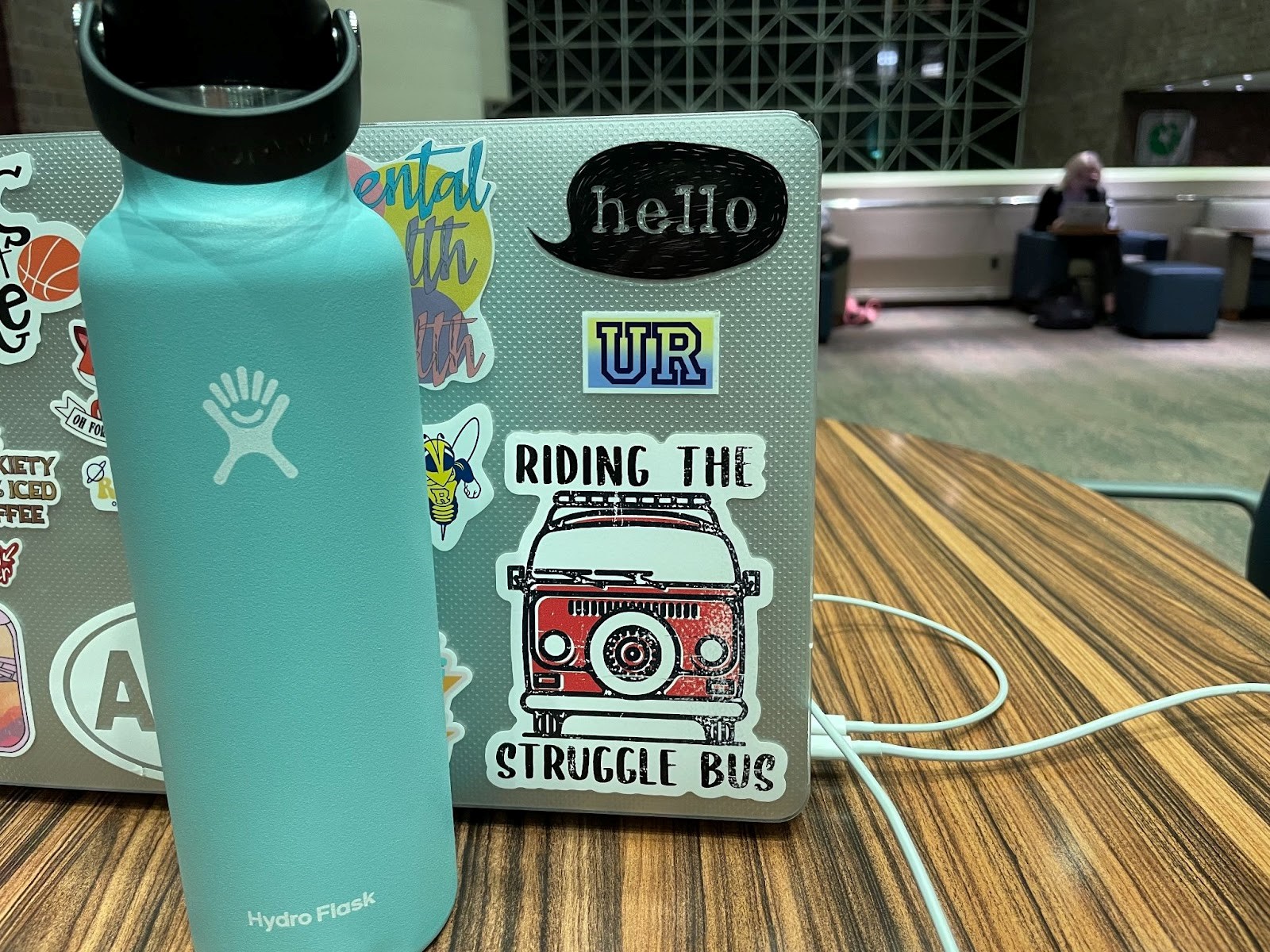
I have a sticker on my laptop with a giant red bus that says “riding the struggle bus.” Actually, if you read the sequence of stickers, it (semi-accidentally) says, “hello” “UR” “riding the struggle bus.” My mom thinks this is incredibly depressing and unmotivating. I think it’s hilarious.
Here’s a common overheard from scholastically-depressed college students at the University:
“I am so overwhelmed! Like I have so much to do and there’s literally no way I’m going to finish.”
When someone says this to you, you basically have two options to respond.
Option 1: “No you’ve got this! You can do it! I believe in you!”
Nope. Wrong choice. 2/10. If you’re on the other end of this statement, you should realize that your friend has no idea if you can actually do it. You’re immediately going to think, “How do you know?” and “What if I can’t?” What’s the point?! These are empty words of fake encouragement, and I won’t stand for it.
Option 2: “Dude. Same.”
This. This is it. 11/10. No false claims here, because this person is undoubtedly also struggling. Pros: solidarity! A common struggle! Your friend can’t get mad at you if they indeed do fail their assignment because you made them no promises whatsoever!
(Option 3 is to stare at them blankly because your brain is equally fried, then slowly start leaking tears. I wouldn’t recommend this, for various reasons—we like to fake having lost our minds, but this should be a commonly-accepted joke.)
Anyways. Back to my sticker. Why would I want a sticker that says “you can do it!”? First of all — LOL, maybe I can’t. Whatever. If you want to motivate me, you have to make me laugh at the impossibility of it all. Lower the stakes! So what if I fail, it’ll kind of be hilarious! (No, not actually. I would sob if I failed a class. But I’m telling you, that’s the mindset you’ve gotta have if you want to survive college.)
You’ve gotta laugh at how freaking stressed you are, because otherwise all that’s left to do is cry. Nobody wants that — especially not your roommate, who’s gonna have to put up with the nightly sobs. Instead, confuse your friends by absolutely losing it with laughter instead of tears when Rizzo assigns the next weekly homework. “This is impossible!” you’ll cry. “It’s 110 points’ worth of work over the week!” Yeah, yeah, whatever, who cares. We’ve all been there. Be more original, why don’t you?
Once you make it to hysterical laughter over the thought of the amount of work you have left to do, you’ve reached peak college nihilism. Join the club. I’m so proud of you! /s.
Cheer up, buddy. If you’re not one straw away from breaking your back (and probably your psyche, also) at all times, do you even really go to school here?
Disclaimer: No real encouragement should have been found in this article. I only suggest you go stare down Rush Rhees until your eyes start to water from the cold. Then break out into a manic smile and march your wretched self to class. I’ll see you there. 😀