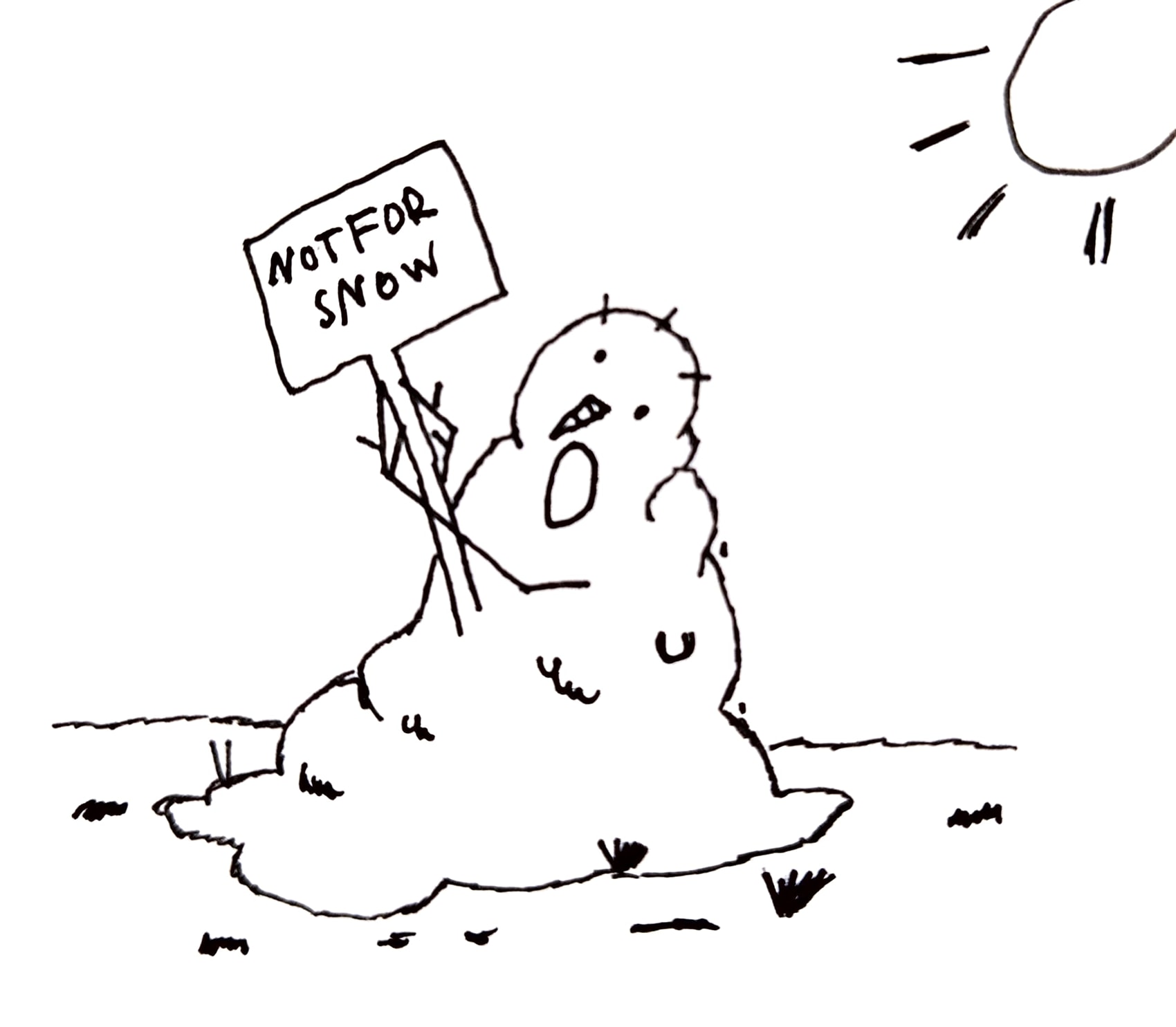
María Zardoya, lead singer of The Marías, has taken on a solo project called “Not for Radio,” which she calls her “alternate reality” — not the end of The Marías, just a side endeavor. After announcing the news to the public in late August, she released her first album as Not for Radio, “Melt”, on Oct. 10, just in time for the autumn feels.
As all solo projects go, there is curiosity around the distinction between a The Marías song and a “Not for Radio” song; how much will be different? And how much will be the same? Zardoya obviously plays a tremendous role in the writing and producing of music under The Marías, so there’s expected to be significant overlap both thematically and in sound. However, as the name suggests, Zardoya’s intention with her solo project is to make music that strays from more radio-friendly music The music made under “Not for Radio” is meant to be a more personal and transparent version of Zardoya, and listeners can definitely hear it in the lyrics.
The bookends of this album are really good at thematically representing “Melt.” We start off with “Puddles,” which begins with a summery, hazy, and dreamlike atmosphere through the use of airier and higher register vocals. This slowly shifts into more of a gray, rainy tone with the use of a more one-note, lower register, as we hear about the fears of pursuing love and it not working out. The song looks into the puddles of what could be if this relationship, this love, was sought out. There is an even stronger transition in the middle of the second chorus, where we fade out instrumentally and slowly fade back into the last crux of the song with an introduction of a more dynamic harmony. This deeper and gripping mixture of sounds puts an emphasis on fear. Then, concluding on a repetition of “I think I should try,” despite all the concerns and fears about pursuing love, the song determines that this chance should still be taken.
On the complete flipside of this album’s timeline, sitting as the finale of the album, is “Slip.” In this song we are transported into a snowy and cold winter; the sounds here are deeper and lower toned. Zardoya is walking atop a frozen lake and is scared of falling through, scared of the fragile state of the love and its breaking. And it ends with a repetition of “don’t go,” begging this person, their partner, not to go.
“Melt” is a back and forth of the fears that come with love: the yearning and longing, the easiness, the connectedness, and despite all of it, this relationship not working. “My Turn” is full of guilt for hurting someone she loved — someone who was full of good qualities — and describing how this version of her, or this part of her, died when she lost them. “Moment” is about the fleetingness of life and how she yearns for permanence through this person who she can never belong to, and still she asks them to “disappear with me.” “Swan” is about, well, swans, and how they mate with one partner for their entire life. Like a swan, Zardoya could love this person until the end of her life, but despite their connection there is still a feeling of separation. “Not the Only One” discusses emotional cheating while remaining physically loyal, and how she craves but does not receive care and kindness in a relationship. “Magnet” focuses on being drawn to a person despite this tremendous physical distance. “Vueltas” is about the uncertainty of letting go of a relationship, and filling this void where her partner used to be with love for herself. Lastly, “Water On Your Nose” is about how easy it is to love this person, how easy and naturally it comes to her. Through each of these songs, the album transports its listeners through many different aspects and complications of love.
These lyrics were partially deciphered through the literal reading of them. However, with the more ambiguous and metaphorical aspects, there is a lot we can figure out by referring back to themes and meanings we saw from songs by The Marías. Zardoya and Josh Conway, co-founder and band member of The Marías, has spoken on multiple occasions about their break-up and how it’s reflected in their music, especially for their album “Submarine.” “Melt” does showcase a more personal reflection on love and romantic relationships from Zardoya, in comparison to The Marías where Zardoya and Conway both contribute as writers.
The highlight of this album is certainly “Back to You,” which is also a direct response to “Back To Me” by The Marías. Beyond just the inverse nature of the two titles, “Back To Me” focuses on trying to get a former lover to return to the relationship, while “Back to You” focuses on the impossibility of being able to return to a former lover or relationship. “Back to You” has a very solemn, slow, and yearning tone. The repetition of the line “I hope it brings me back to you” pairs with mystical impossibilities, such as finding a fallen star or learning how to fly. It shows Zardoya’s wishful thinking and desire to get back with her love, while emphasizing the impossibility of it happening. The bridge follows a sequence of dreamlike, and not-quite-real scenes like wearing a dressing gown made of crystals or being in a sea of orchids, further emphasizing the hopelessness of it all because of how unrealistic it is.
So, as we watch the leaves change to various shades of red, orange, and yellow, and eventually brown, leaving the trees bare; and as you feel the autumnal itch of yearning for a love that was or will never be, give “Melt” a listen.