When conservative commentator and political activist Charlie Kirk was shot and killed two weeks ago, he was hosting a Turning Point USA–sponsored speaking event. The series, titled “Change My Mind” was created as a means to encourage political discourse on college campuses across the U.S. For years it facilitated meaningful and controversial debates among people across the political spectrum.
Unfortunately the very space intended to foster free speech was the place Kirk lost his life for using it. The irony of this is sad and dark.
We as a nation must stand in support with those who are most directly affected by this senseless act of violence: Charlie Kirk’s wife, Erika, and their two children. Second, we must stand with the Utah Valley University community in its time of grief and trauma.
But most importantly, let us reflect. Let us reflect on our thoughts, our words, and our actions. Let us reflect on what this assasination truly illustrates. It is very clear — we as a nation are losing our liberty and security around free speech, and this is due to our politically charged and hostile environment.
We do not know the true motivations of the shooter at the time of this article being published, but we know one thing for sure: by definition, this tragic event was a political assasination.
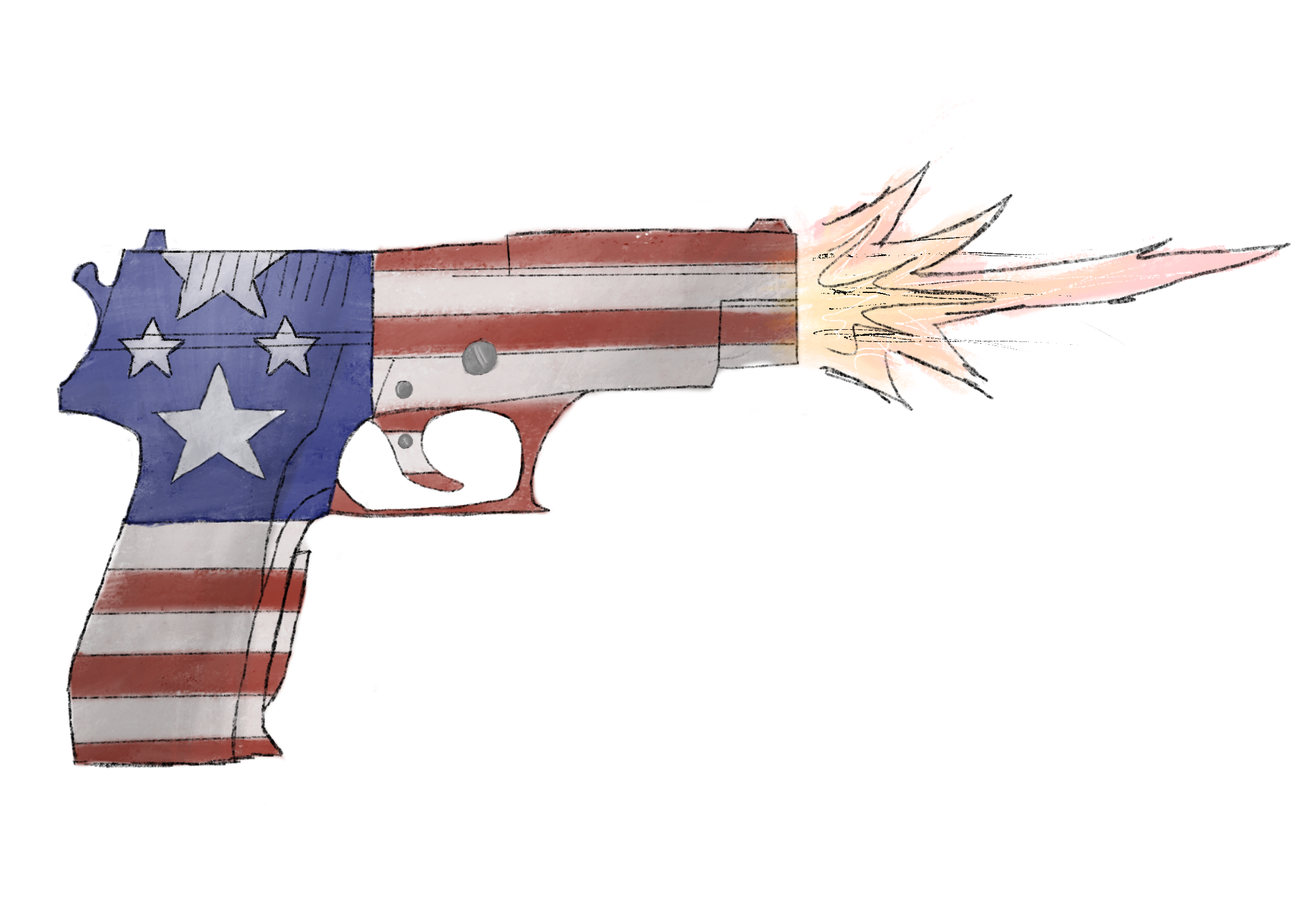
This incident has highlighted two points of focus that need to be addressed in our social culture: the imperative to end both political violence and gun violence.
Around a year ago, I wrote on the problems of gun violence. Now, as I write once more, we have yet another state, another school, another day of senseless violence in this country with the same result: a tragic death. Now, though, I add this to the conversation. We have lost another husband. Another father. Another public figure. Another American.
In today’s world, it seems we have normalized the dehumanization of people we dislike or disagree with. Even before Kirk’s assasination, this past year has proved ripe for political and social violence regardless of political standing.
Acts of political violence such as the attempted assasination of President Trump, the assasination of Minnesota House Speaker Melissa Hortman and her husband, and the constant threats of violence towards politicians online creates a dangerous time in American history. A time in which no one, including our political leaders, are safe.
But where is this violence coming from? Is it inherent in people to hate, or is it bred by a system which stokes division? I think it’s the latter.
We are divided and incidents like this expose our rifts. But simultaneously, the shooting of Charlie Kirk is a crucial moment in this country’s recent history; a moment in which we can define who we are as Americans.
Are we a nation of chaos, division, partisan quarrels, and violence? Or are we a nation that in tough times unites in an effort to do what is right and oppose political violence?
As we have seen across history, when political violence erupts, so do civic engagement and discourse — in both positive and negative ways. In the wake of the assassinations of President Kennedy and civil rights activist and Reverend Dr. Martin Luther King Jr., major positive social reforms were achieved. Massive protests, marches, vigils, and other acts in the wake of these tragedies prompted the passage of major civil rights legislation. This ensured that future generations of marginalized African Americans in this country were now protected under our laws and Constitution, representing a huge win for political expression, speech, and individual liberty.
Do I think that the assassination of Kirk will spark another civil rights movement? Most likely not. But I do hope that it will start new discussions over how speech is protected. I hope it will spark conversations over extremism and violence, and I hope it will start a much needed conversation about mental health funding and resources. No one who could shoot another human being with such preparation and deliberateness is mentally well.
There are many things that we can discuss in the wake of this assassination. What led to this? Why is violence so accepted in today’s culture? What will we do to prevent this from happening in the future? These are all valid questions and thoughts. But they are missing one key point.
How do we become kinder to one another? How do we, as a nation, with all our opinions and ideals, learn to sit and listen to each other even when we disagree?
I guess the answer to this question is still in the hands of us, the American people. In the meantime, let’s take time not just to mourn Kirk, who, whether you liked or hated him, stood up for what he believed in, and always fostered uncomfortable conversations in a way that seemed to be kinder than most other forums in modern politics. Let’s also mourn that we lost an American who was killed simply for having an opinion, and is now serving as an example of freedom and resilience for millions around the country and the world.