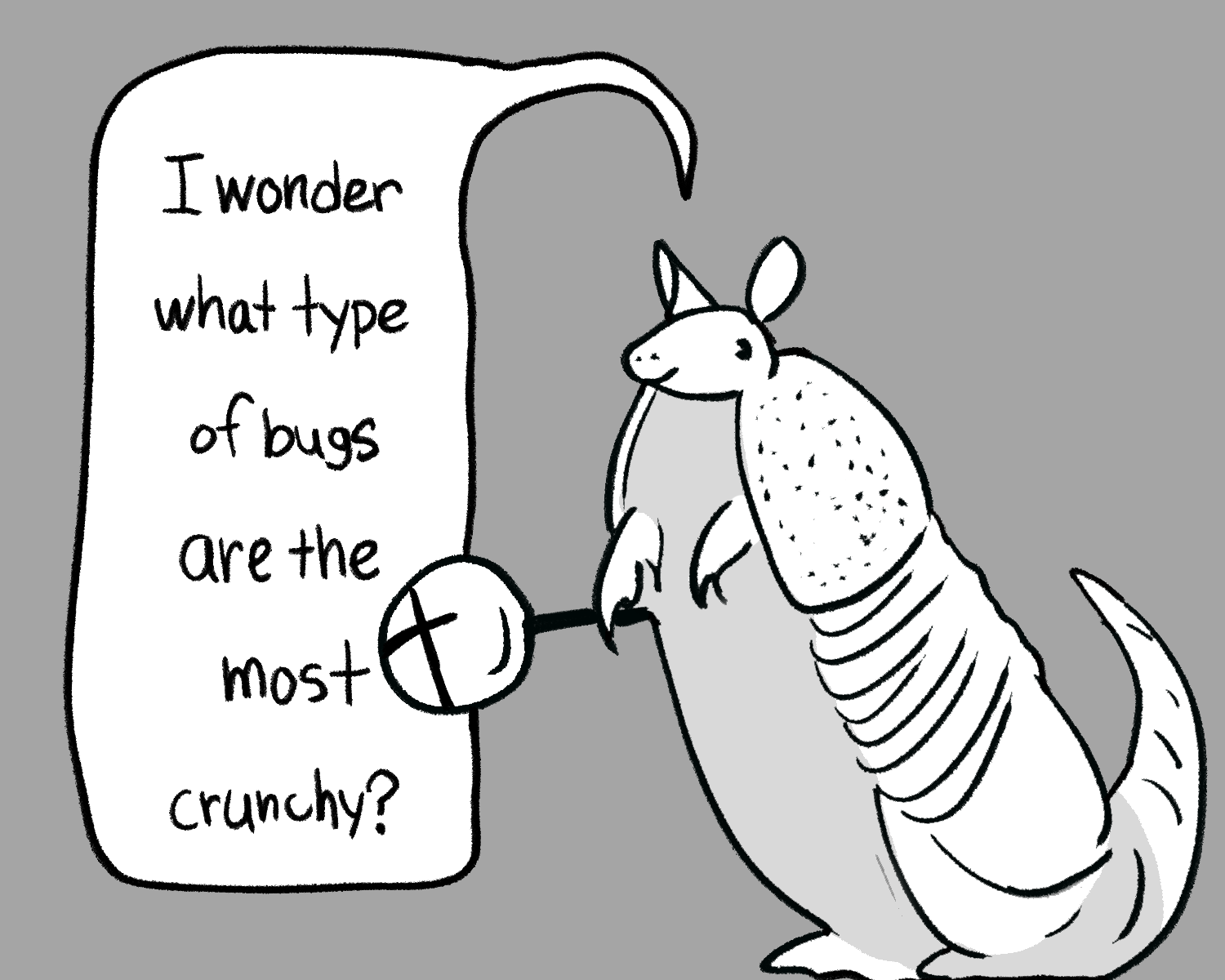
For the past 10 years, Dr. Bob Ollidamra and his team have been working to solve what is, to them, one of the world’s most pressing issues — the carbon footprint of the eleven-banded armadillo. Campus Times had the pleasure of sitting down with Dr. Ollidamra to learn more about the field of research his team has been working on.
Dr. Ollidamra’s connection to armadillos burrows deep. He recounted with fondness the memories of growing up in the wilderness of rural Texas, where armadillos were a constant presence. His parents, both environmentalists, instilled in him a profound respect for nature, but it was the armadillos that captivated him the most. “I appreciate armadillos for what they are,” he said softly during the interview, a wistful smile crossing his lips. “They are one of the creatures of all time.”
Six days a week, he and his team record air quality and carbon data in armadillo habitats. These recordings serve to fortify the eleven-banded armadillo’s place in natural environments and understand their effects on global warming as a whole.
Dr. Olidamra himself works 60 hours a week analyzing the data. “We are playing a major role if not the most important role, in biology here at UR,” Ollidamra proclaimed.
Senior Dave Deckham is a paid intern at the lab and has been working with Ollidamra since his freshman year. “It’s been a pleasure working with Ollidamra. He is really passionate about this species and his work in this field is nothing short of admirable.”
However, the latest data from the lab shows that the combined output of carbon dioxide that the armadillo species emits is not even comparable to a student riding to class on an electric scooter. When asked about the broader impact of his research, Ollidamra was at a loss for words.
“I mean yeah they’re not carbon powerhouses but the work still counts for something right?” he asked the CT. As of 2025, the eleven banded armadillo species are severely endangered and are expected to become extinct by next year. Leading experts in his field said, “his work does not, in fact, count for anything.”
“I spent decades in the field, on my knees, following these armadillos around town,” Ollidamra said, his voice trembling. “I have no family to go back to, you know. I only have these armadillos. They’re my family.” He paused and wiped his eyes. “They understand me.”
“Yeah, he’s a bit… weird about his armadillos,” Deckham added, awkwardly shuffling his feet. “Like, he talks to them. A lot.”
The CT quietly exited Dr. Ollidamra’s office, where the P.I. could be heard sobbing quietly as soft armadillo noises played in the background.