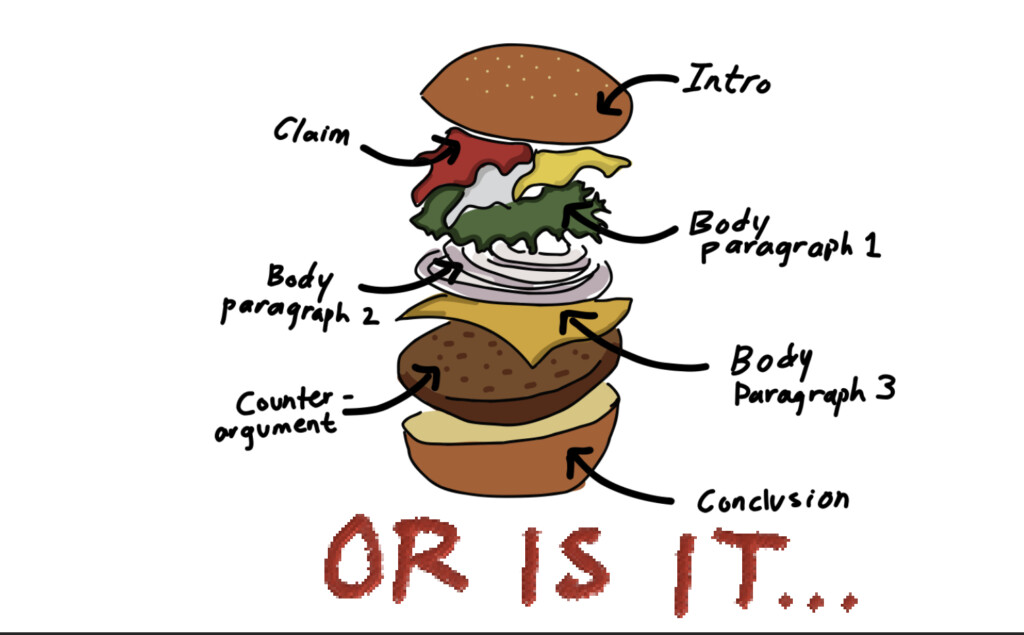
Disclaimer: I am a freshman. All freshmen need disclaimers. I wrote this while procrastinating writing my WRTG 105 paper.
This is the introduction, also known as the part where you rewrite the essay question but try to make it look like you didn’t — sort of like when you copy someone’s homework but change it just enough so it doesn’t look like you did. It’s also the part when you vomit out the complete backstory of whatever you’re writing about, even though you know full well that your professor knows more about it than you do, but you’re writing it out anyway because it adds more words to your paper, and you need as many words as you can get. Then there’s the thesis, where you try to stuff as many words into one sentence as possible so people can understand what you’re trying to argue.
Now you’re going to talk about your evidence. This is the best part, because now you can copy and paste all your evidence and make your word count skyrocket without putting any actual effort into it. Then you will needlessly over-explain what your evidence means, even though the meaning was already very obvious to the reader, but you worship at the altar of the word count and you need to avoid getting a zero, so the reader can suck it for all you care, and besides, you’re pretty sure this is what you’re supposed to do in an essay anyways. Remember the “hamburger” structure or whatever it was you learned in high school? Nah, forget it, you probably don’t, because high school was dumb and you never want to go back to that.
Finally, you have the conclusion, also known as the only part of your essay that your professor will actually read. You can’t exactly blame them. Whenever you do the readings for your class (on the very rare occasions that you actually do them), the conclusion is also the only thing that you read. Well, either the conclusion or the abstract. Pick one. But yeah, for the conclusion, you just use the same strategy you used for the rest of the essay, but in a broader sense: Simply regurgitate everything you already wrote in the essay as if the reader doesn’t know anything.
Congratulations, now your essay is done! You probably wrote the whole thing within an hour and submitted it at 11:58 p.m. on the day it was due (or maybe at 12:05 a.m. with an email claiming Blackboard was down, unless your professor doesn’t use Blackboard in which case you’re just screwed), but at least you did it. Now you don’t have to worry about a new essay until… next week.
Or you can just put your essay prompt into ChatGPT and watch it write a better essay within minutes than anything you’ve ever written. Because life is not fair.
P.S. MyBib is way better than EasyBib. No ads. Just saying.

