A new study at UR is helping to keep birds on campus safe from window collisions.
One of the biggest conservation threats birds face today is collisions with glass windows. Researchers estimate that around 2 billion birds are killed by glass annually in the United States. Although windows are essential in architecture, they often reflect surrounding vegetation and lead birds to their deaths.
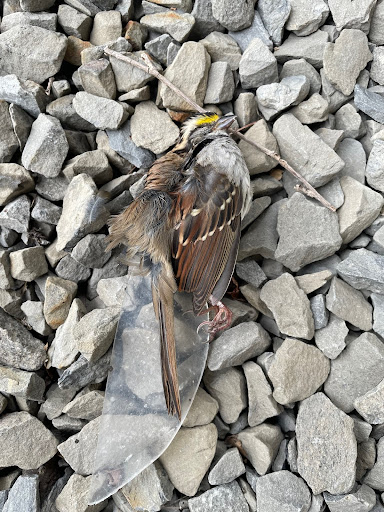
White-throated sparrow found behind Hutchison Hall.
“Smash the Crash,” a research initiative made up of a team of dedicated student volunteers and faculty, hopes to accurately document these collisions and recommend solutions for preventing bird-window collisions on campus. The study is led by anthropologist Dr. Richard Fadok, a postdoctoral fellow in the Humanities Center.
Since window collisions typically happen in the morning, the student volunteers typically survey specific buildings from 2-3 p.m. before scavengers tend to look for carcasses later in the evening. Based on a variety of factors, it is predicted that UHS, Rush Rhees Library, Wilson Commons, Rettner Hall, LeChase Hall, Sloan Performing Arts Center, Wegmans Hall, Hutchison Hall, and Georgen Hall are the buildings that birds are most likely to collide with, which students survey the area around these buildings. Using their phones, they take photos of any bird collisions they find, as well as handle them with gloves to observe and submit their data.

Student handling a carcass and collecting data on a yellow-bellied sapsucker that collided into Wegmans Hall.
In just four weeks of surveying 10 buildings, volunteers have found over 40 birds that have died due to collisions with windows, including yellow-bellied sapsuckers, white-throated sparrows, black-headed grosbeaks. The goal of collecting this data is to identify local collision hotspots on campus and target those areas that often pose a problem for the birds.
With enough data collected, we can work towards installing more bird-safe measures around campus, such as adhesive films, acopian birdsavers, and fritted glass alongside collaborating with University leadership to decide how we should make these improvements.
If you wish to help “Smash the Crash,” there are two ways to participate. You can volunteer to be a building monitor by emailing smashthecrashUR@gmail.com. You can also photograph any collision victims you find on campus and upload them to iNaturalist, email smashthecrashUR@gmail.com, or submit them on the Smash the Crash website. Even the smallest acts can help protect our surrounding wildlife.