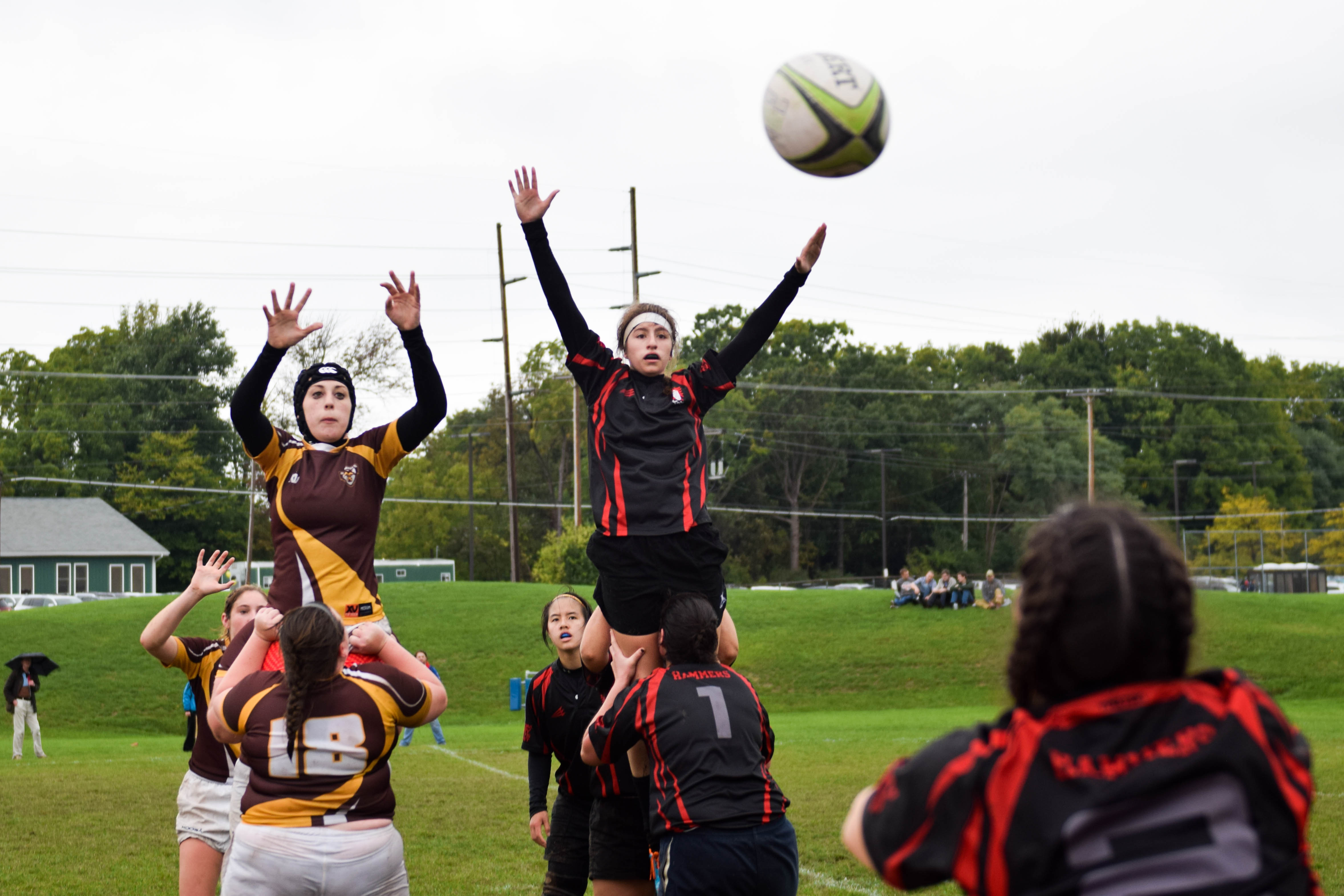
The UR Women’s Rugby team boasted an undefeated record this season, a light spot despite being routed by SUNY Cortland on Saturday in their first game of postseason play.
The UR Sledgehammers faced Cortland on Saturday at Aardvark Park, losing 0–53. The two teams played together just last spring at RIT’s Prom Dress Tournament, where UR lost to Cortland by a score of 0–20.
Hoping to upend that score, the Sledgehammers were ready for Saturday after a team dinner Friday night. Unfortunately, SUNY Cortland proved again to be the stronger team that day, effectively ending the Sledgehammers’ season.
Women’s Rugby President Catherine Yip said before the game that SUNY Cortland would be the toughest opponent the Sledgehammers have played yet, but remained confident in her team.
“I would definitely say that our back line is stronger and more together than I can remember it ever being,” Yip said, adding, “I think something we really should focus on […] is coming out strong right from the beginning.”
While other teams played in the quarterfinals last weekend, the Sledgehammers were able to rest because of their placement as the number-one seed in the league. With a win on Saturday, the women would have advanced to Sunday’s league final, and, regardless of that game’s outcome, would have automatically advanced to Regionals.
Senior Jaede Carney, Match Secretary for the team, cited “a strong team, great coaches, and a positive attitude” as assets going into Saturday’s game, as well as highlights of the season.
Though the team may not be competing in postseason play, there are still titles to uphold. With three first-place finishes in tournaments last spring, the Sledgehammers have their work cut out for them.