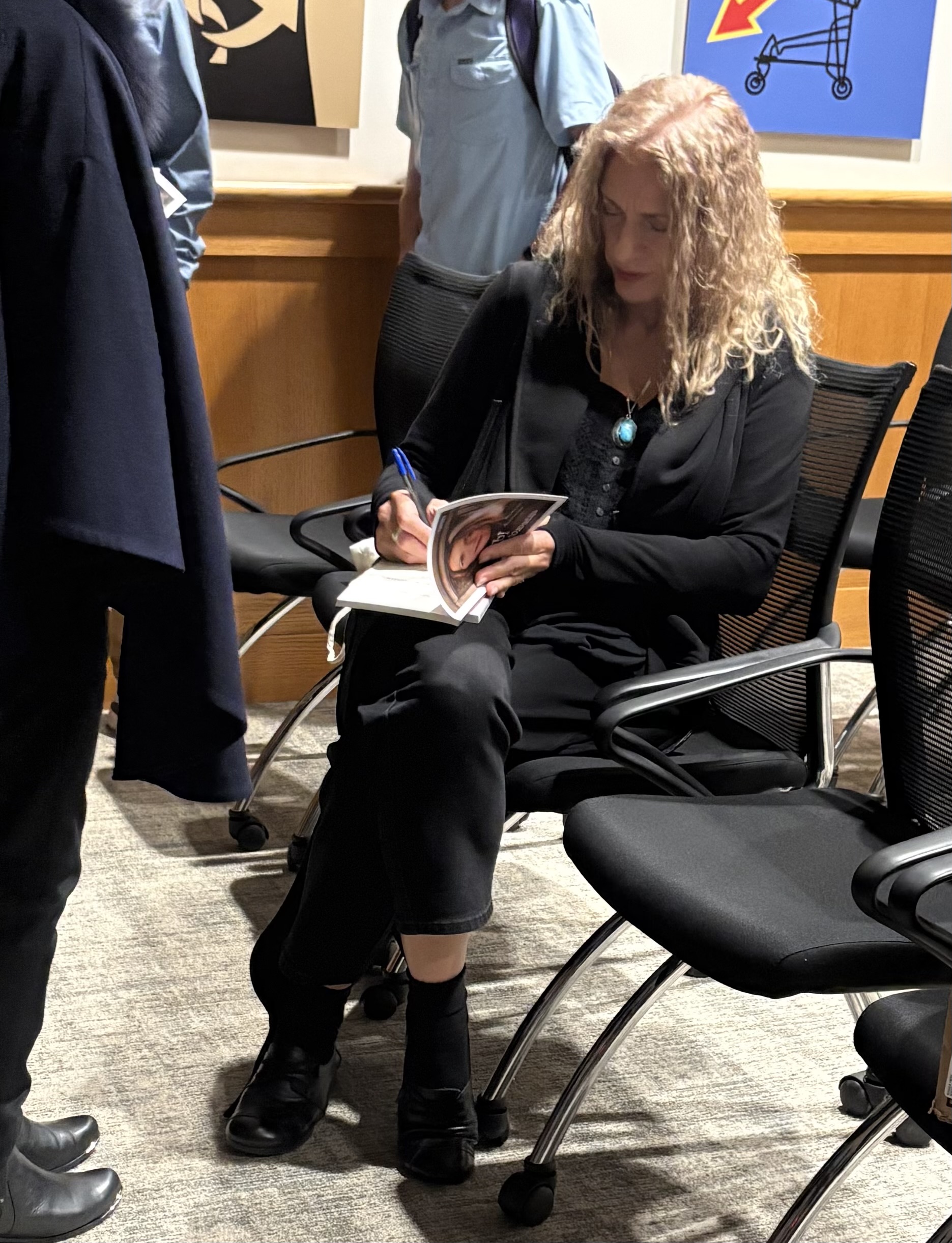
The Department of Modern Languages and Culture held a poetry reading on Thursday for the Russian poet and journalist Tatiana Voltskaya called “Poetry in Wartime” during which she also promoted her new book “The Glass Peacock.” This was an individual event facilitated by the Scholar in Residence Dmitri Bykov, who left Russia shortly before its invasion of Ukraine. Both Bykov and Voltskaya are prominent Russian poets who have actively challenged President Vladimir Putin.
There was a charcuterie board in the back of the room that various people helped themselves too, but everyone was seated shortly after 5 p.m. There was a brief waiting period as Bykov escorted Voltskaya to Rush Rhees Humanities Conference Room D.
A handful of people entered after the reading had started and a few more left before it was over, but most stayed for the full time. The majority of people in the room appeared to speak Russian, and fell into one of three categories: students, professors, and older individuals, likely immigrants from the former Soviet Union that made up slightly more than 5% of the local Rochester population in 2024.
Voltskaya stood in the middle of the room, reading from her phone, held sideways in her left hand, and speaking into the microphone which she held with her right, occasionally lifting a couple fingers to scroll. Her voice was strong and clear, though while reading her poetry she appeared to get slightly teary once or twice. Bykov translated and summarized her words on the spot whenever she paused. However, active interpreting is a profession of its own and very few of these professionals are tasked with communicating an English approximation of Russian poetry, so understandably, it wasn’t always easy to follow or comprehensive.
The opening poem was one of only a few of Voltskaya’s poems which have an official translation, titled “There Will Be No Coffins.” The first few poems mentioned Ukraine while the remainder revolved around Georgia where she has been living, in exile, since 2022. She was forced to move there after being declared a “foreign agent” in October 2021, a month after she was detained in Moscow for protesting the use of the term foreign agent to describe independent journalists such as herself. One particularly poignant line as translated in the moment by Bykov was “all the world must watch as we are eating our salads from their skulls.”
After an hour and a half of reading, Voltskaya took questions. The first one, from Bykov, who asked after her usage of rhyme-verse, which he teasingly pointed out has generally fallen out of favor.
She replied that the Russian language demands it because the words are longer. She also spoke of her older son who ran away from home a day before he was to be drafted, and now lives in Greece where she recently visited him. In regards to the differences between his generation and his mother’s, he told her that, as Bykov translated, “you [old people] are unhappy everywhere and we are happy everywhere.” This was one of several topics Voltskaya’s work touched on. One of her poems distinguished people like her, in exile, from immigrants who move by choice and so cannot be happy because they want to go home.