NASA just launched Artemis II. Starting on April 1, four astronauts flew farther from Earth than any human being has ever traveled, looped around the Moon, and splashed down safely in the Pacific 10 days later. It was the first crewed mission beyond low-Earth orbit since 1972. I watched the launch from my phone, NASA live streamed it on their YouTube, and it was hard not to feel some amount of excitement.
Then I opened social media, and the excitement turned into something else.
My feed filled instantly with influencers explaining the mission. Some of them had millions of followers. Their videos were polished, confident, and loaded with terms like “trans-lunar injection” and “free-return trajectory.” They spoke with the authority of people who had studied astrophysics and literal rocket science their entire lives. The comments under their posts were the same: people casually tossing around technical language, nodding along, adding their own takes. Everyone seemed to already understand everything.
However, I had questions. I wanted to know more about why NASA changed the reentry trajectory for Artemis II after the heat shield problems on Artemis I. I wanted to understand how the Orion spacecraft’s life support systems were tested for a 10-day mission. Basic questions. Good questions. But scrolling through my feed, I felt like I was the only person who did not already have the answers.
That quiet pressure not to ask, not to feel stupid, is a problem.
Imagine you are a college student who knows almost nothing about spaceflight. Your algorithm knows you are interested, so it serves you related content. But the content is not educational. It is performative. Influencers delivering surface-level summaries with the confidence of mission control; no explanation of how they know, no citation of sources. No admission that the knowledge came from anywhere other than absolute personal expertise. They present borrowed knowledge as native fluency, and their audiences mirror it back.
Now imagine you have a question. Maybe you want to know why it took more than 50 years to send astronauts back toward the Moon. Maybe you want to know what a heat shield actually does. You scroll to the comments and consider typing it. But the comments are already full of people who appear to know. And when someone does ask a basic question, the response is dismissive. “Just Google it.” “How do you not know this?” “Bro, it’s literally right there.”
So you do not ask. You close the app. The question stays unanswered.
This is not a new pattern. Last September, NASA announced that the Perseverance rover had found a potential biosignature on Mars. The research team spent more than a year carefully analyzing the data before publishing their findings in Nature. The paper used precise, cautious language. “Potential biosignature” means exactly what it says: a substance or structure that might have a biological origin but requires further study. That distinction matters.
On social media, the nuance vanished within hours. Influencers and news aggregators declared that NASA had found life on Mars. Posts with millions of views stated it as fact. People who tried to point out that “potential” does not mean “confirmed” were met with ridicule or indifference. Meanwhile, the scientists who actually did the work, the ones who could explain what the finding meant and what it did not mean, were buried under content from “experts” who had discovered the topic that morning.
The same thing happened during the total solar eclipse in April 2024. The same thing happened when the James Webb Space Telescope released its first images in 2022. Every time a major science event reaches the public, the cycle repeats. Influencers race to post first. Surface-level content dominates the feed. The tone is authoritative. The audience performs understanding. The space for genuine questions disappears.
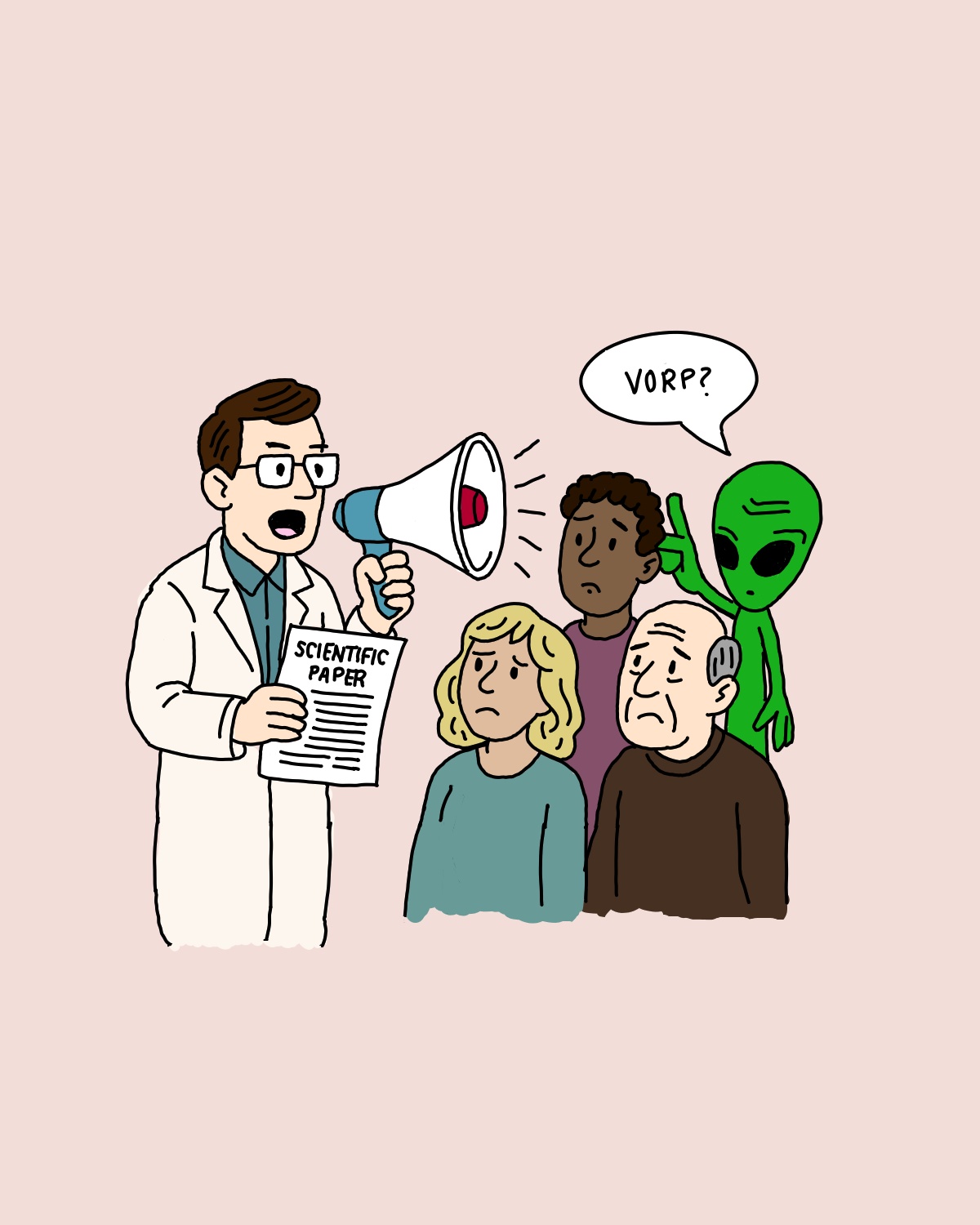
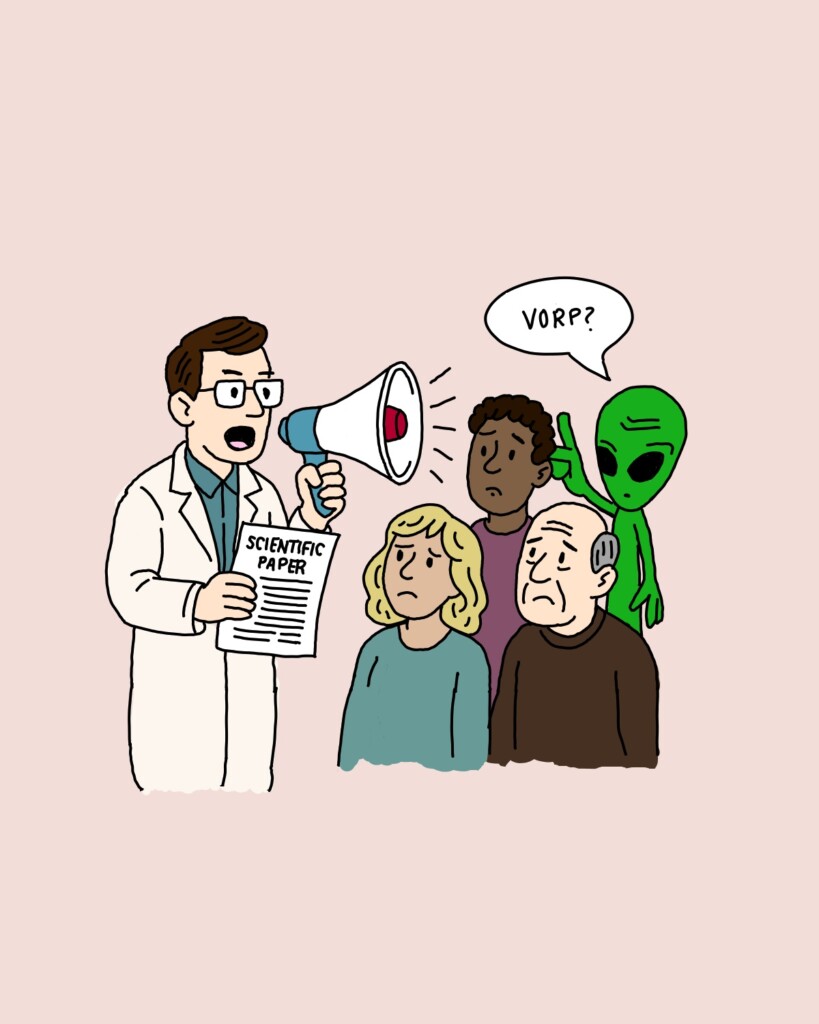
Scientists want to talk to you. Researchers spend years, sometimes decades, building knowledge that they are eager to share. Many of them are on social media precisely because they want to make their work accessible. They want to answer your questions. They want to explain what a biosignature is, how a heat shield works, and why we study the Moon. That is the whole point of science communication.
But they cannot compete with the volume. A researcher who posts a careful, accurate explanation of the Artemis II heat shield decision gets a few hundred views. An influencer who posts a 60-second summary with dramatic music and confident delivery gets millions of views. The algorithm does not reward accuracy — it rewards engagement. And engagement favors certainty, speed, and polish over nuance, context, or honesty about what we do not know.
The people least experienced in science and most experienced, instead, in media end up controlling the conversation, while the people who truly understand the topic get pushed to the margins. Students who want to learn are left with a choice: perform understanding they do not have, or stay silent. Neither option leads to actual learning.
And that is where the real damage happens, not just to individual conversations, but to something deeper: curiosity.
Science runs on curiosity. It always has. We did not go to the Moon in 1969 because the return on investment was clear. We went because we looked up and wanted to know what was there. Penicillin was discovered by accident. The cosmic microwave background, the echo of the Big Bang itself, was found by two radio astronomers who thought their antenna had a pigeon problem. The best science often starts with a question that has no obvious payoff, asked by someone who simply wanted to understand something they did not.
That instinct, the willingness to reveal ignorance, is the most valuable thing a student or a scientist or anyone can have. It is also the thing that social media is quietly destroying. When every feed is full of people showing off their expertise, when asking a basic question invites mockery, and when “I don’t know” feels like an admission of failure, people stop being curious. They stop asking. And when people stop asking questions, they stop learning. They stop pushing. They stop discovering.
Every scientist who ever made a breakthrough started by not knowing something and having the courage to ask about it. Darwin did not understand why finches on different islands had different beaks. He asked. Marie Curie did not know what was causing photographic plates to fog in her lab. She asked. The Artemis II crew just traveled farther from Earth than any humans in history, and they did it because thousands of engineers and scientists spent years asking questions that had no guaranteed answers.
Not everyone can be an expert. That is not a failure. That is the starting point. We need to build a culture where “I don’t know” is a normal thing to say. Where asking a basic question is treated as curiosity, not ignorance. Where the response to someone who does not understand is to help them learn, not to make them feel small.
The questions you are afraid to ask are the ones worth asking. So ask them. And if someone makes you feel foolish for not already knowing, remember: They probably looked it up 10 minutes ago. The difference between them and you is not knowledge. It is honesty.
Never stop being curious. That is how science gets done.