Why do politics have to be so political?
Now, I know what you’re thinking. How naive to suggest that politics are anything but political? But truly — why, in today’s political climate, are issues so polarizing? Not only has polarization caused hyper-partisanship in American politics, but it also has dulled the political elite’s will to act.
The reason for today’s hyperpolarization is simple: political gain. Although politics were still polarized 40 years ago, it was nothing like the political extremism of today. The elections of political figures like Ronald Reagan and Bill Clinton were times of relative prosperity for the nation: a booming economy, limited foreign policy involvement, and even national unity. Whether you loved or hated a president, there still seemed to be respect for our political figures as institutionalized leaders of our nation.
Just 20 years later, this picture couldn’t be more different. Following multiple Middle Eastern conflicts and the Great Recession, America has changed — and certainly not for the better. Something had shifted in the social fabric of our democracy.
We are not unified as a nation. As of July 30, 2025, 80% of US adults say that they cannot agree on basic facts and policies with the opposing political party.
This is due to the continual erosion of our democracy. Largely, political parties aim to achieve strictly partisan goals rather than fulfilling their political platforms.
Such can be seen in the divisive political rhetoric and actions of each political party, which do nothing to benefit the union worker, the single mother with two jobs, or the small business owner — everyday Americans who our politicians should represent. Instead, parties play into high-risk games with each other that harm voters rather than helping them.
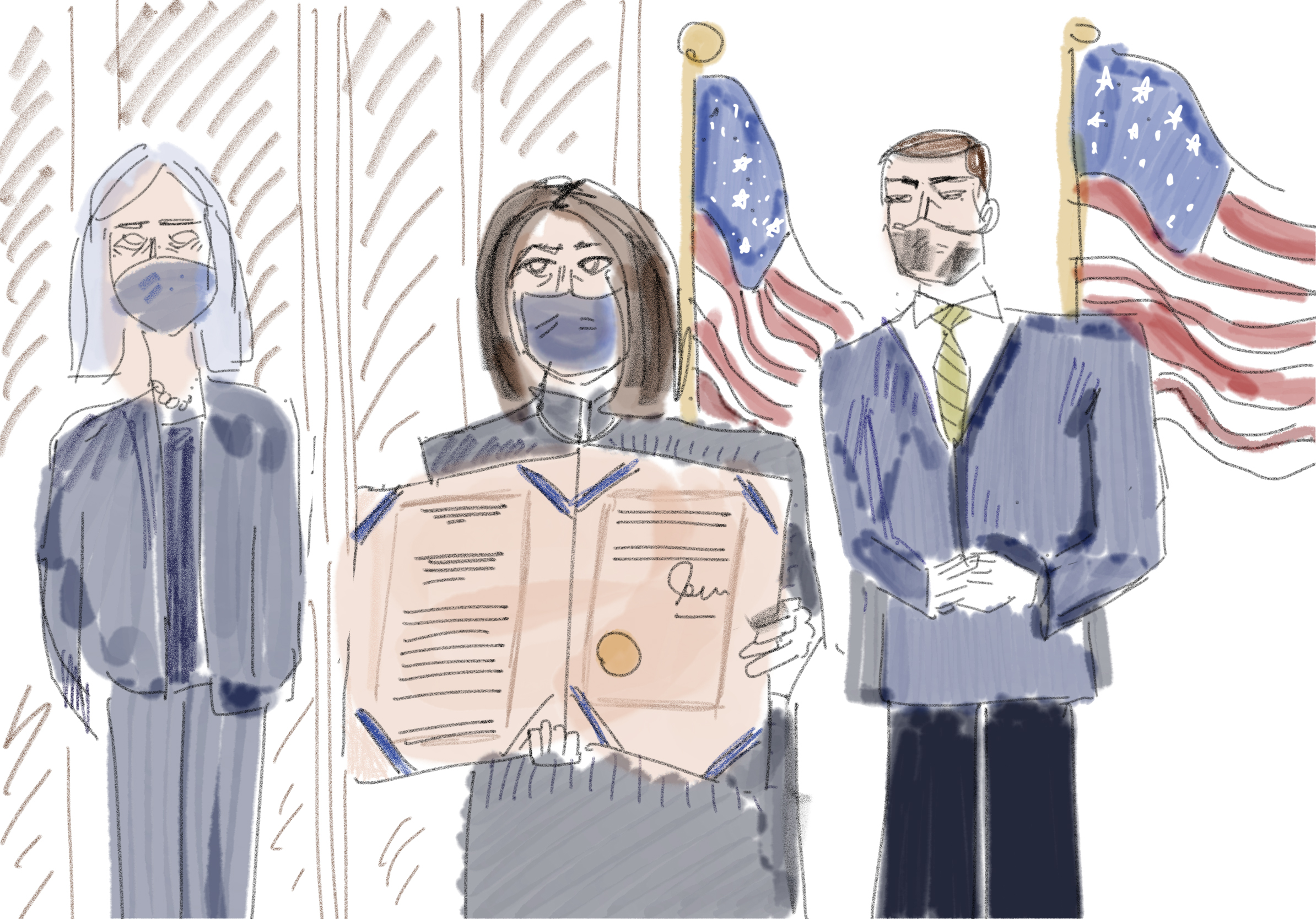
There are many examples of this by both parties. One is the Democrats’ impeachment of Donald Trump during his presidency in 2019, even though he was ultimately not removed from office. Despite their weak argument over the alleged “High Crimes and Misdemeanors” committed by President Trump over a phone call with President Zelenskyy of Ukraine, Democrats knew that their argument wasn’t enough. To successfully remove a sitting president from office you need enough House and Senate votes and political capital, the former of which they did not have.
The first Trump impeachment failed in the Senate on a partisan vote of 48–52 for Article I and 47–53 for Article II.
And what did this impeachment effort do for the nation? Nothing, except cause more division. In fact, a AP-NORC poll conducted in October 2019 before the impeachment demonstrated a strictly partisan divide among those who believed Trump’s actions with the Ukrainian President were wrong. 92% of Republicans believed Trump’s actions were in some part legal, while nearly 70% of Democrats believed his actions were illegal.
Now, let’s look inversely at the Republican party’s hyperpartisanship — in particular, their challenging of congressional maps to benefit their electoral chances in the upcoming midterm elections. While in most states this is constitutionally allowed to some degree, it sets a dangerous precedent which further erodes the intended bipartisan or non-partisan nature of simple electoral rules and map-making.
In states like Texas, which have moved forward with their redistricting plans, the partisan nature is blatant. Texas State Senator Phil King, a primary senate sponsor for the GOP-backed redistricting bill, was quoted as saying the new Republican-drawn district map “meets the critically important goals of legality, of political performance for Republicans and of improved compactness.”
Why have we accepted these actions as the new normal? Why have we made it okay in our democracy to allow such divisive events — both monetarily exorbitant and time-consuming — to take over our political conversation?
At the time of our nation’s founding, political parties weren’t even thought of as a fully fleshed-out idea. In fact, they weren’t even mentioned in the United States Constitution. Instead, we had groups and factions that commingled and worked together to solve collective problems. It’s clear that those days are far behind us, and the wise warnings of George Washington about the dangers of political parties which guided our early nation are now ignored.
We need to regain the spirit of the foundational political operation in America. Gerrymandering and partisan impeachments will continue — with or without the objections that I, and thousands of other opinion writers and reporters, raise every year. Until substantial shifts happen, we must continue these conversations.
The biggest mistake failing democracies make is ending discourse. I hope that this year, we as young people continue holding our leaders accountable, Democrat or Republican, and call out all sides when we see problems in our government.
For if we can’t distinguish political accountability from political polarization, how can we distinguish who we are as a nation?