I saw the hand first. Small, brown, tapering claws.
“There’s something in the sticky trap…”
There is something so human about hands. The way they curl, grasp. I flexed my own hands and steeled myself. Bent down. A wing now, half tucked under a small body.
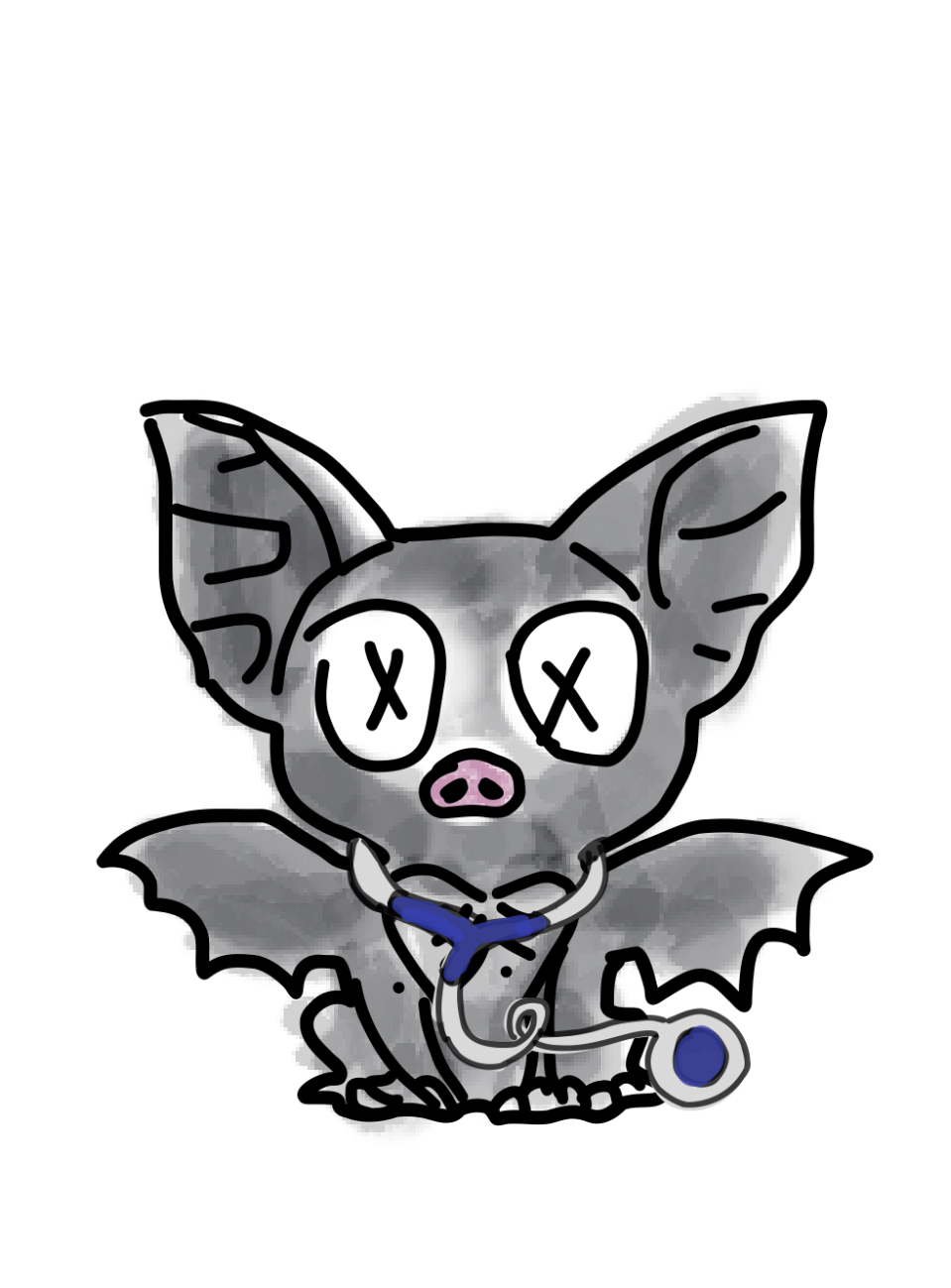
A little brown bat.
Well.
Let’s rewind for a moment. The context: not some musty attic or cave or tree trunk, but the UR Medical Center. Urology’s the floor below; pathology’s down the hall.
Bat studies? Not anywhere the last time I checked.
It was an ordinary commute to lab. Walk past the cemetery from River Campus, attempt to cross Elmwood safely, inhale the earthy wafts of mouse experiment, navigate the maze that is the
Medical Center.
Now, I don’t want to scare anyone about bats flying around in the hospital. I’m sure some of you work in labs like mine, expecting some level of bat-free environment.
I want to warn the bats. Sweet creatures who keep mosquito populations in check and pollinate crops, avoid the Medical Center at all costs. Lurking in the corners of most labs and office spaces is a more sinister addition, sticky traps. These traps are meant for roaches and other insects, but will, as I stumbled upon, catch a mammal or two.
If you’d like to be sad for a moment, Google, “Are glue traps humane?”
Finding a bat in a med center lab raises a lot of questions: How did it get in here? Are there more? Why did it pick a sticky trap as its landing pad? Did it appreciate how organized the bench space is? (I just did inventory.) Did it want to be a study participant? Was it looking for the Wegmans gift cards?? Whatever drew our bat friend into the lab, it obviously did not sign its participant consent form.
So rest in peace, poor Med Center bat. We’ll remember you this Halloween.