The Student Association Government (SA) invited representatives from the URochester’s Department of Public Safety (DPS) to the latest senate meeting Monday, Nov. 9, to answer questions and discuss the University’s increased campus surveillance as well as other safety concerns.
Quchee Collins, Associate Vice President for DPS and Chief Public Safety Officer, spoke on reporting procedures, and the overall developments in URochester security.
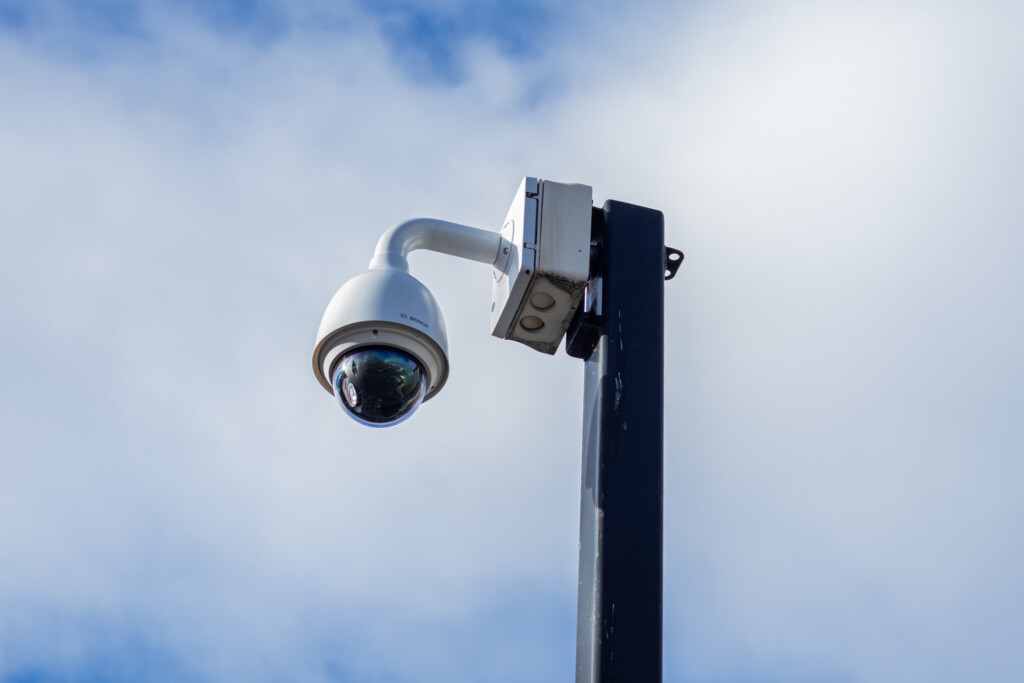
Collins clarified that, according to DPS procedures, camera footage is reviewed in response to reported incidents or complaints rather than continuously monitored by a dedicated team of employees.
He also stated that footage is retained for a minimum of 30 days, with an “industry standard” retention period of 30 to 90 days. Footage is subsequently deleted unless preserved as evidence.
Regarding student privacy, Collins explained that cameras are programmed at the hardware level to prevent surveillance of inside residential spaces. While entrances and exits remain visible, windows are digitally obscured from camera views and remain blacked out.
“In terms of our cameras, everything the University does from a software standpoint is behind secure firewalls.”
Collins emphasized that DPS uses incident reports and crime statistics to guide its security practices.
“There’s a standardization process that looks at risk mitigation and how we overlay cameras and systems,” he said.
When asked about the recent break-in at Hill Court and whether campus cameras have audio-recording capabilities, Collins declined to comment, citing “proprietary and operational security reasons.”
Collins encouraged students to bring any concerns about the placement and operation of surveillance cameras to DPS directly, and to participate in an upcoming survey, expected to be released by DPS in March 2027.
“Our efforts are to deter, to defend, and to minimize, mitigate risk,” he said.
“We need to hear from you,” Collins told students. “You see something, you say something.”
Despite the recent break-in, data presented to the SA reported that “Clery” crimes have decreased. However, Collins cautioned against interpreting the decline as reflective of larger trends in campus crime.
The Clery Act, named after Jeanne Clery, a Lehigh University student who was murdered in her residence hall in 1986, requires colleges and universities to disclose information about certain crimes occurring within a federally defined area around the campus.
SueAnn Farnsworth, the University’s Clery compliance officer, presented a map of the locations around campus where the University is required to report crimes, alongside the latest campus crime statistics.
Despite an overall decrease in “Clery” crimes, Collins emphasized that there is more that the University can achieve.
“This is not a time for victory laps,” Collins said. While the community can “acknowledge that there has been work done,” he emphasized the “need for continued work.”
“One of the greatest risks to safety is underreported incidents,” Collins said. “Understanding what’s available in terms of reporting out there is a priority for public safety and a priority for the institution.”
DPS representatives also explained the University’s different categories of campus safety communications: emergency notifications, timely warnings, and other important emails to students.
Emergency notifications alert the campus community, or affected portions of it, to immediate threats to health or safety, such as active shootings or explosions. Timely warnings concern Clery Act crimes that have occurred and may pose a serious or continuing threat.