It’s no secret that over the past several years, the cost of higher education has rapidly increased, with the cost of attendance at many private institutions now exceeding $100,000 annually. As students struggle with the challenge of paying such incredible sums of money to get their degree, one large contributing factor is the exorbitant cost of college meal plans. These plans, once a simple solution for the inevitable inconvenience of cooking on-campus, have quietly become a large revenue stream for educational institutions and their dining service providers.
Here are the baseline numbers: according to a study across 75 private and 75 public institutions conducted by Education Loan Finance (ELF), the average lowest-priced meal plan required for first-year students costs $5,656 per year. When we narrow our scope to only private institutions, the average lowest-priced plan cost rises to $6,242 per year. Furthermore, out of the 150 colleges and universities surveyed, 147 of them required first-year students to sign up for a meal plan. Simply put, this is not a nutritional plan; it is a profit-generating machine disguised as a necessary student service.
It’s easy to understand why universities maintain such high minimum costs for their meal plans: If we multiply the average cost of a meal plan at URochester by the number of students in the Class of 2030, we see that the University is on track to make roughly $6 million in gross revenue from their meal plans from the Class of 2030 alone. Universities have no incentive to reform such a large source of guaranteed revenue.
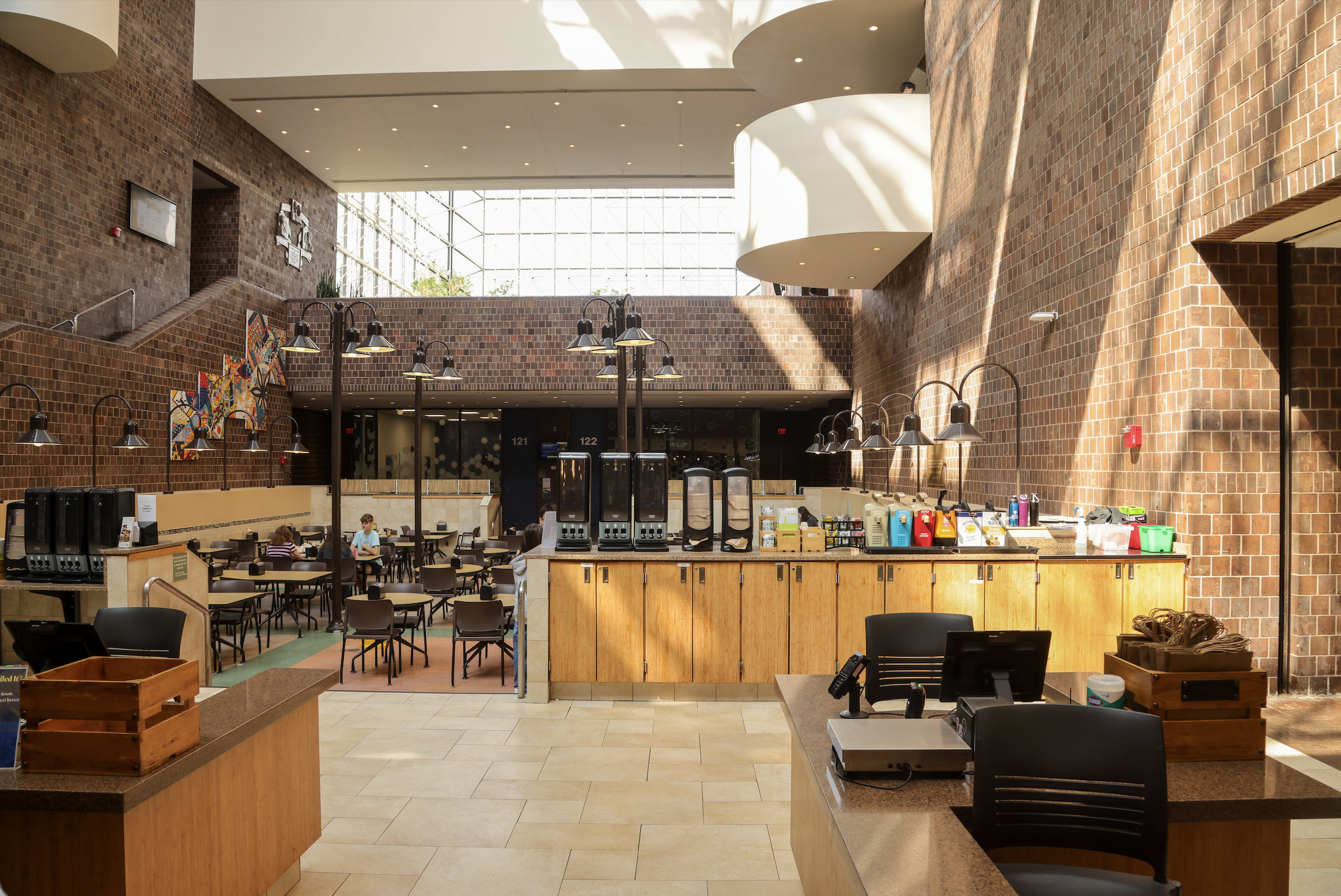
Quality is another issue that is often at the forefront of dining services controversies. As many students agree, URochester’s food does not meet a particularly high standard. Complaints often ring out amongst the student community that the food is bland and that there aren’t enough options.
Some colleges, including URochester, have moved away from costly third-party operators and have chosen to bring their dining services in-house. This aims to give the institution more control over the quality, pricing, and diversity of the food served in its halls.
Until last year, URochester contracted food services through Harvest Table Culinary Group and their parent company, Aramark. It’s important to note that while Aramark manages “hospitality” and dining for many colleges and large institutions throughout the nation, it also services the defense sector and many correctional facilities, and has been subject to hundreds of thousands of dollars in fines for serving substandard food, particularly in prisons.
According to University Spokesperson Sara Miller, this change to an in-house dining service allowed the University “greater flexibility to adjust dining programs and options based on student needs.” This comes amidst the introduction of a new meal plan called the Flex Plan, which allows students $35 daily to be spent in a dining hall or any other URochester-affiliated dining location.
According to Miller, this is to offer “athletes and other students who need food on the go” more flexibility. This was a change “based on student feedback and enabled by the move to self-operation.” However, recent price hikes in meal plans have put into question whether this was the right move for the University to make. From the 2025–26 school year to the 2026–27 school year, even though URochester brought dining in-house, housing and food prices increased 4.2%.
Another move supposedly made to ensure “access and affordability” through programs according to Miller is the UR Essentials program. However, the Essentials program — a monster of its own — is widely regarded as another $800 bill that the University tacked onto tuition to cover textbook expenses, when this change really wasn’t needed or asked for.
Thus, the question of quality in Douglass and Danforth Dining Centers is unlikely to go away in the upcoming years. And as long as its profits hang in the balance, the University is unlikely to commit to serious reforms. Therefore, the profit machines cloaked as nutrition plans will be a major part of tuition costs for the foreseeable future.