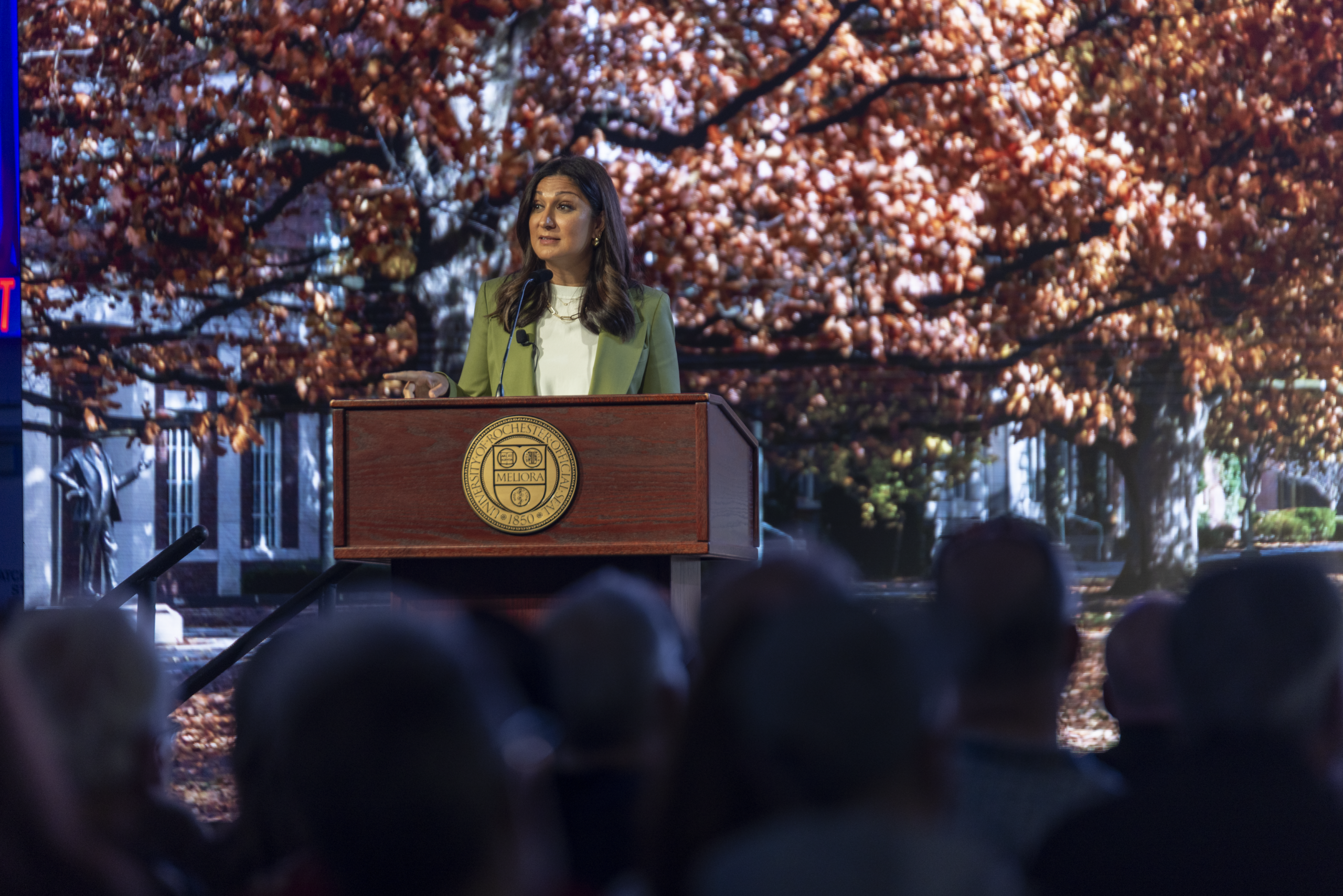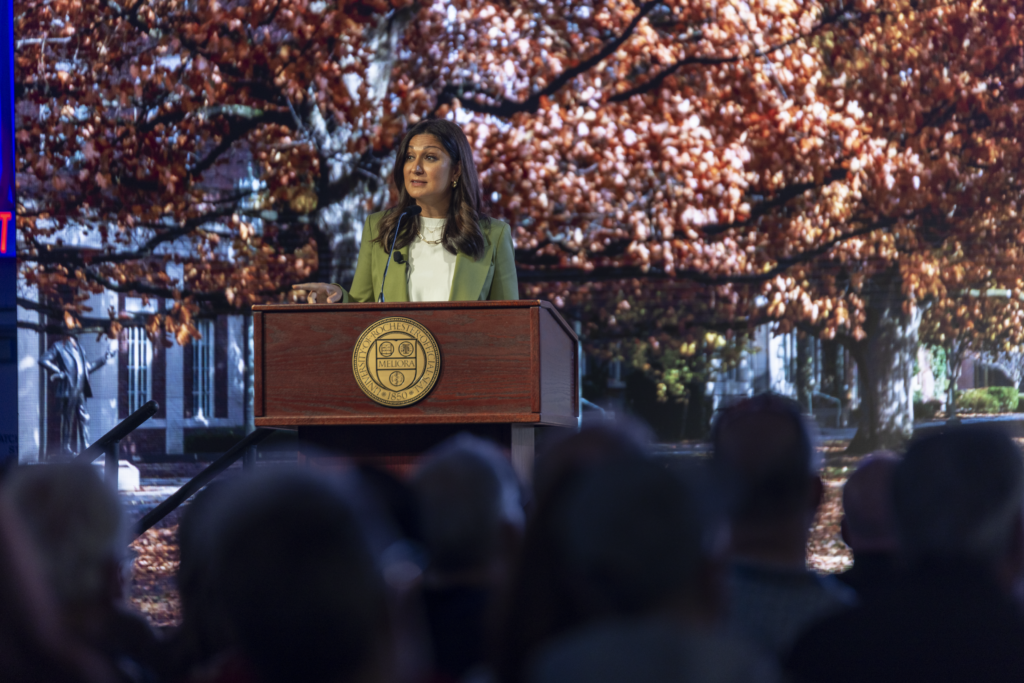
Over the last 25 years since starting her career, Nawaz has seen journalism evolve, and with it, how we consume media. According to Nawaz, technology has led to more news and information than ever before.
“Technological changes mean that you can deliver more news faster,” she said. “And so one of the biggest challenges, I think, for journalists today is how to fight these waves of misinformation and disinformation; how to make sure reliable and credible information is getting into people’s hands.”
As Nawaz explains, this means “cutting through the noise.” Whether by sharing content on social media platforms or recording a 90-second TikTok, the important thing is that reporters find new ways to connect with their audience. As the way we consume media evolves, the ways news outlets target audiences must as well.
Many people predict the imminent death of journalism, but Nawaz believes that the field will instead evolve with changing times. “Literally every year in my career, someone’s talking about the death of journalism,” she said. “And yet, there is more journalism and more news and information content making its way out to people on this planet than at any other time in our history of humankind.”
Part of the advantage of working at PBS, a non-profit organization supported by tax-payer dollars, is that they do not have a constant need to make money compared to a for-profit organization. This means that they have more latitude in what they can publish and focus on providing accurate information and disseminating that to their audience.
Continue reading below to see Nawaz’s thoughts on how journalism continues to evolve.
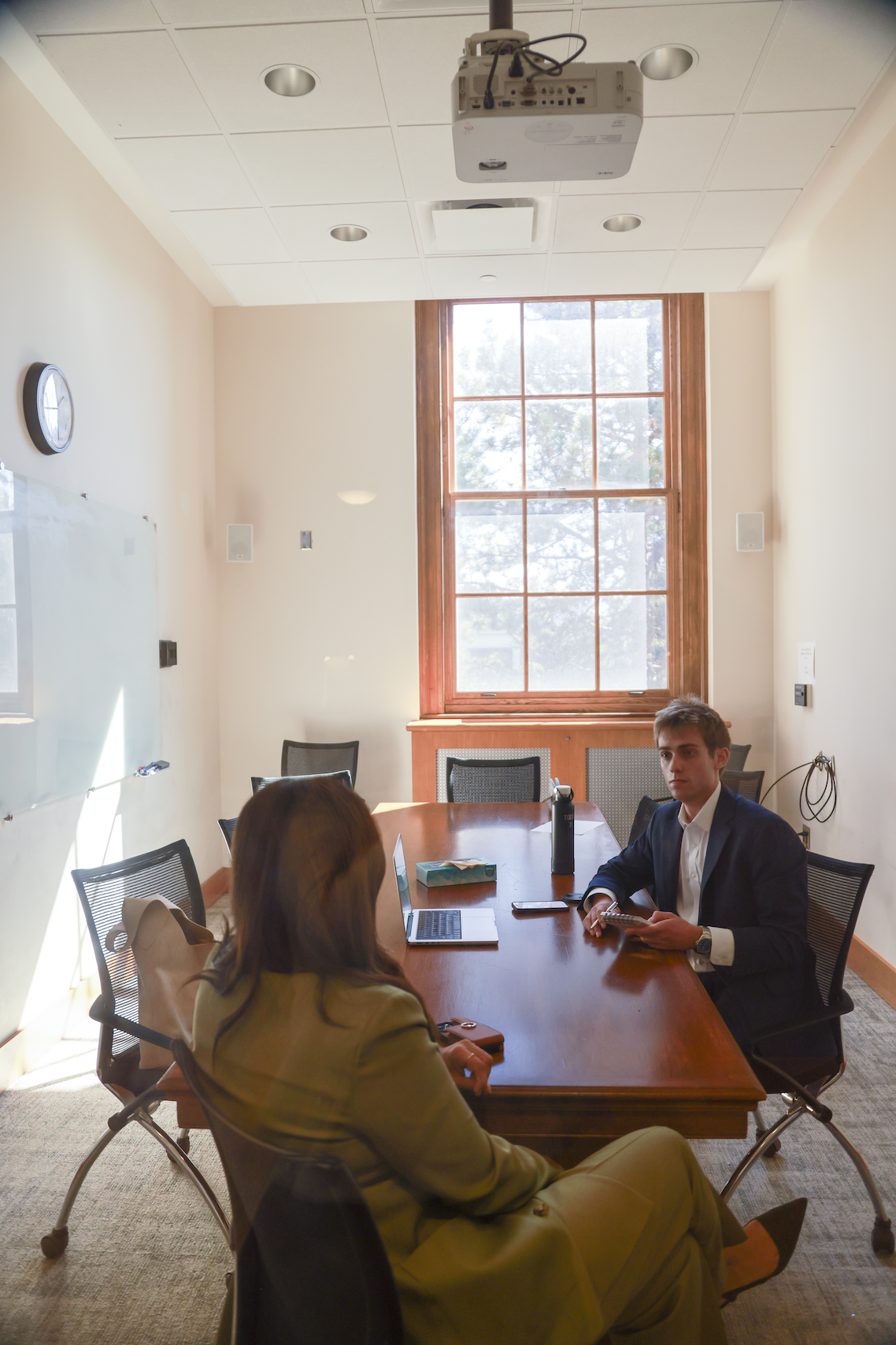
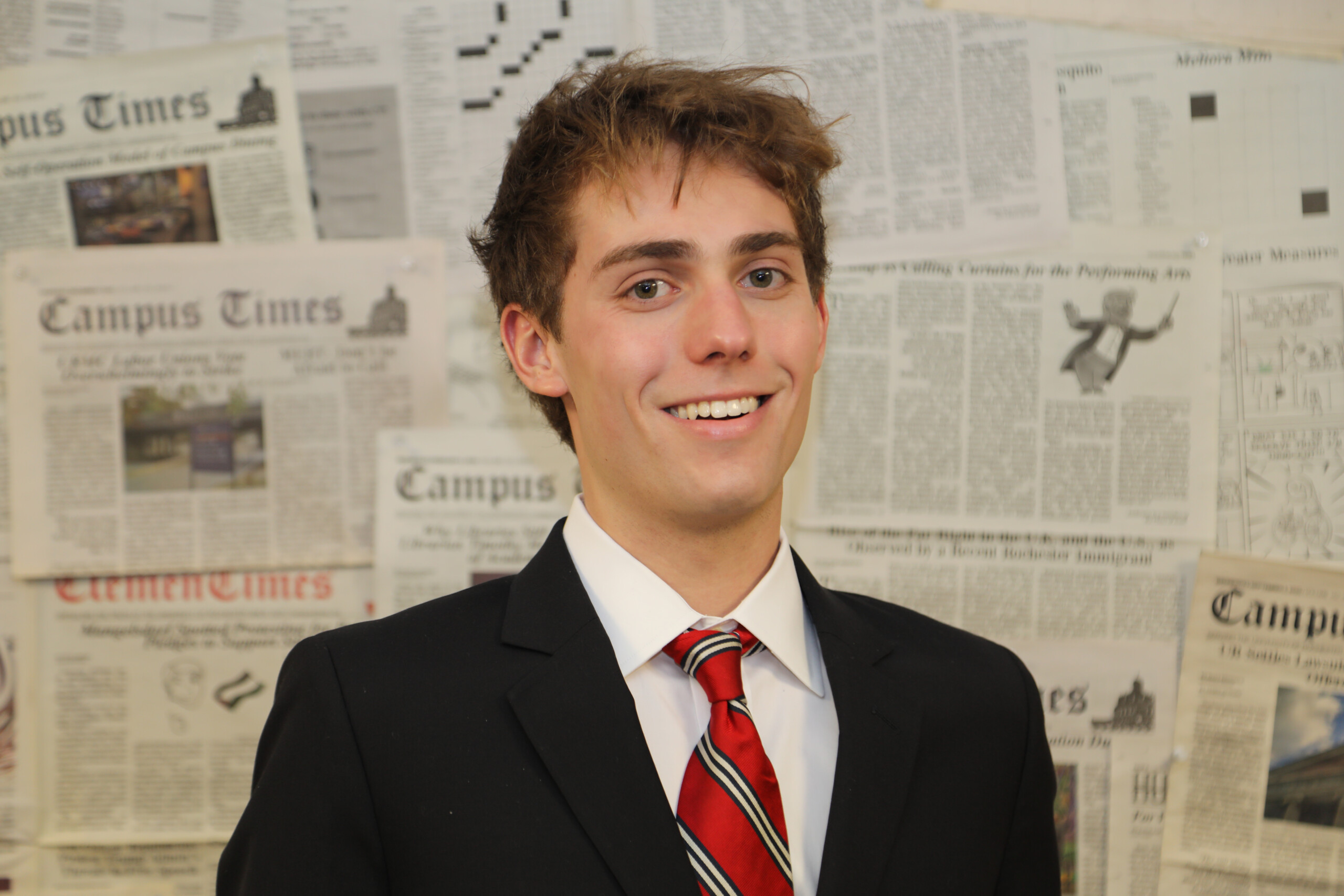
News Editor Teddy Almond interviews Amna Nawaz in a conference room after her keynote lecture. (Contributing Photographer / Auden Hammill)
An Interview with Amna Nawaz: Q&A
Q. How would you say journalism has changed since you started your career?
A. “One of the biggest challenges, I think, for journalists today is how to fight these waves of misinformation and disinformation, how to make sure reliable, incredible information is getting into people’s hands.”
Q. As someone who specializes in long-form journalism, how has the shifting environment in which people consume much shorter-form media affected you?
A. “We do everything. I mean, I am on TikTok, and I am also producing our long documentaries. And I think you kind of have to be able to do that, and everything in between these days, because as long as the right information and good information gets out to people, I’m agnostic about what button is pushed to get there, right?”
Q. I know that now, since Donald Trump’s second term, he has had a lot of disagreements with the press and has shut many out of the White House — what’s your opinion and perspective on what’s happening?
A. “I would say they’re not disagreements. I would say that this administration is engaged in an all-out attack on the free press, both rhetorically and also in some of the policies that it puts into place. We’ve seen it [before] in different agencies, we have the Department of Defense asking the press corps, who cover the Pentagon, to sign a pledge, which greatly limited their access, and also their ability to report free and fairly. I was proud that PBS was one of the numerous news organizations who did not sign that pledge, and we were summarily kicked out of the Pentagon as a result of that. This president has also tried to ban specific news organizations, and he has said it’s because he does not like their coverage.”
Q. Some of the ways he’s attacked journalists include cutting their funding, how has that affected PBS?
A. “So as you and I sit and talk here, it’s basically been one year since federal funds were cut for public media. And they had an enormous impact. I think those cuts really hurt the entire PBS system. Worst of all, I think, are the member stations that are in smaller and remote areas, where there’s not an enormous donor base, and then really relied much more heavily on those federal funds that were distributed through the system.”
Q. How have you personally ‘cut through the noise’ in your career thus far?
A. “I don’t know that I have succeeded … one of the ways I mentioned is by making sure that we’re appearing on all the platforms people are on. You have to meet people where they are. So I have no problem recording a 90-second TikTok, or doing a straight-to-camera piece about the latest headlines for an Instagram reel — in addition to preparing for a big newsmaker interview or an hour long broadcast that night; you have to be able to do absolutely everything. But we could all do better. I mean, we could absolutely all do better. And that’s why I like to stress that this is the practice of journalism, not the science.”
Q. There are a lot of young journalists on this campus who’ll be reading this article. What do you think is going to happen in the field in the next 20 years?
A. “I have no idea what’s going to happen in the next year, let alone the next 20. When it comes to journalism, I will say, since my very first year doing this, there’s always been some conversation about the death of journalism or how journalism was never going to be the same or how journalists were failing … I don’t think that’s bad. I think journalism needs to evolve; to meet both the technological world that’s living in, but also the culture and the people that it’s serving.”
Q. Did you have a different experience covering 2016 political coverage versus covering it now?
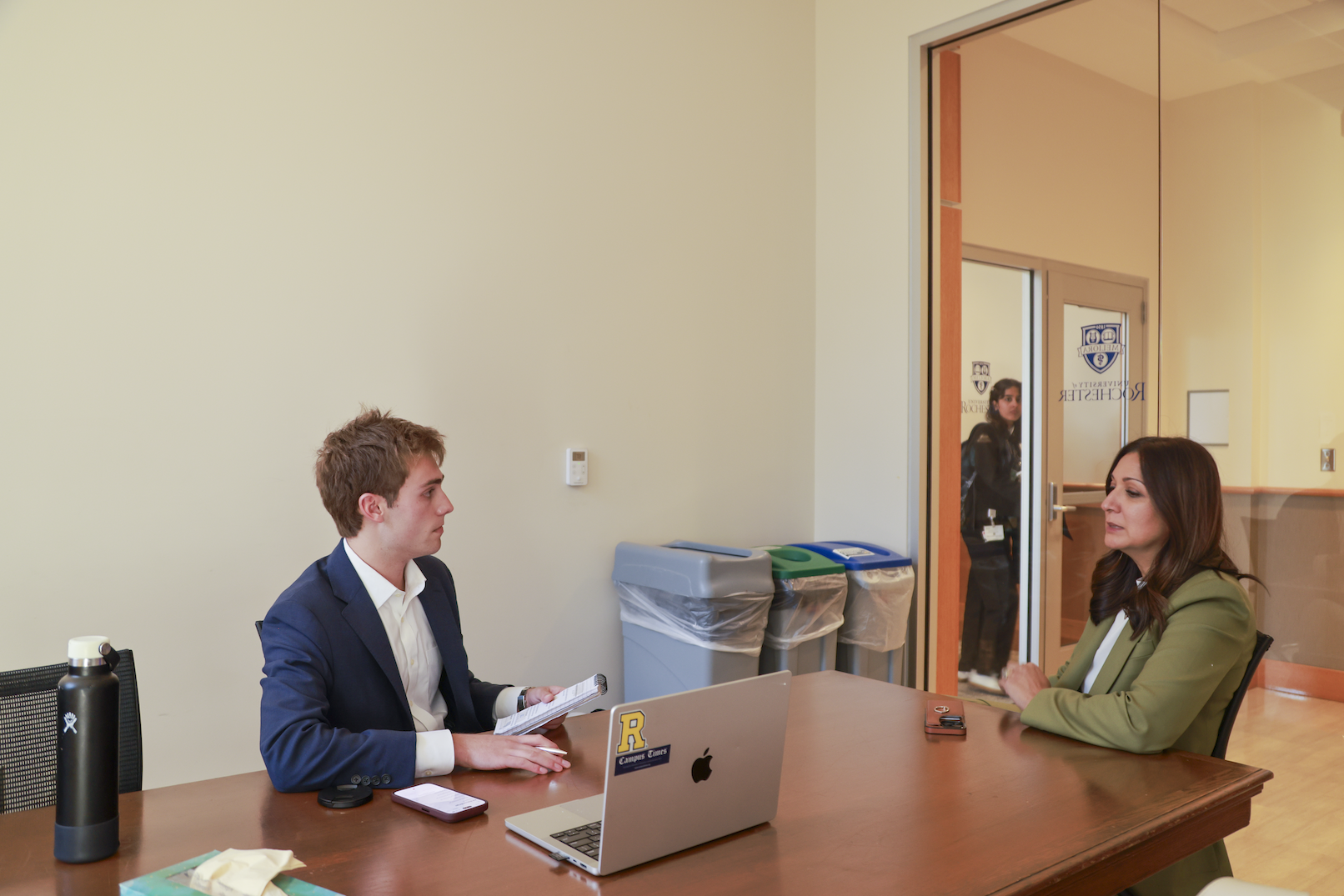
News Editor Teddy Almond interviews Amna Nawaz in a conference room after her keynote lecture. (Contributing Photographer / Auden Hammill)
A. “2016 was the first election that I anchored coverage for ABC, so I was leading a lot of our election coverage and in live stream form — which meant that I wasn’t relying on a teleprompter to tell me what to say. We were often reacting to things as they were happening in real time, whether that was a rally or a debate or the election night itself. And I think for me, the journalistic challenge was how do you make sure that all the preparation you’ve done, for the years and months prior, feeds into this to make sure what you’re saying is true, what you’re saying is accurate, and that you’re keeping up with the news. So it was different and challenging in that way, but it was also, of course, historic and different and challenging for journalists, because it was the first time that we have someone who’s never held political office, who has no military background, who was formerly known as a real estate mogul, and reality TV star, making his way to the highest office in the land.”
Q. What would you say is the most important message for young journalists that are just starting out in their careers, both in print and broadcast?
A. “I think the number one thing I’d hope to stress to people today is to be curious. There’s a really firm line between activism and journalism that we sometimes see get blurred. And I think people can bring their own backgrounds and bring their own lived experiences to the job, but it can’t influence the work that you do. It can only inform it. If the core part of this job is to ask questions, you have to bring with you a sense of curiosity, right? A sense that you’re there to learn something new. And I think it’s actually one of the best parts about this job that I still can’t believe is an actual job. I just show up and literally learn something new every day.”
Q. Do you think that curiosity is a trait that this generation has?
A. “I’d like to think so. I think it shows up in different ways, which is why people sometimes don’t see it. We talk a lot about people being buried in their phones all the time or not interacting in real life as much as they used to. But people are on their phones looking for information. What kind of information — that is up for discussion and debate. But this is a generation that has access to distant corners of this planet and pieces of information for more sources than ever before. That’s a really potentially exciting thing.”
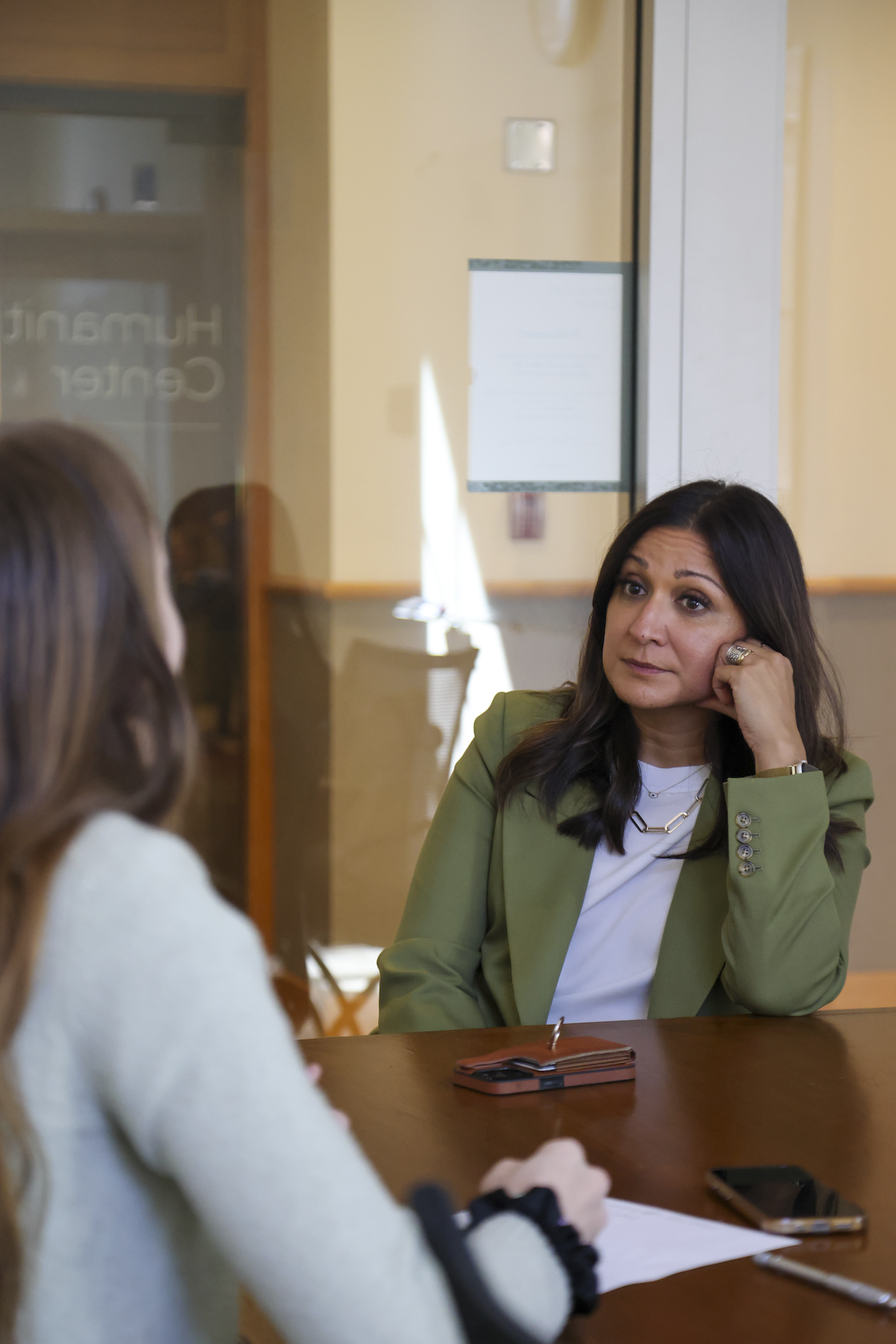
Amna Nawaz answers questions in a conference room in Rush Rheese Library. (News Editor / Teddy Almond)
Q. For the current generation, do you think it’s a challenge, with all that information, for people to cull through and piece together what’s real and what’s not?
A. “We like to say these days as journalists, just for the level of information coming at us every day, it’s like trying to take a sip of water from a fire hose. I imagine that’s what it feels like for people who maybe just have a basic question about something and want it answered. If you just go search for it, you’re gonna get a flood of information. It’s really hard to know who to trust and who to believe.”
Q. Are there any tips or tricks that you have picked up?
A. “Definitely no tricks. This is the kind of job where you gotta put in the work, and you do the work in the dark, and that’s where this, that’s where the good stuff comes from. One of the things that can trip-up an early journalist is maybe deciding that you already have your mind made up about things. I think this is a great place to learn, and it’s a great place to ask questions. And if you have the chance to just go out and do it, local journalism is what we need most right now.”
Q. Would you say that the skills of journalism are something that everyone should know?
A. “I don’t know if I’d say everyone needs to. I mean, maybe selfishly I’d like to believe that. The basic elements to this job [are] curiosity, a willingness to learn, a sense of acting in good faith when you interact with people, putting yourself into uncomfortable positions, and learning how to navigate it. All of those things are just life skills, whatever you’re doing, [whether] people want to be a musician or a doctor or an engineer or a plumber or whatever. For us, they are professional habits.”