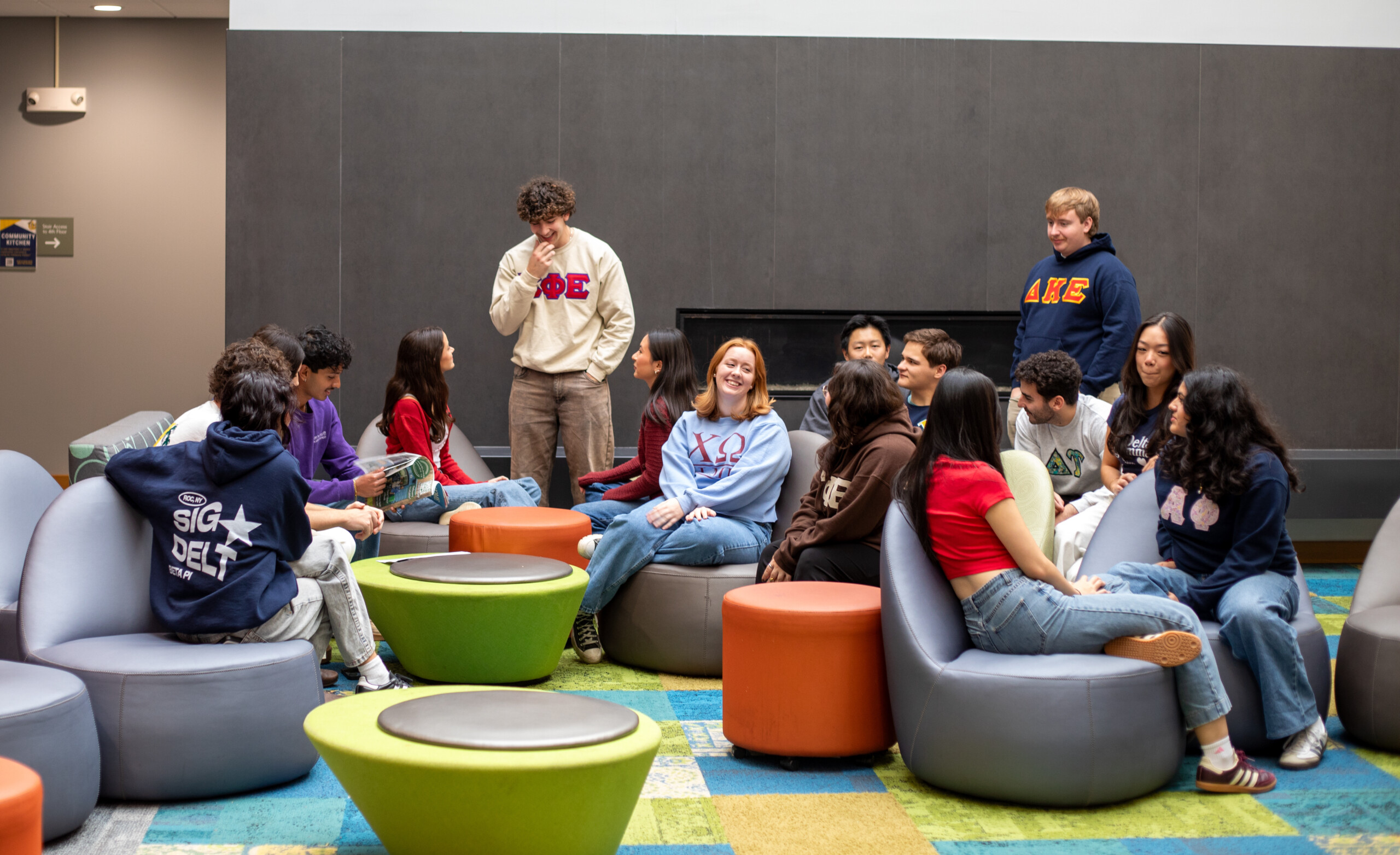
Students’ return to campus and the start of the Spring Semester means rush season is open for those interested in Greek life. Given that URochester has 23 affiliated Greek organizations, there is bound to be a fit for anyone with an interest in joining. While most students rush in their freshman spring, there are plenty of members who join later in their college careers.
For many current members of Greek life, the most important part of rushing was finding the best fit socially, and that’s what they would advise prospective members to focus on. Current Sigma Phi Epsilon (SigEp) President and sophomore Jadon Kowaleski “really connect[ed] with SigEp during the events and meeting a ton of super talented and interesting people. They also had so much energy and charisma but also an admirable work ethic.”
While most events are similar across the board for both fraternities and sororities, there is one major difference: how long prospective members are expected to rush. The formal sorority recruitment process typically lasts about a week and takes place each year in early February. Running from Thursday through Monday, the program begins with open-house style events held on Zoom, followed by two in-person days featuring each chapter’s sisterhood and preference rounds. These events give potential new members the opportunity to meet current sisters and learn more about each chapter’s values, campus involvement, and community impact. Recruitment concludes with Bid Day on Monday, when participants receive invitations to join a sorority and celebrate the start of their new membership.
Rushing a fraternity takes a bit longer, lasting about a month and including a bunch of games and events to get to know prospective members. For example, SigEp holds “Meet the Brothers” events over the span of two weeks where people interested in rush can come and meet the chapter’s members over light refreshments. According to Jadon, this gives prospective members a chance to really understand chapter life and culture. Current members of the houses find rush, or recruitment, super important because “we really want interested students to feel like they’ve found the right organization for them, we have over 50 active members so that’s a lot of guys to meet as well.”
Despite some of the perceived negative connotations of Greek life, Jadon explains its benefits: “Greek life is an extremely supportive culture that gets a bad reputation given stories from more party heavy schools. 30% of the University used to be involved, but post-COVID, it’s down to around 12%.” While some of the big football schools have their Greek life as a symbol of who they are, the University of Rochester uses it to help diversify and engage student life with other on-campus events, such as Sigma Delta Taus’s Mr. URochester, which raises money for Prevent Child Abuse America. “SDT’s local philanthropy partner, dedicated to preventing child abuse nationwide […] We raise[d] $7,000 for this,” said Mary Newbold, a member of Sigma Delta Tau.
According to Jadon, the goal of Greek life is “for students to walk away feeling confident in their choice; whether that choice be SigEp or another organization that better aligns with who they are.”
A common idea shared among members is that there is much that can be gained from Greek life. These chapters are deeply rooted in tradition and hold a deeper and tighter bond between members that goes beyond just friendship. These connections and networks built through sororities and fraternities engage so many more people than just those members — URochester’s Greek scene has something for everyone. Members of Greek life live their lives for more than just their weekend parties — these organizations represent a culture based on bonds of friendship and community service.