Throughout civilized history, music has been used to promote thought patterns and shape public opinion. Music is an immersive experience that quite literally broadcasts someone’s thoughts and experiences directly into your ears.
Musical propaganda is so effective that entire regimes have successfully identified themselves with something as trivial as a particular scale or time signature. A minor octatonic combined with a driving dance rhythm is inseparable from Russian connotations, for example. By excluding the performance or composition of any piece deemed too “Western,” Stalin created a distinct, triumphant sound to nationalize his citizens.
Amidst transitional periods in nations throughout history, art has long been a tool for helping a populus acclimate to new ideological and social conditions. After the 9/11 attacks, there came a rise of patriotic country-western pop designed to rally the citizens of America in defense of their country.
As proud Americans, we often look down upon authoritarian governments for enforcing censorship on music, but under the Trump administration, free speech and the right to information is slowly but surely being squeezed from our grasp.
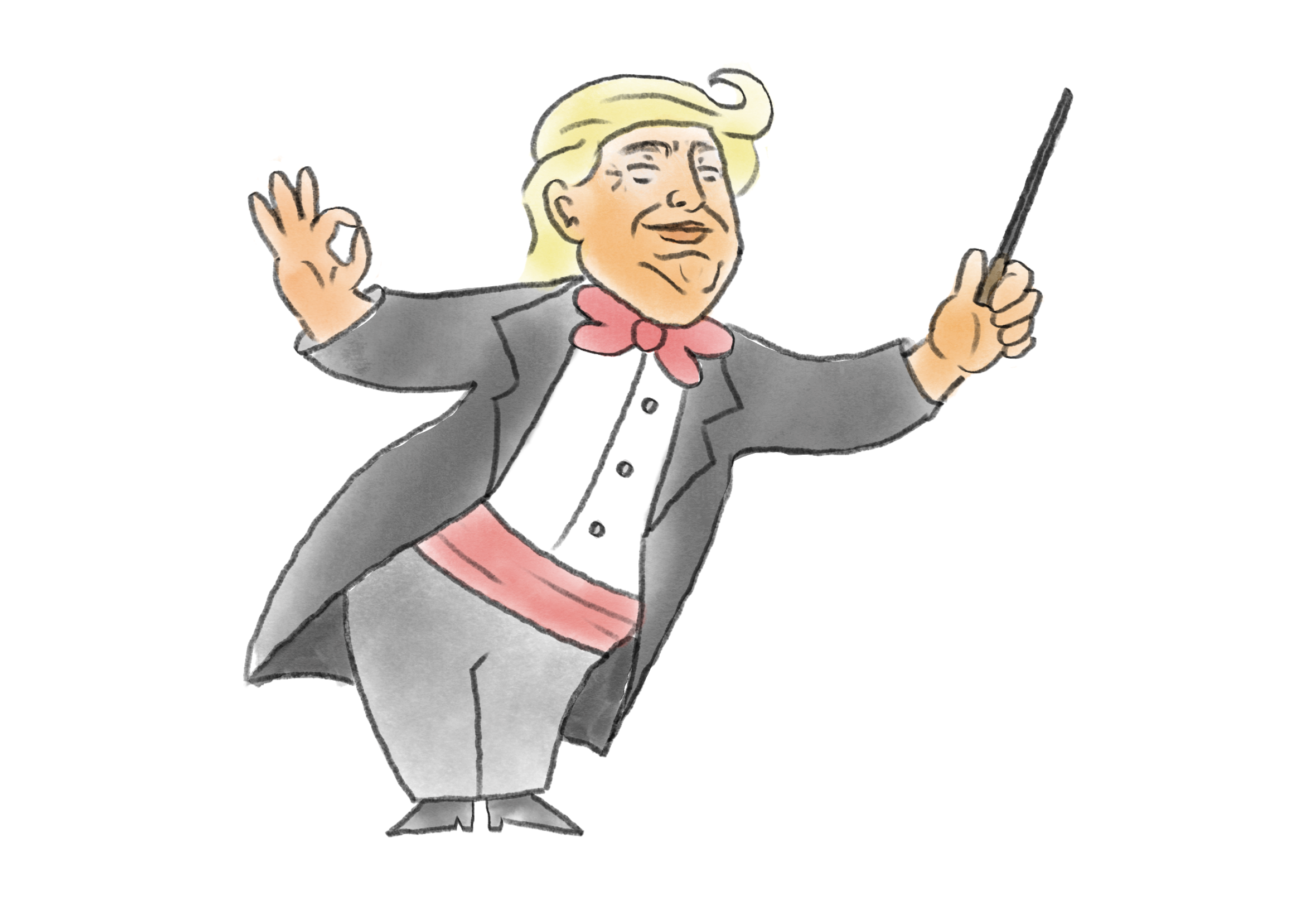
One of the first attacks on the performing arts is the takeover of the Kennedy Center, Washington, D.C.’s most celebrated stage for stage productions, both touring and local, and orchestras.
In February, Trump dismissed the Kennedy Center’s Board of Trustees and promptly appointed himself as chairman. His reasoning for this swift reshuffle was that the existing board did not share his vision for a cultural Golden Age.
Trump already had the power to appoint the members of the board of trustees, so why appoint himself chairman? Because the chairman of the Kennedy Center has absolute veto power over what concerts are being presented there.
When talking to reporters about this change, President Trump stated that some past shows were a “disgrace,” and he will make sure the new shows are “not too woke.” The President’s vague anti-wokeness stipulation left many performers feeling uneasy and unsure if their art was acceptable to their new chairman. Specific requirements were set about three months later when Trump found a new target: the National Endowment for the Arts (NEA), a fund that provided $220 million for arts projects and productions in the 2024 fiscal year.
Many orchestras and theaters rely on this funding to launch new projects and finance developing endeavors. However, in May, the Trump administration announced the cancellation of many NEA grants, heavily defunding many arts programs that relied on the organization.
This includes the University’s Three Percent, a leading force in translating modern and contemporary foreign novels into English. The Eastman School of Music also has used NEA grants in the past. In 2023, Eastman received grants for the new Music and Medicine program and for the Gateways Music Festival.
When the defunding was first announced, the NEA dispatched an email to all grant recipients stating that projects which “foster AI competency,” “empower houses of worship to serve communities,” “foster skilled trade jobs,” and “make the District of Columbia safe and beautiful” fall under American ideals. These ideals devalue intellectualism and promote reliance and complacency to the government, both economically and socially.
Eastman students and others in performance majors or jobs paths: Be aware of the source of your commission. With the careful curation of artistic projects, our jobs may slowly lean more towards nationalism and inauthenticity than true artistry. Please follow the money, and be aware that you hold the voice of a nation’s people in your hands. You have the power to be the change; use it.