Joining the ranks of academic honor societies Phi Beta Kappa and Tau Beta Pi, the Nu Rho chapter of Institute of Electrical and Electronics Engineers Eta Kappa Nu (HKN) is coming to the University’s campus.
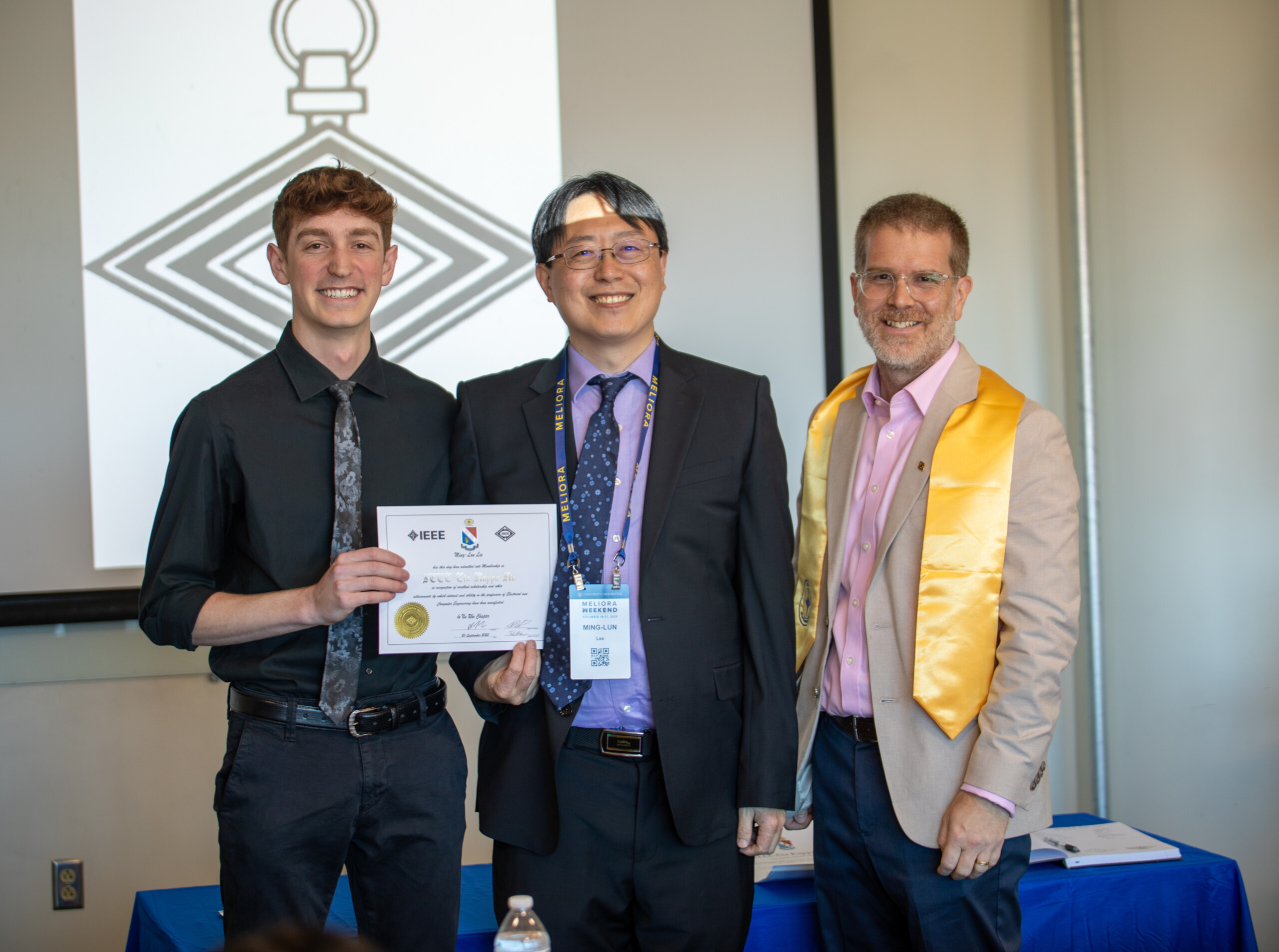
After more than a year of planning, a group of 13 students were inducted into Nu Rho during a ceremony Sept. 20.
The chapter is hosted by the University’s Department of Electrical Engineering, with professor Ming-Lun Lee serving as the group’s faculty advisor. The society is currently open to students studying Electrical and Computer Engineering, Audio and Music Engineering, Biomedical Engineering, Computer Science, Data Science, Optics and Optical Engineering, and Mathematics. However there is a clear emphasis on Electrical Engineering scholarship.
In order to charter a chapter of HKN on a campus, the national organization requires a minimum of eight students.
“Anything smaller than [eight], we’re worried that there’s not going to be enough momentum to keep [the chapter] going,” Sean Bentley, president of Eta Kappa Nu, said. Bentley traveled from Long Island for Saturday’s event.
As of now, in order to join you must be an undergraduate, graduate student, or faculty at the University, have a minimum GPA of 3.7 (for students), and be involved in a qualifying major. The chapter’s founding president, senior Kyle Perlman, wants to change that.
“Currently we would be inviting about 300 students next semester, but I want to lower the GPA threshold and make the following application process much more intensive and competitive,” he said. “We are probably hoping for classes of around 20 people each time.”
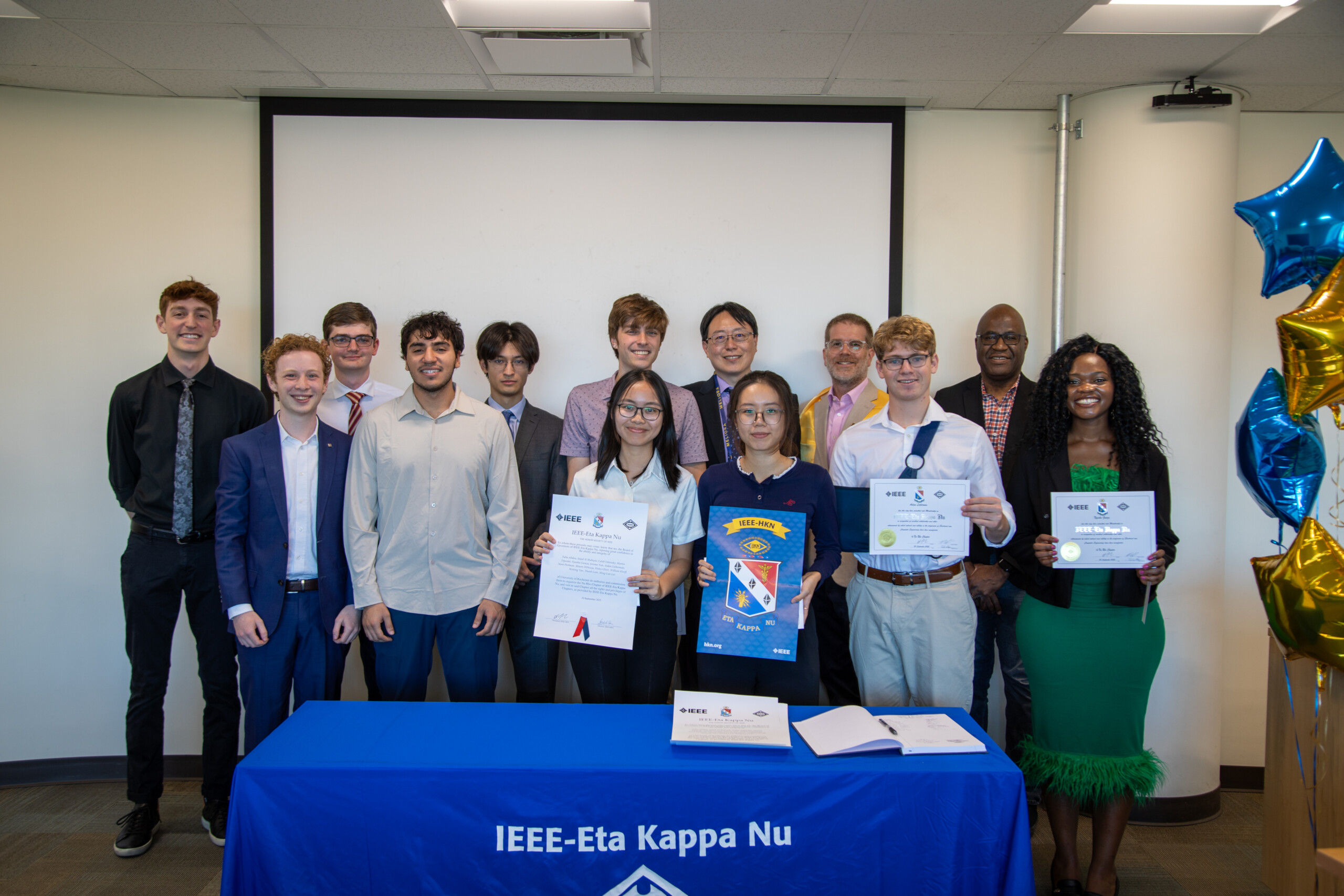
Inductees to the Nu Rho chapter during the ceremony Sept. 20.
Perlman explained that there are advantages to having such a selective application process.
“I want to keep numbers very low so that the name has a lot of weight to it,” he said. “So when we go to industry professionals requesting lab tours or networking events, they know they’ll be working with the best students possible.”
Perlman, who is also in Tau Beta Pi, said that he wants HKN to differ from other honor societies on campus by offering more events and activities. He also hopes to set up a mentoring system, which he says is non-existent in the Hajim School for Engineering.
“It would be cool to have one-on-one mentoring where we pair up upperclassmen with underclassmen from outside of the society who are in Hajim.”
While this society will be based on involvement, not all new inductees see it that way.
Junior Aidan Lieberman, who was at Saturday’s event, explained that he was interested in joining an academic society.
“I’m excited to be a part of it,” he said. “But to be perfectly honest, I do not foresee it becoming like a major part of my college experience. I’m a Computer Science major, and I feel like it is more focused towards electrical and computer engineering.”
Along with Perlman, vice president and junior Mason DiNezza has been spearheading the initiative to start the organization since the beginning.
“I’m really excited to get this up and running,” he said. “We really have a lot of different things that we can do with this honor society, a lot of different directions that we can go.”
DiNezza explained that part of the programming involved will be touring professional facilities in the Western New York area.
“For a lot of electrical engineers, when we graduate, we would go to work for these companies with full-time jobs,” he said. “It would be really nice to see how they operate beforehand.”
Despite the Meliora Weekend event being dedicated to inducting its new members, only 10 of the 13 students being honored attended the ceremony.