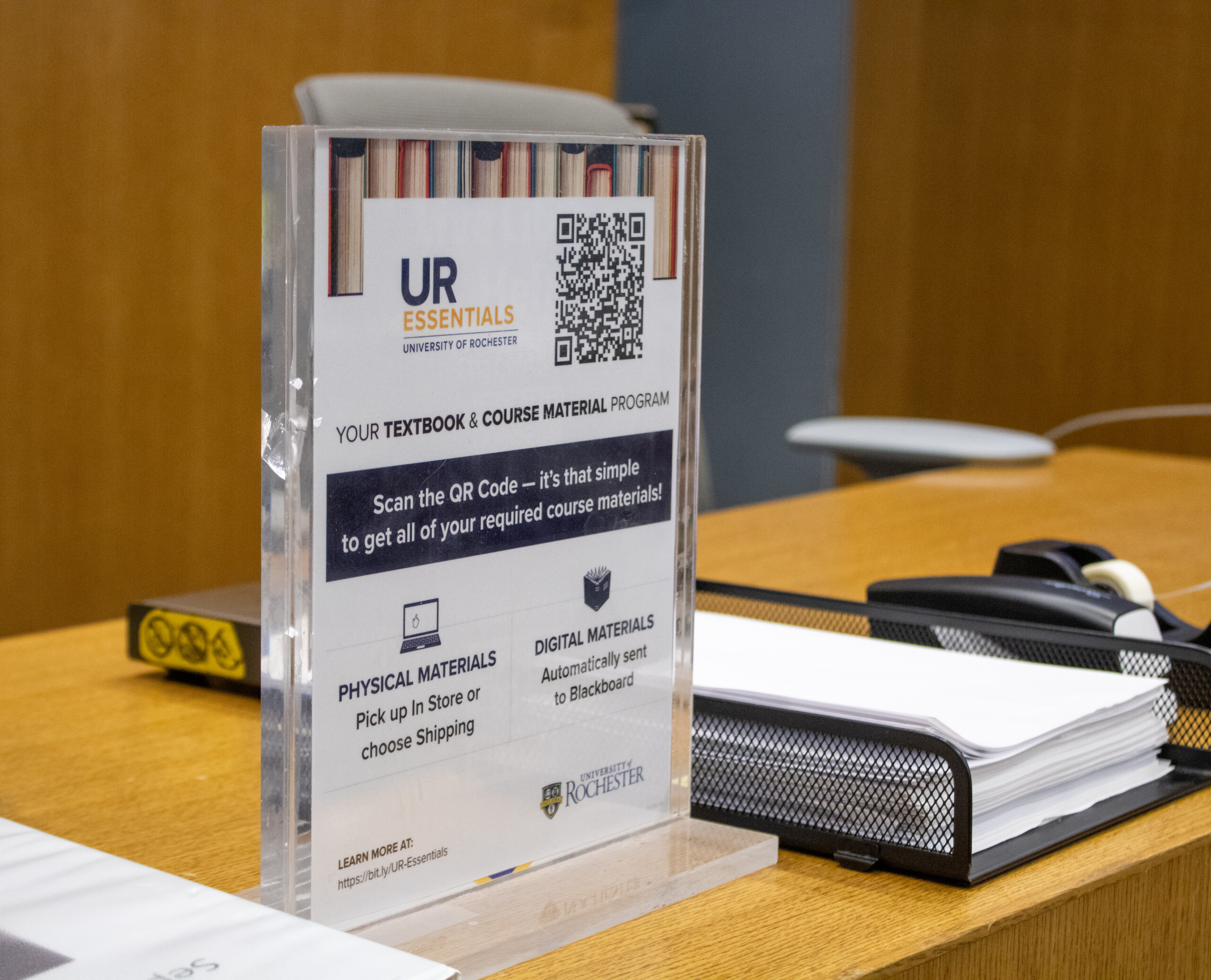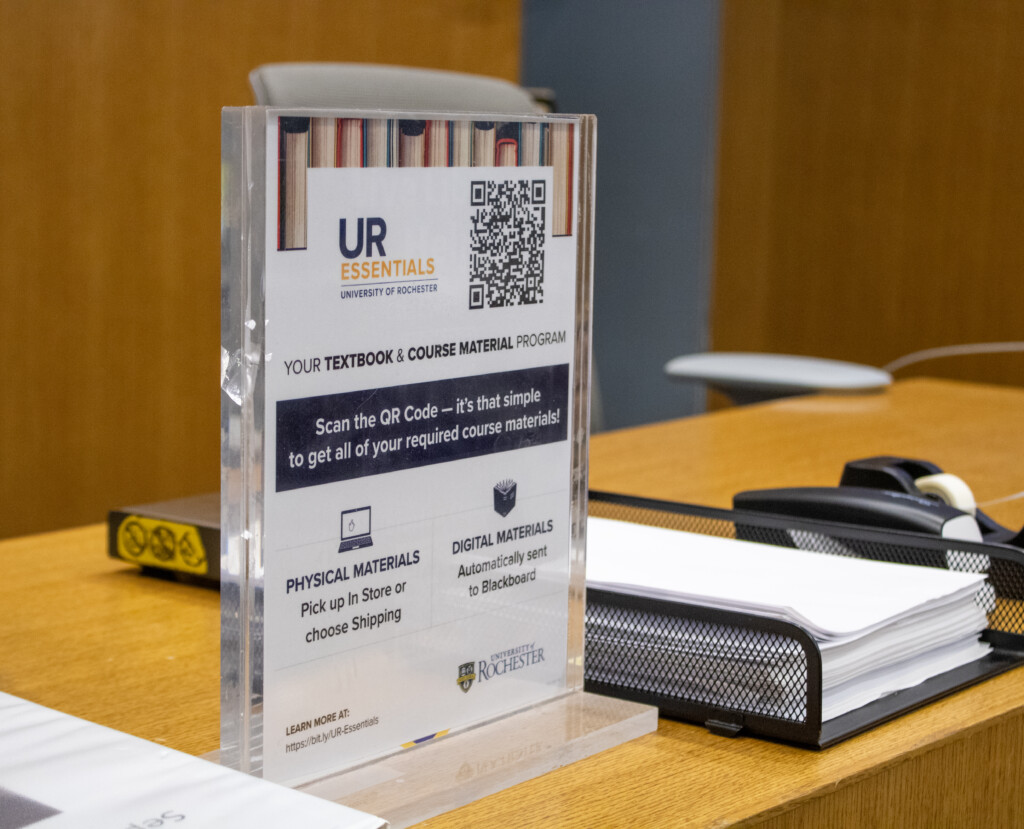
The pitch for the University’s new textbook program, UR Essentials, was simple: every full-time undergraduate would start the semester with their required books, physical or digital, with everything covered by tuition.
UR Essentials, which launched with the Fall 2025 semester, is an undergraduate-wide textbook rental program. Full-time undergraduates are automatically enrolled for fall and spring semesters, though they can choose to opt out — albeit without any cost incentive. Rather than requiring students to scramble to find the right materials and pay out of pocket, the program instead bundles the cost of required course materials into tuition and fees. Students receive either a physical or electronic version of each assigned text. Physical books are packaged for students, and digital materials are delivered through Blackboard or other online applications. At the end of the term, students may either return rented physical materials to the University bookstore or purchase them permanently at a reduced price.
However, not all course items are provided through UR Essentials. Consumables such as lab goggles, dissection kits, engineering kits, art supplies, and similar single-use materials are excluded from the program.
The University said the program was designed to remove an unnecessary barrier to academic success, to improve textbook affordability and access, and to simplify the start-of-term logistics for students and families. Implementation required coordination across departments and a partnership with the Barnes & Noble in College Town to prepare course lists and fulfill orders.
Sara Miller, Associate Vice President for Public Relations and University Spokesperson, explained that UR Essentials aims to provide students with better preparation for the semester.
“[UR Essentials] has improved students’ access to course materials by ensuring that required textbooks and digital resources are available at no added cost for the fall semester,” Miller said. “This helps eliminate delays caused by financial constraints, or confusion about what materials are needed. As a result, students are better prepared to engage in coursework, which supports academic success and equity across the student body.”
Miller acknowledged that the rollout brought “some first-time logistical challenges,” including clarifying distinctions between optional and required materials, and making sure students noticed Barnes & Noble emails.
“Faculty and staff have also provided constructive input, which we’re using to refine the process and enhance the overall experience,” she said.
So far, the pilot semester has produced clear benefits for many: students who would otherwise struggle to afford materials instead received them without added cost, and the program reduced guesswork about editions and access codes. But the rollout also exposed operational weaknesses. Not every professor submitted course-material lists in time for the start of the semester or opted to have materials routed through the program, leaving some students to purchase texts independently or wait weeks for access. In other cases, materials arrived late or were unexpectedly digital-only, requiring students to alter plans at the last moment.
Those delays and gaps produced frustration for undergraduates and bookstore staff alike during the first weeks of classes. Student leaders say communication to both faculty and students could have been clearer before launch, and they remain focused on ensuring professors finalize and submit required lists earlier so shipments arrive before classes begin.
Student experiences ranged from smooth to frustrating. Take Five Scholar Caleb Kohn-Blank said the program “definitely saved a bunch of money,” but admitted that at first he “wasn’t sure what it was referring to,” and even wondered if the emails were a scam. Once he confirmed with a professor that the emails were legitimate, the pickup process was “smooth from there,” though he initially had to rely on a digital copy of one textbook until the physical book arrived.
First-year Japanese major Kaz Onuma expressed frustration that his Japanese textbook wasn’t included and that he “had to pay extra for that shit.”
Despite these issues, the program overall was hailed as a success. Alexa Rosenbloom, chair of the Student Association’s Academic Affairs Committee, called the program “a huge win,” noting that “students can now get their textbooks for free through a rental program instead of having to pay high prices for materials they might never use again.”
The University will evaluate the program’s impact at the end of the semester, using student and faculty feedback to decide whether UR Essentials should remain optional or evolve into a permanent feature of undergraduate life. Miller said that as the system matures, clearer communication and earlier faculty submissions should help the program meet its goal: making textbooks accessible and affordable for every Yellowjacket from day one.