Bathrooms are dangerous. That is a fact. There are many things that could go incredibly wrong in a bathroom. Whether it’s drowning in a toilet, drowning in the sink, drowning in the shower, or the worst of the all: slipping when getting out of the shower and hitting your head on the opposing wall which results in a concussion, which might lead to drowning in a puddle on the floor.
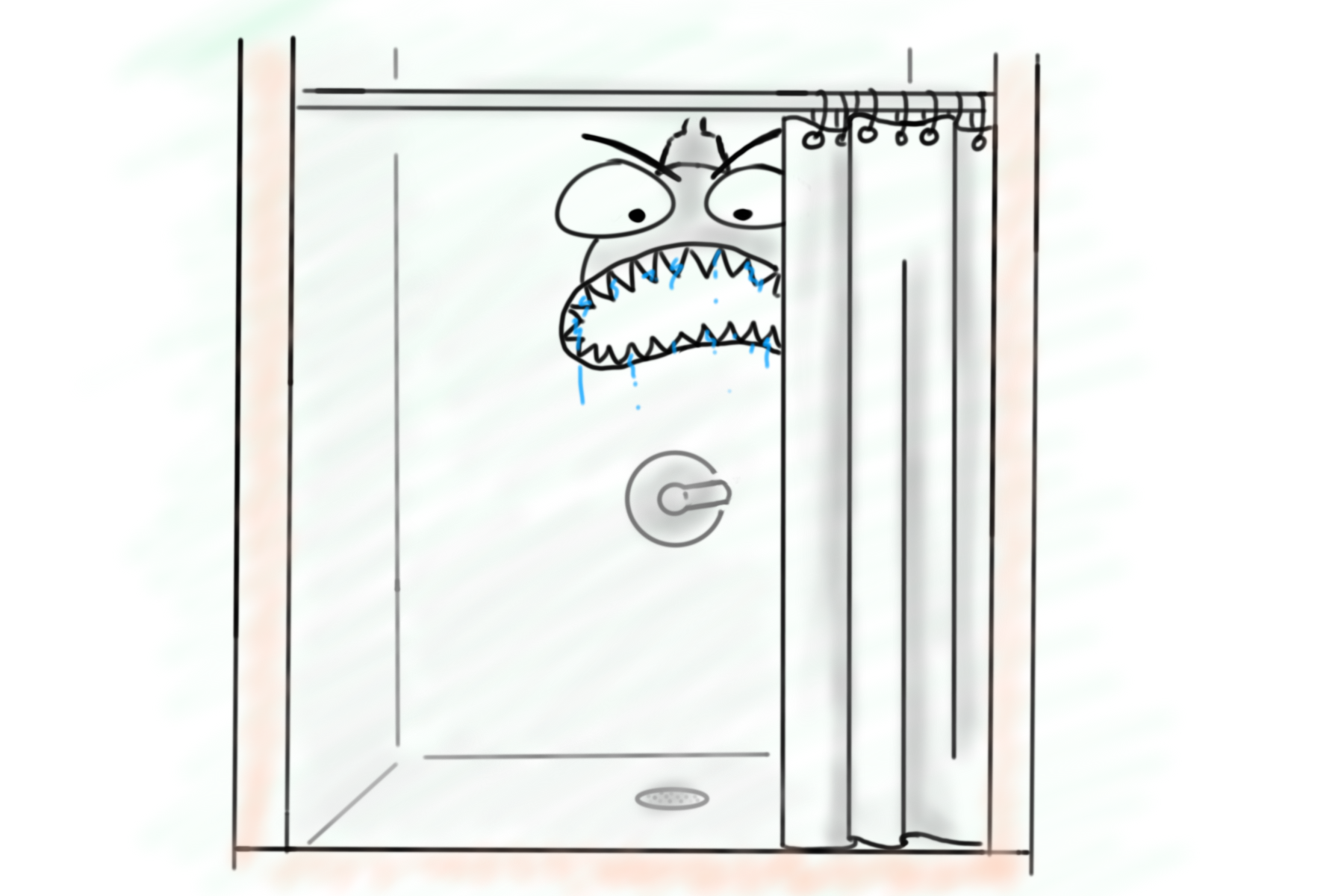
This past week, I’ve personally experienced one of these dangers. While showering one night, I was bitten by the showerhead. Yes, I have proof of it on my hands. The teeth on the showerhead dug into my hand and drew blood.
This event is not the first of its kind. Humanity has been terrorized by these little critters since the dawn of bathrooms. The earliest example of the bathroom dates back to around 3000 BCE in the Indus Valley Civilization. In these bathrooms, there were chutes leading to public sewer systems into which waste would fall. It was reported that occasionally people would fall into these chutes and never come back, and eventually it was discovered that the reason for these reports were because of an ancestor to the modern day showerhead which bio-historians have dubbed “ye olde poophole.”
It is unclear where these bathroom creatures originated from, whether it is human greed, evolution from the waste of the humans, or alien-created creatures to nerf humanity. Whatever their origin, we now have to live with them despite their daily inconvenience.
Sir James Harington, a direct descendant of John Harington (who invented the toilet), discovered that these creatures can be domesticated in order to prevent less harm within restrooms. By being able to innovate upon the design of bathrooms, he was able to leverage multimodal synergy between various bathroom creatures. For instance, the toilet consists of a combination of creatures named the poophole (which evolved from its Indus Valley counterpart), the evil valve, and the suspicious seat cover. Individually, these creatures are deadly, but together, they are docile.
Now the showerhead is particularly deadly because it consists of fewer bathroom creatures, which explains its aggressive nature towards unsuspecting showerers. This makes complete and total sense. No questions will be tolerated. It is because of this that it is deemed the apex predator of the bathroom. With its many rows of teeth and aerial advantage, the showerhead is able to sneakily hurt anyone within reach. It is especially aggressive against unsuspecting Computer Science majors — whose lack of job prosperity angers the showerhead. This aggression has led many CS majors to avoid approaching the creature altogether.
Fortunately for me, I am not a Computer Science major. Yet, the showerhead’s assumption that I might be one hurt me in the deepest depths of my soul. In this matter, I have much appreciation for the WCSA advisor, Cat Crawford, who has helped me through the traumatic experience. She has helped me remember that I’m not a Computer Science Major, and I don’t deserve to be treated like one.
Sources (very credible):
https://en.wikipedia.org/wiki/John_Harington_(writer)
https://en.wikipedia.org/wiki/Indus_Valley_Civilisation
Me, myself, and I.
We, ourselves, and us.