By: Sarah Woodams
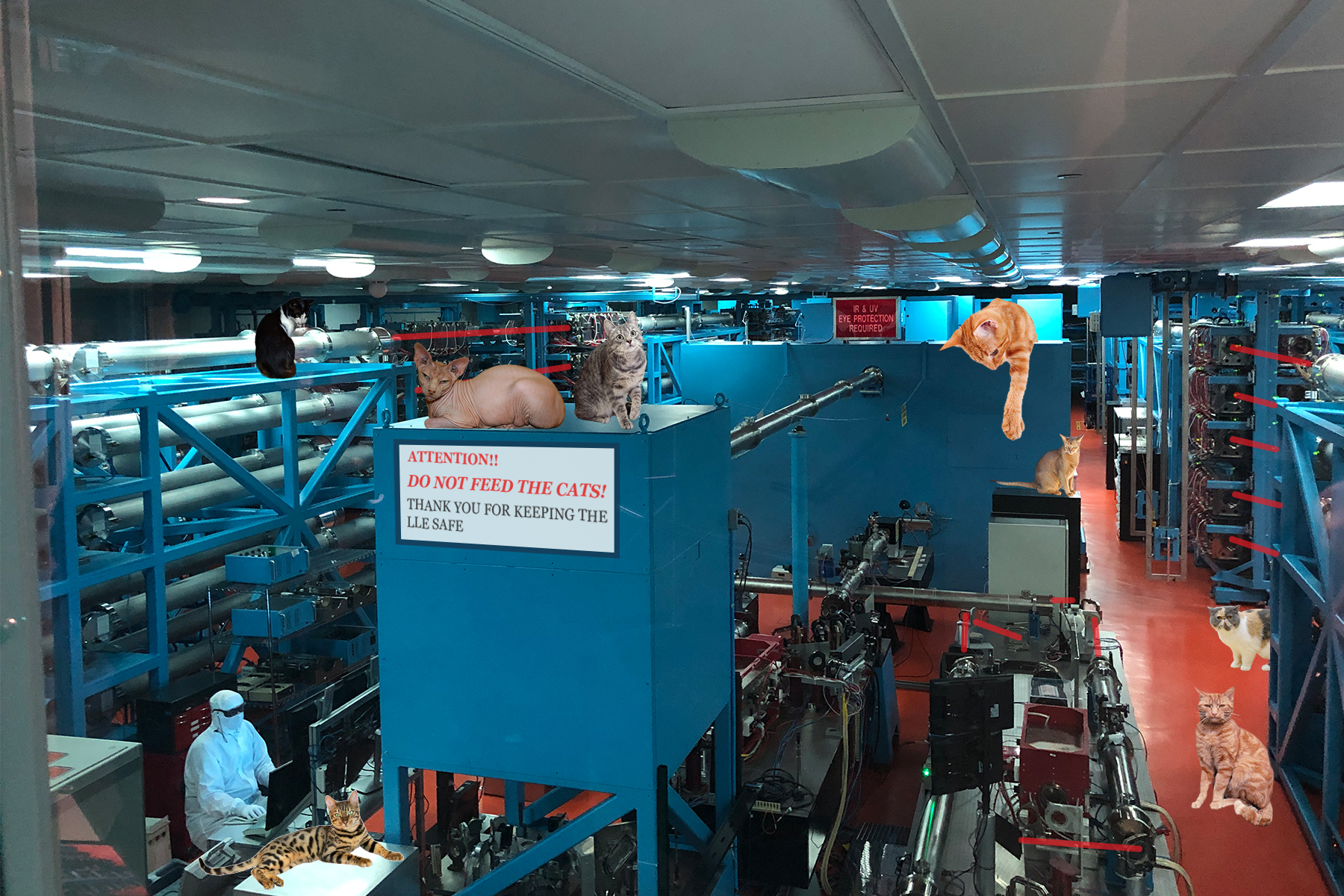
The University’s Laboratory for Laser Energetics (LLE) has partnered with Lollypop Farm to provide a fun, mentally stimulating activity for their many cats waiting for adoption — chasing the lab’s 60-beam ultraviolet frequency-tripled neodymium glass laser.
LLE is excited for this new community partnership and is looking forward to having a positive impact on the local kitten community.
“We’re all huge cat people here at LLE,” Director Chris Deeney shared. “When Lollypop reached out about a potential partnership, we were thrilled. I don’t know how we didn’t think of this before.”
The cats will be let loose in the laser rooms on the weekends, with the LLE engineers taking minimal caution to keep the cats unharmed. Overtime will not be provided to those working during the cat visits; instead, they are categorized as unpaid mental health breaks.
“Our cats had been complaining that they didn’t get enough exercise at our shelter,” VP for Organizational Development at Lollypop Farm Terry Knapp shared.
They knew it could be a stretch, but Lollypop Farm reached out to Deeney in early 2024 to broach the idea, adding several of their long-term cat residents to their video call in February to really sell it. To their surprise, Deeney was quite receptive. “Cats and lasers are a no-brainer combination,” he told the Catholic Times.
The new collaborative project will hold its pilot run this coming Saturday, April 6. The cats are looking forward to their field trip. Frederick, the longest tenured shelter cat, expressed his excitement: “Meow meow meow, meow, meow meow meow meow.”