Jewish Voice for Peace (JVP) held their first public event Jan. 21 to express their horror at the tragedies occurring in Palestine, representatives of JVP told the Campus Times.
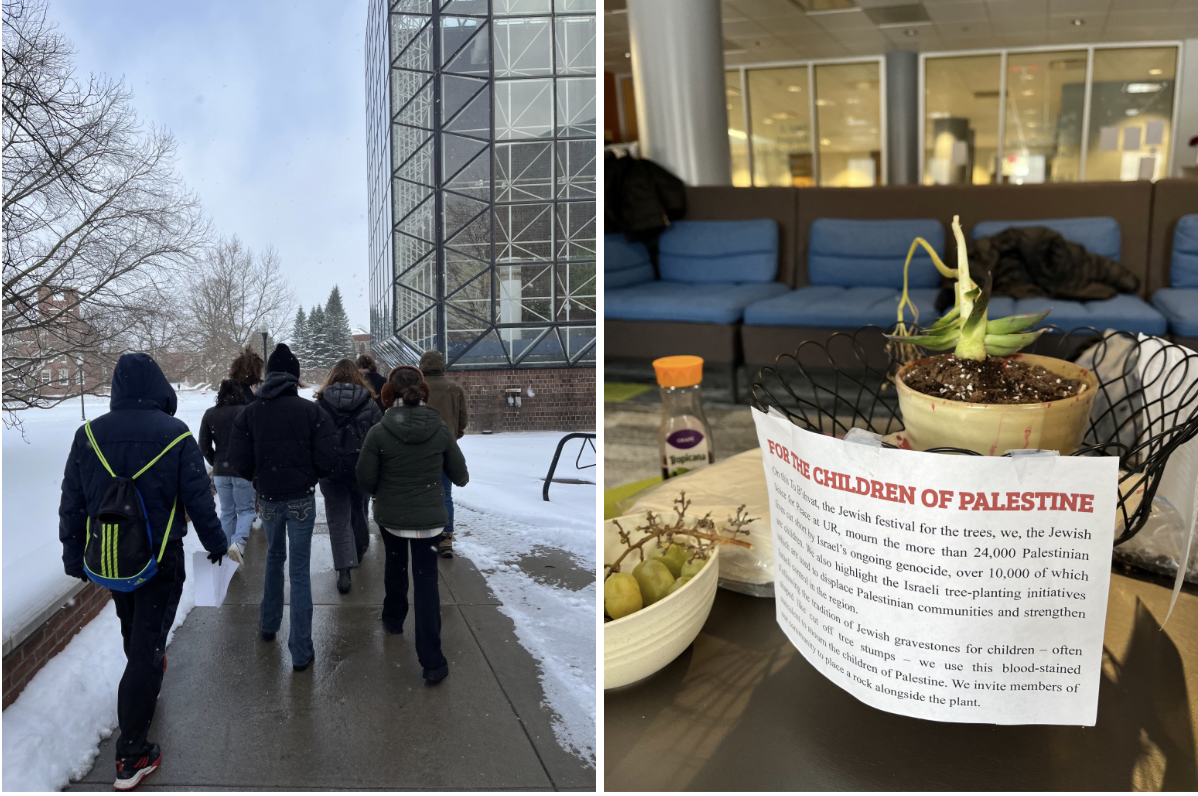
The event started with 10 students gathered on the public sidewalk near the Interfaith Chapel in order to avoid any disciplinary action by the University administration.
The administration released their newest protest policy on Nov. 17. The update reaffirmed their implementation of “time, place, and manner” restrictions and introduced a three-day notice policy for on-campus gatherings. The change came in response to a slew of pro-Palestinian demonstrations carried out since October, and it preceded an “unsanctioned” — as the University put it — demonstration on Dec. 11 that was met with a large Public Safety response and the arrest of senior Nadia Tolosa.
While waiting for everyone to arrive, the students at the JVP event stood gathered in a semicircle and sang in Hebrew.
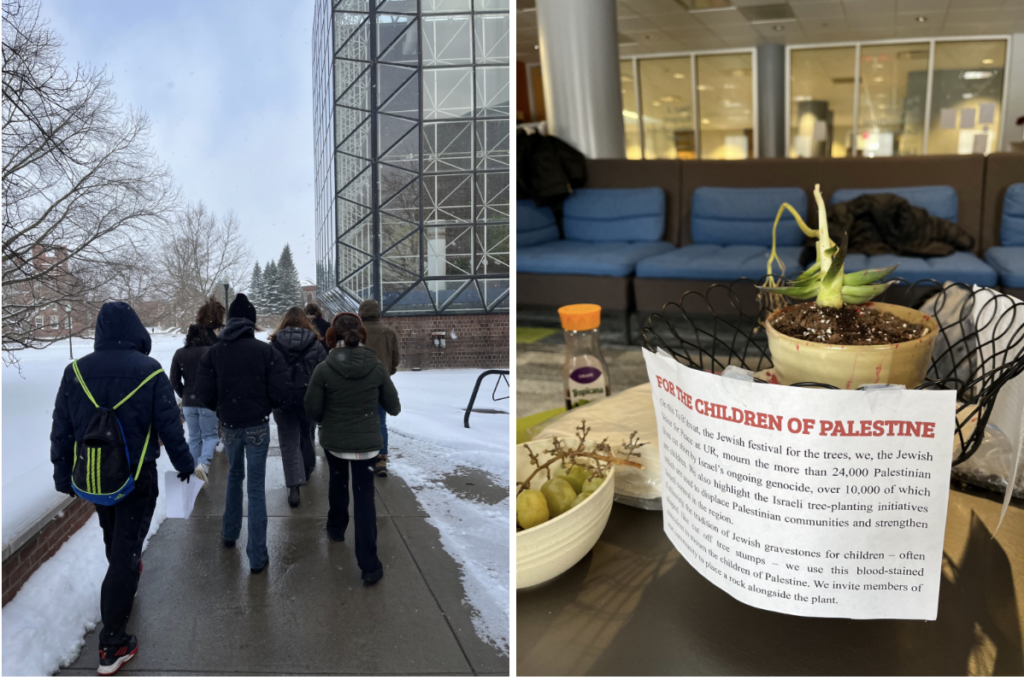
They then walked to the Intercultural Center, where they participated in a service for Tu B’shvat. They ate foods symbolic of trees and the Earth and read aloud remembrances for the people and conditions in Gaza.
Tu B’shvat, a Jewish holiday typically celebrated as a day of environmental awareness, often incorporates tree-planting ceremonies. In the spirit of the holiday, JVP hopes to “plant the seed towards a Judaism that is based on a real acknowledgement of our prides and pitfalls of [Jewish] history,” while striving towards liberation “with all people,” JVP said.
The service concluded with each attendee placing a memorial rock near a succulent to memorialize and honor the “trees of life” that have been cut short — the children who have lost their lives throughout the War in Gaza.
JVP wanted to publicly “show the Jewish community on campus that [they] are a real group of people,” united in “fighting for all people — from Rochester to Palestine — to live in freedom, justice, equality and dignity.” According to JVP’s Tu B’shvat packet, they “know that Jewish liberation can only come with the liberation of all peoples.”
JVP notes a disconnect between the “young state of Israel” and “the Jewish diaspora with our diverse, ancient, and rich histories, languages, traditions, and cultures.” JVP maintains that they are morally obliged to act in solidarity with all oppressed peoples — which is why they held Tu B’shvat in solidarity with those suffering in the Gaza Strip.
JVP leaders were pleased with how their first event went and plan to hold more, both small and large, in the future. Their shorter-term goal is to build a community where Jewish students stand for peace in Gaza. “We envision JVP at [UR] to be just as much of a community space as a political one,” representatives of JVP told CT.
In the long run, JVP hopes to prevent students from becoming desensitized to the continuous tragedies occurring in Gaza. Jewish and Palestinian safety can exist simultaneously, they said, and there is a place for a future “beyond occupation and apartheid.”
“The genocide in Palestine is still happening and the conditions in Gaza get worse every day,” representatives of JVP told the CT. “Don’t get used to seeing dead children on your screen. Don’t let the University or any other institution scare you out of speaking up. We are stronger together, and we are fighting for a future for the freedom of all people.”