Like many of us, I entered college confident in my intellectual abilities. Although I knew as a rising freshman that the University of Rochester would challenge me academically, I failed to anticipate the reality of imposter syndrome. And I certainly underestimated its unrelenting nature.
When attending the first lectures for my pre-medical requisites, conquering the material taught seemed daunting, but not insurmountable. I assumed, foolishly, that each of my 200 adolescent peers felt similarly apprehensive about their ability to succeed in STEM classes at one of the nation’s most prestigious establishments.
It was not until my first “workshop” that I realized just how incorrect my belief had been. Fall of 2021, amid droves of the gifted and talented, I was met by a jarring realization: I am merely average.
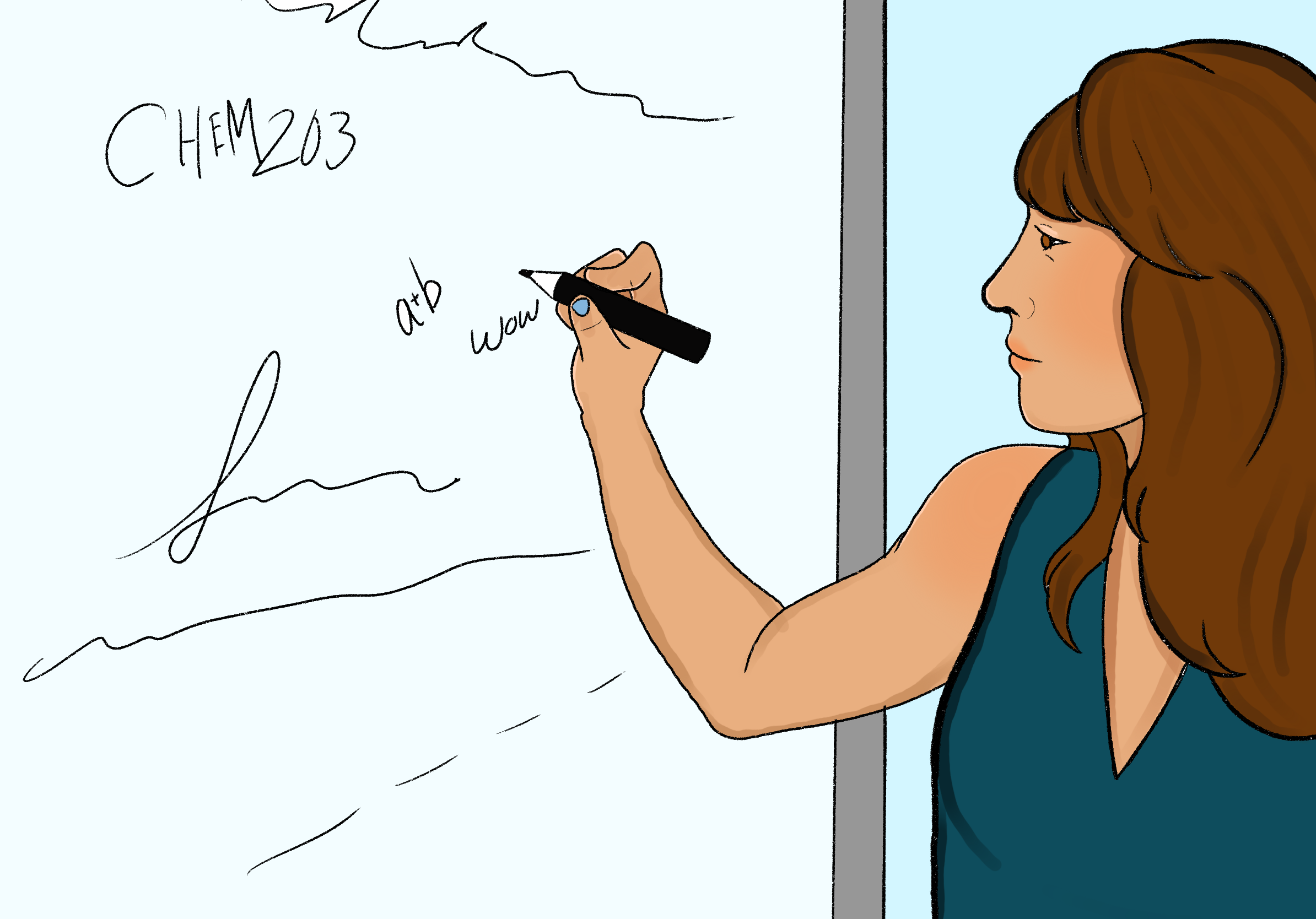
As STEM majors will tell you, four credits of a science entails more than meets the eye: in addition to weekly lectures and lab hours, small-group learning “workshops” are mandated. Pioneered at our very institution, workshops encourage students to collaboratively attempt questions of similar difficulty to those which will appear on exams. Students display their work on white boards and engage in constructive discussion with classmates. In theory, workshop is deeply beneficial.
I have experienced that, in reality, a hefty anxiety can hinder one from fully utilizing this tool.
What if I ask a question that my peers deem simplistic, or even worse, stupid? Will they laugh at me? Think poorly of me? If the answer I write on the board is wrong, would those around me not have made the same inaccuracy?
With those thoughts pervading my mind, chemistry problem sets become all the more trying. ‘Take a deep breath,’ I tell myself.
What is so easy to forget when seated alongside highly-motivated, exceptional peers, is that their opinions of my ability don’t matter in the end—nor do those of even my closest friends. The core purpose of workshop is to make mistakes and learn from them, and not everybody’s mistakes will be the same. Embarrassment and judgment have no place in workshop, because at the end of the day, each student’s education is their own, including mine.
Each of us deserves to reap every benefit possible from the scholarly experience we seek; and if that entails asking a question to which my peers already know the answer, then so be it.