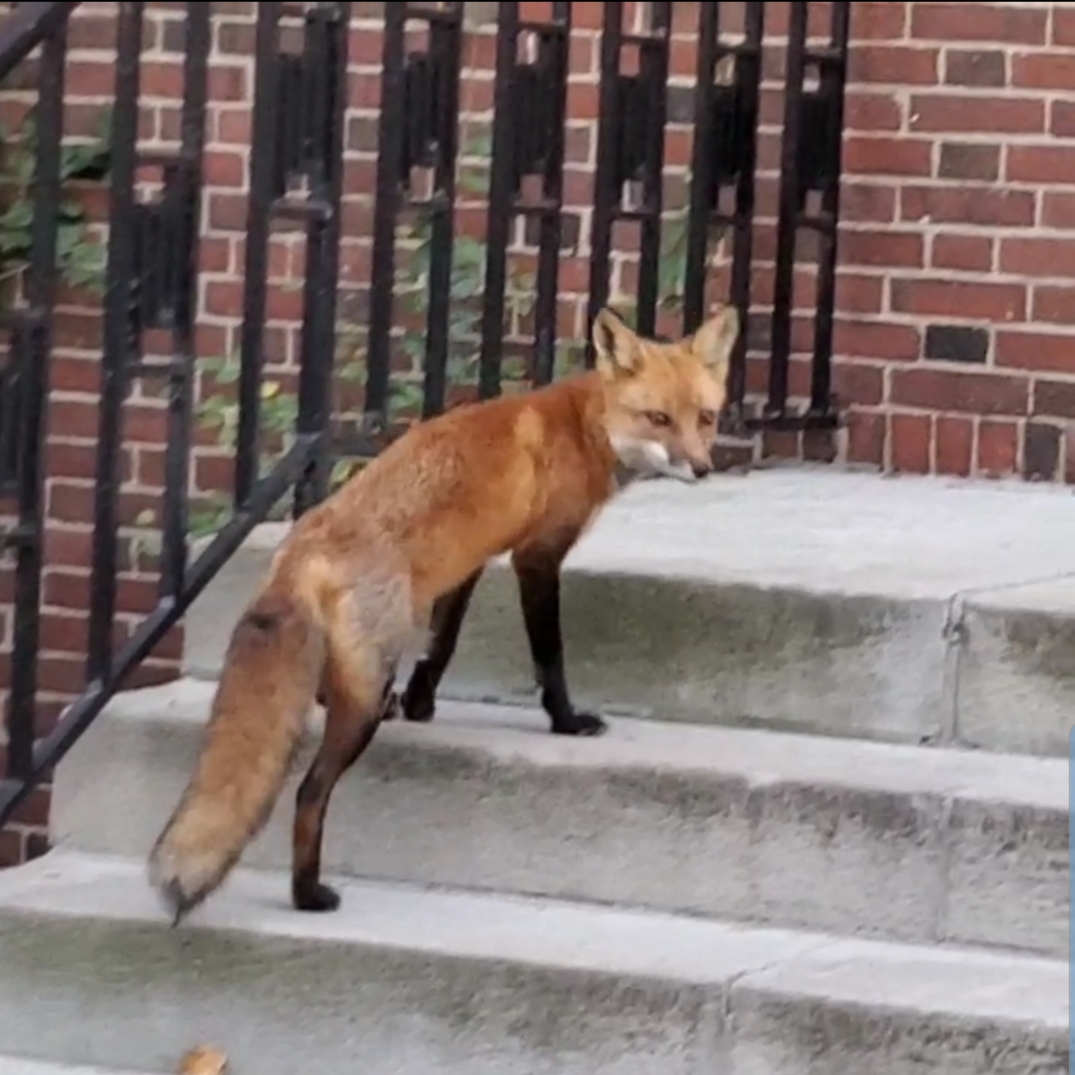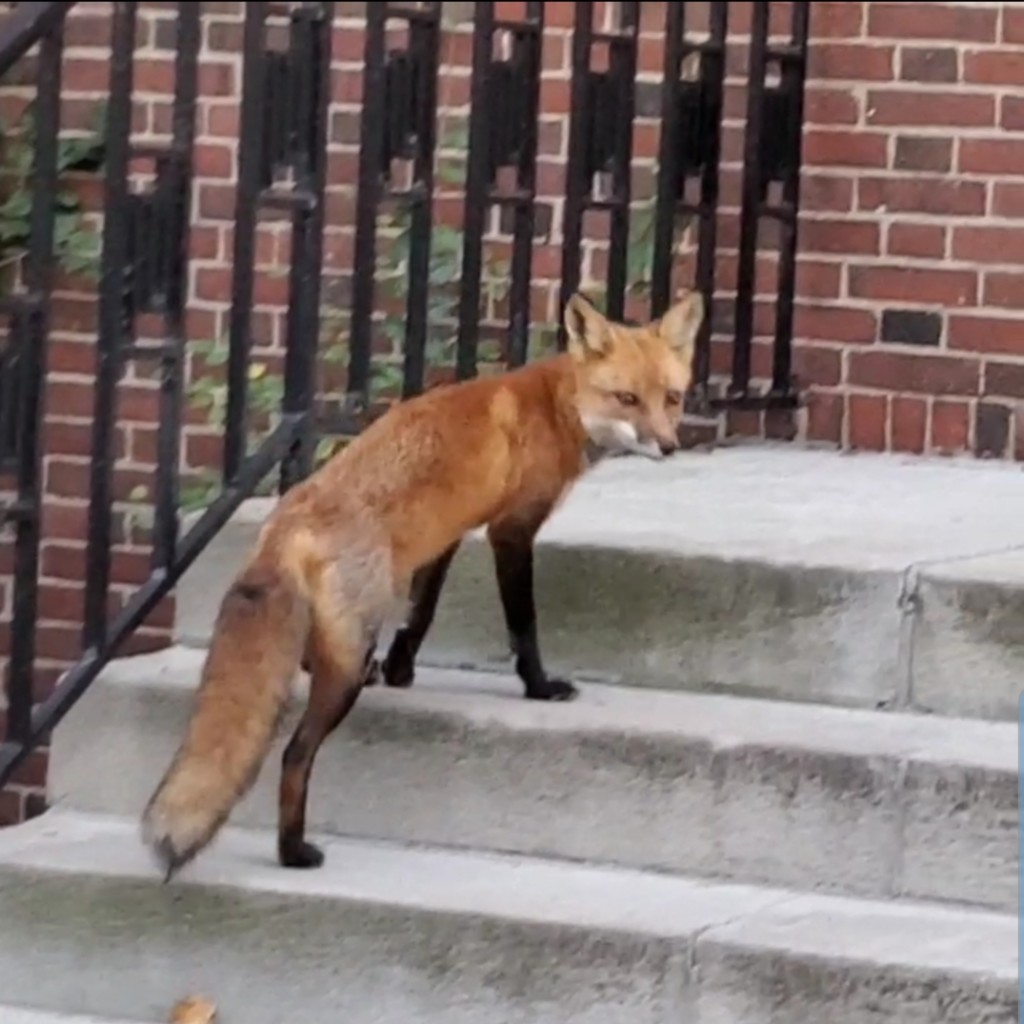
The iconic quad fox that captured UR imagination has been revealed to be not one, but two furry creatures — and both may be gone for good.
Peter Castronovo, manager and senior sanitarian of UR’s Pest Control Unit, said he first started receiving calls about a “mangy-looking” fox on campus this spring.
Students were feeding and taking pictures of the fox — a fox which, according to Castronovo, displayed symptoms of mange.
He described the characteristics of foxes with mange: friendliness toward humans, scaly skin, hairless patches, and constant hunger. All of these were present in the campus fox. Healthy foxes are nocturnal, rarely seen during the day, and tend to avoid people.
After receiving more calls, Castronovo realized there was more than one fox with mange on campus. Castronovo called the two foxes the South Campus fox and the North Campus fox. He believes that the one that lived near a parking lot of the school was the one seen on campus most frequently.
“We had traps,” Castronovo said. “We kept setting traps, we kept checking the traps. The fox itself came close to my pest control specialist and we tried to noose it, [but] we couldn’t get close enough to do that.”
In the meantime, the Office of Environmental Health & Safety (EHS) sent out communications to the entire University, alerting the community to the presence of foxes on campus that appeared to have mange. Castronovo said his goal wasn’t to catch the foxes. Rather, he aimed to protect students by keeping them away from them.
After realizing that the other option outlined by the NYS Department of Environmental Conservation (DEC) was to euthanize the foxes, Castronovo took matters into his own hands and attempted to treat the foxes.
With the help of Krittrkris, a wildlife rehabilitation organization, Castronovo planted mice and hard-boiled eggs injected with ivermectin, a “medicine that helps cure mange in all kinds of animals,” around the dens.
The frequency of fox sightings began to decrease. This was a good sign. “When a fox gets healthy, it generally doesn’t want to come around people,” said Castronovo.
The last reported fox sighting was on the Wilson Quad during Meliora Weekend in October, when Castronovo himself encountered a fox.
“There [was] a healthy-looking fox walking right towards me,” he said. “It wasn’t acting strange, it wasn’t acting aggressive. It was walking like it was a student.”
Since then, Castronovo said, he hasn’t received any calls or been notified of any fox sightings or sightings of any other new wildlife on campus.
“We spent tremendous amounts of manpower, time, and effort to address this situation, and I think we did it appropriately,” he said. “I think we have a happy ending here.”