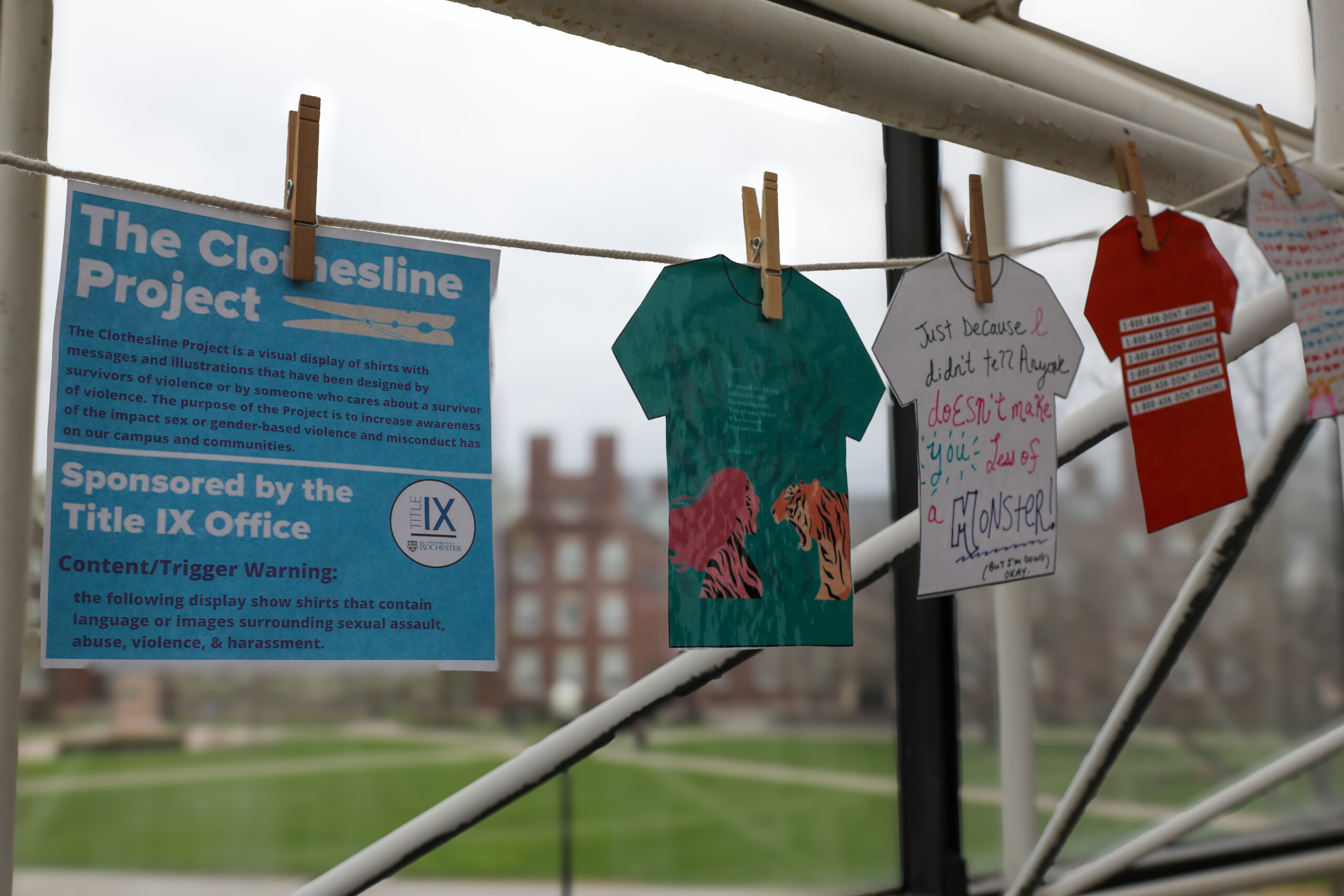
People passing through Wilson Commons may have seen the laminated paper chain of little t-shirts strung along the walls of Hirst Lounge over the last two weeks. Those shirts represent the Title IX Office’s iteration of the Clothesline Project.
The Clothesline Project was started in 1990 when founder Carol Chichetto hung a clothesline with 31 shirts designed by survivors of domestic abuse, rape, and childhood sexual assault across the village green in Hyannis, Massachusetts.
UR “has participated in the Clothesline Project since the early 2000s,” organizer and Associate Director for Sexual Misconduct Prevention Education and Response, T Street, told the Campus Times. “Our University is just one of many that host this event annually in April, during Sexual Assault Awareness Month (SAAM).”
Starting in March, the Title IX Office tabled every two weeks in Wilson Commons, providing paper t-shirts and markers for anyone who wanted to add to the collection.
UR’s Title IX Office gave out paper shirts instead of real ones as they did in past years, which enabled them to keep the exhibit up for longer. They also encouraged all UR community members to make shirts — not just women. There were several shirts espousing non-female victims.
Like the national project, the office does not censor any of the shirts regardless of content — all were displayed to “uphold our community members’ lived experiences and create solidarity and momentum to end sexual and relationship violence and abuse,” Street said.
In order to make the project happen every year, the Title IX Office collaborates with a variety of different groups whose goals are centered around sexual violence awareness. This year they collaborated with RESTORE Sexual Assault Services — a confidential resource available on campus through Planned Parenthood they’ve worked with in the past — to make the project happen.
The office “welcomes partnerships with any group that has like-minded goals on any event to raise awareness about and end sexual and relationship violence,” Street said.