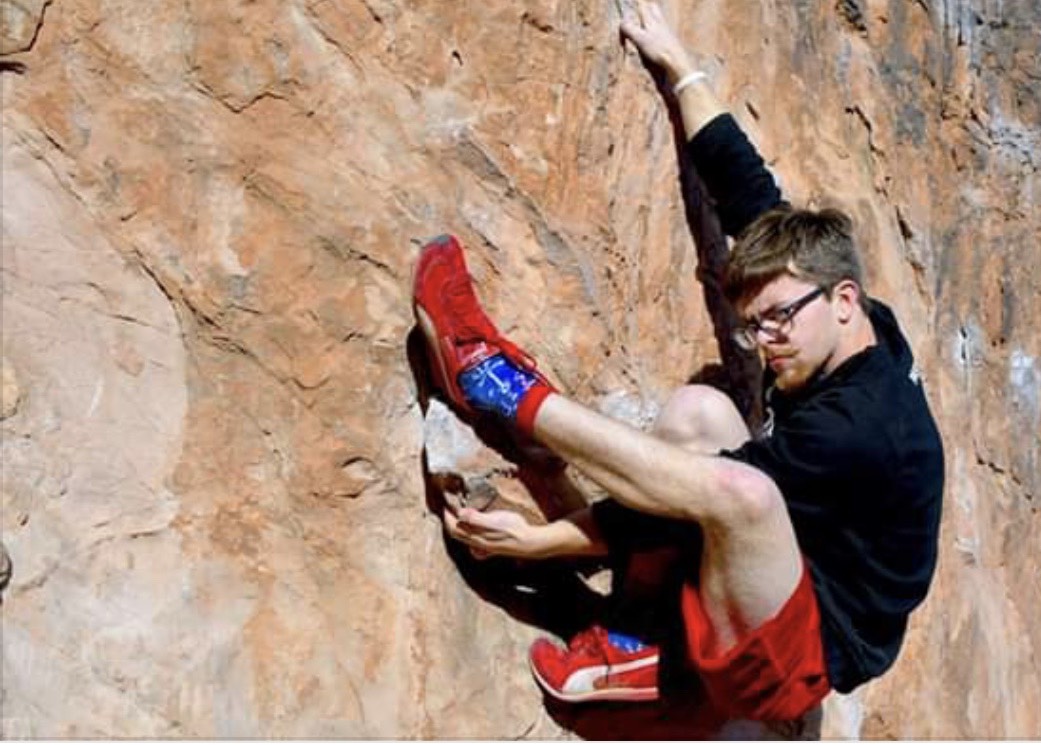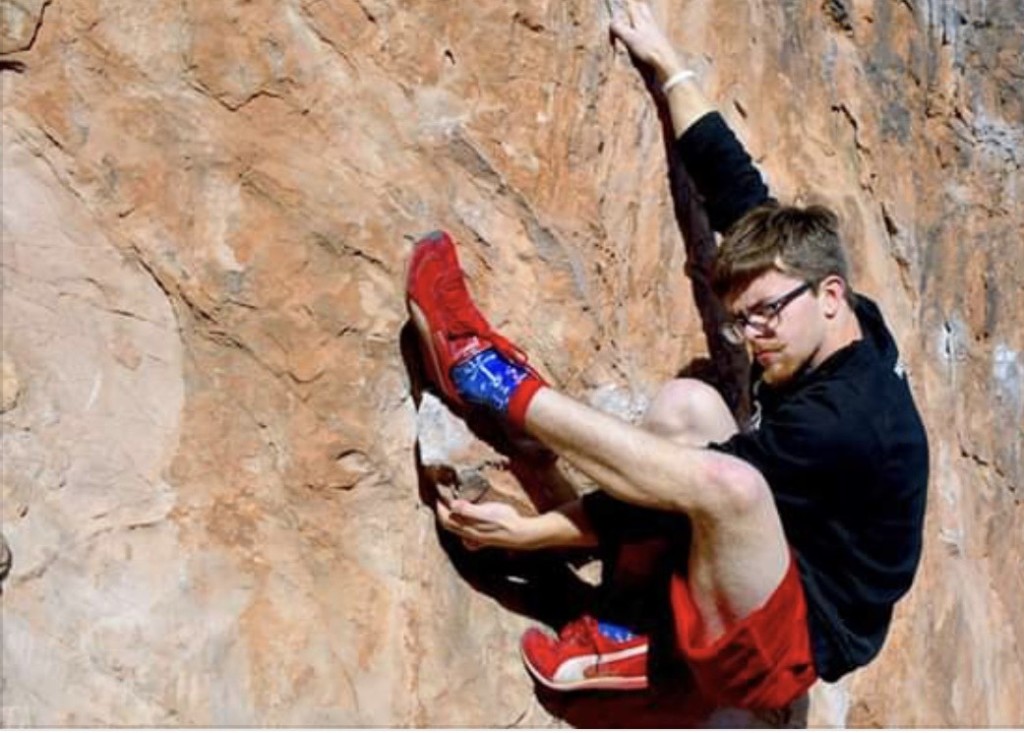
William Schlageter spent much of his childhood preparing for the competition of a lifetime: “American Ninja Warrior.”
Hailing from a small town in Lancaster, PA, Schlageter occupies many roles at UR. People may know him as just the “guy with the kendama,” a Japanese ball-and-cup toy that is “his trademark.” But he is also a Take Five Scholar in Astronomy with a triple major in Chemistry (BA), Biology (BA), and Environmental Science (BS). He’s also the Vice President of Beta Theta Pi, the Competition Chair for the University Rock Climbing Club, and might soon be an adjunct professor of rock climbing at RIT.
Now, he has just been chosen to compete in the 11th season of “American Ninja Warrior,” a popular NBC show where competitors try to finish obstacle courses of increasing difficulty.
These commitments mean he has a busy schedule. Waking up at 7:00 a.m., he goes to train at the Ninja Warrior gym in Henrietta until 10, before going to classes. He completes his schoolwork between classes and then heads to teach at the parkour gym or rock climb. “I try to get some form of athletic activity every day,” Schlageter said.
At age 13, he sent a submission video to “American Ninja Warrior” in order to put himself “on their radar.” Due to his age, he was denied entry, but the show’s producers invited him to Miami (where the show is filmed) to meet his “Ninja Warrior” idols. This opportunity inspired him to keep training.
Schlageter built a ninja course in his backyard when he was 14 in order to prepare. “I would set myself really difficult challenges — things I could not do. And I would go out in my backyard — rain, snow, no matter what — and keep grinding it out.” He adds, “It’s just a matter of repeatedly failing — trying to figure out what went wrong that time and making adjustments. I know that I can do it because it’s doable.”
Schlageter, now 21, is “ready to get into it.”
For Schlageter, preparation is key. He often finds himself in intense training sessions, where he manages both physical strain and time pressure. “A big thing is the ‘curved wall,’” he said. “I’ll set a timer for fifteen minutes, then I’ll go up the wall as much as I can in that time with minimum breaks and maximum effort. This is usually my warm up.”
When asked about the biggest challenge he faces, he discussed his anxiety.
“It’s me getting in my own head — me being up there, cameras to my right, audience to my left — and just knowing there’s pressure on. If I can focus on the obstacles, which I know I can do, then I think I’m set,” he said.
After college, he hopes to win the $500,000 from “American Ninja Warrior” and move to Colorado or Montana. There, he wants to open a rock-climbing gym where he can train and teach others.
“Being outside makes me really happy. I just feel really connected with nature; it’s beautiful out there,” he said.
For now, Schlageter continues to challenge and push himself to accomplish more. “I believe if you’re gonna do something, you should A: care about it and B: do a damn good job at it.”