How do we identify ourselves? What constitutes being Asian-American?
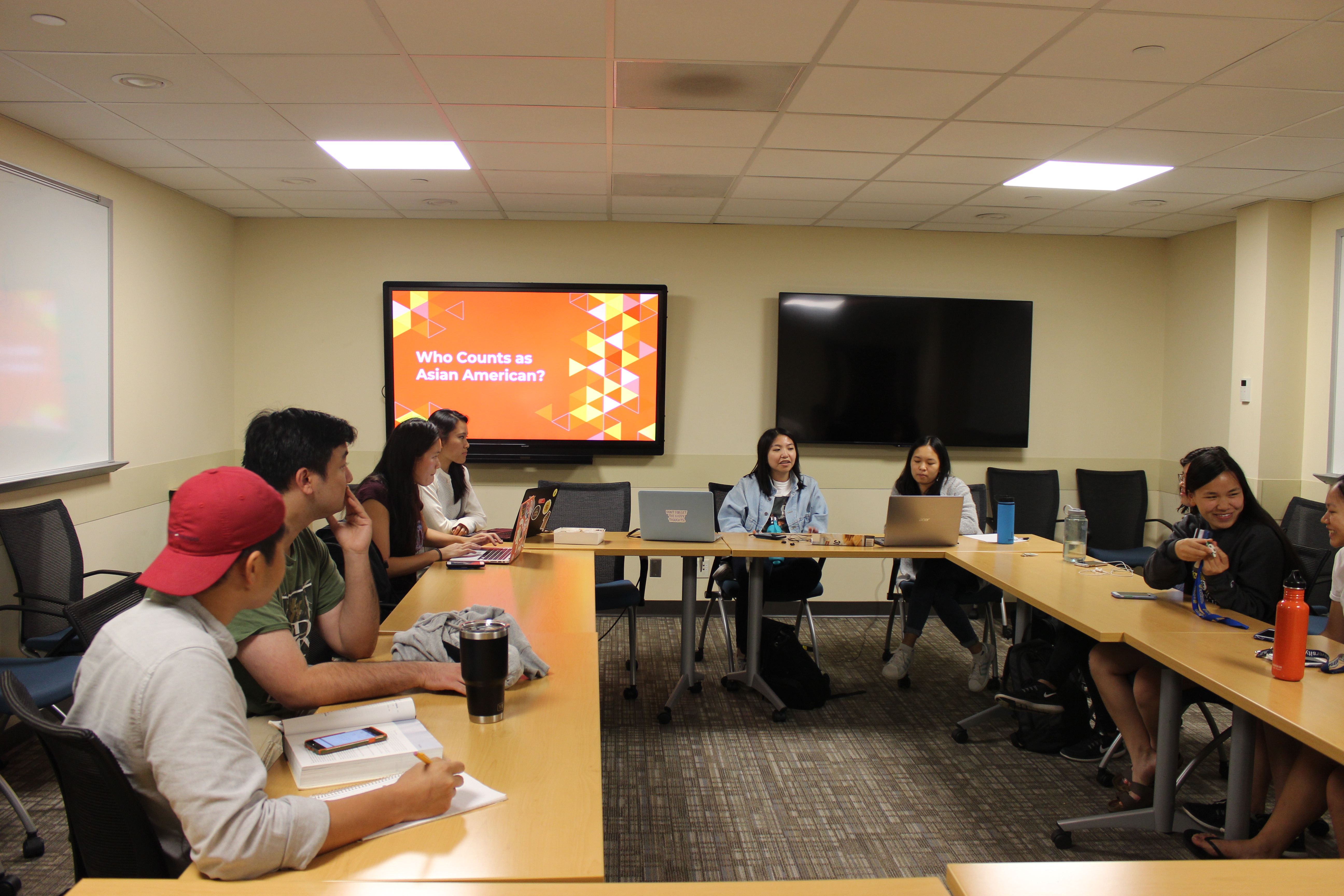
These were among the questions raised in a discussion hosted by Asian-American Alliance on Sept. 19 in Wilson Commons.
“Bananas, coconuts, Twinkies — these terms refer to Asian-Americans who became somewhat integrated into the American culture and cultural identities of their parents,” senior and Alliance eboard member Emily Zhu said. “It’s like you’re yellow or brown at the outside, and white at the inside. This is how people perceive us. But we want to prove otherwise.”
Students dove into topics such as language, interracial individuals, and cultural upbringing.
The most stimulating topic of the evening was the question of an individual’s mother tongue.
Most attendees did not speak their mother tongue fluently. Many attendees’ parents were immigrants and they were among their family’s second, third, or even fourth generation living in the US.
Attendees raised questions like: What constitutes a mother tongue? Why it is important to know it? Who is responsible for passing it on?
Some attendees regretted having not known their mother tongue and said that language is an indispensable part of their culture.
“I don’t know my language because when my parents were teaching it to me, my teacher told them that it would be harder for me to learn English, and they just stopped talking in it to me,” sophomore Minhtam Tran, whose mother tongue is Vietnamese, said.
Nevertheless, she said that it’s her responsibility to learn her native language, and she hopes to go abroad and study Vietnamese in her near future.
“I think language is important because it is a big part of who you are,” Tran said. “I would like to see my parents happy because I am able to communicate with them in their native language.”
Attendees also discussed the topic of cultural upbringing as something that stands apart from the language in showing someone’s cultural identity.
To show how some Asian Americans become isolated from their cultural backgrounds, hosts posted a quote on the screen from an anonymous Asian American: “People were too busy or preoccupied. Sometimes, I got a statement [that said] to be honest, I forgot it was a New Year.”
“If you don’t partake in these cultural activities, celebrate New Year’s, practice their religions, does that make you less Asian American?” senior Catherine Waye asked.
To Waye, being Asian-American was a completely different cultural experience, apart from both Asian and American, respectively.
“I remember my mom would imitate lunar New Year for me,” Waye said. “She would have us make paper dragons out of cereal boxes. Even though this experience might not necessarily refer to “Asianness” of me I am still proud of [the] experience.”
The questions raised at the meeting had no single right answer, but attendees looked at their “Asian” identities from a different angle. After all, what does being “Asian enough” or “American enough” even mean?