Courtesy of Hannah Bazarian - Photo Editor
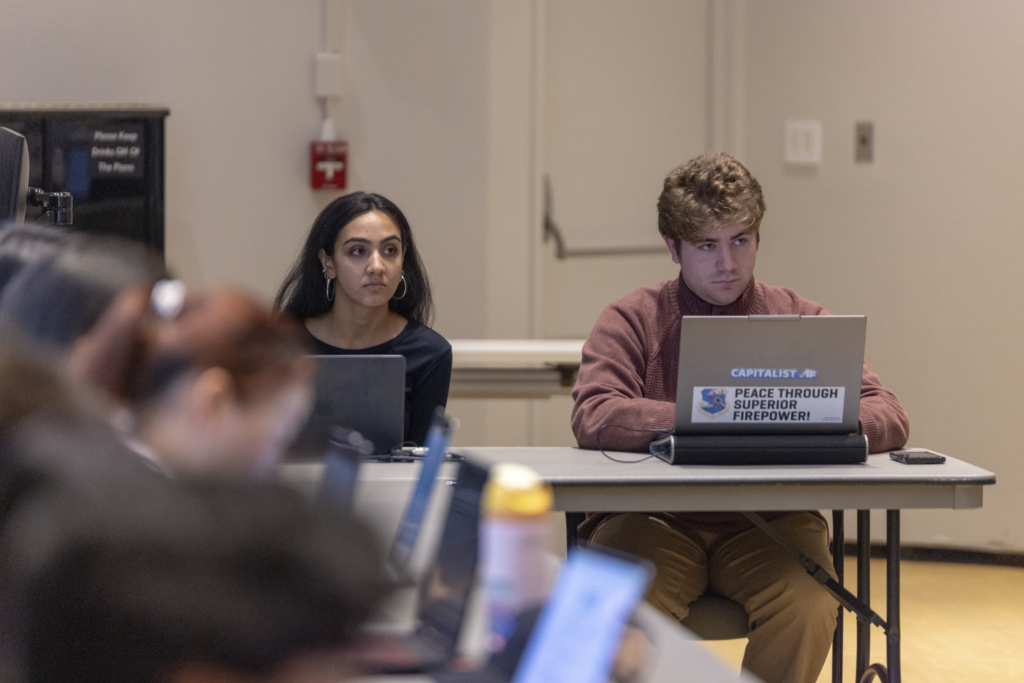
UR flaunts its reputation as having one of the top engineering programs in the country. However, with knowledgeable professors and plenty of research conducted in the labs, it’s difficult to see why only two out of 30 chemical engineering graduates went on to get jobs last year.
The problem isn’t that the curriculum is too easy, but that it’s lacking something vital that engineering businesses are looking for: They are looking for people with hands on experience, something the University does not teach students. This is due to several factors.
Engineering students are not prepared for the industry, but rather are groomed for success in research. Though that’s not entirely a bad thing, not every person is the same. Research and theory are very attractive to those who are researchers or scientists, but are very dull to those who are more mechanically inclined and want to develop their skills in creating something that relates to the theory.
UR also loves to celebrate the fact that all of its professors are full time researchers. That’s wonderful — if you want to only get one facet of a subject.
Engineering professors are immensely intelligent in a particular field of study and can talk to you until they’re blue in the face about their research. But when it comes to imparting knowledge into a classroom, they cast their nets wide — catching only a small percentage of the class that can conceptualize from pure math and theory. The rest of the class that needs visual stimulation or mechanical examples to understand what they are learning is left behind in the dark.
To take one example, the chemical engineering department has been trying to insert more labs into its curriculum in order to give students a more hands-on role in the subject matter they are learning. With a junior lab, senior design and additional labs being inserted into already existing classes, the chemical engineering department is taking steps to address both sides of the academic aisle.
But this is not enough. In order for UR to get more students into the workplace, it’s going to need an academic revitalization. While we campaign for $1.2 billion, we should be campaigning for new equipment, more lab space and workshop areas to give students a free place to work.
We should work to emphasize not only teaching students how to be great researchers but to also be great inventors. Once UR marries innovation and research, then its students will be strong assets to not only the University but also to the socioeconomic construct we live in.
Minahan is a member of the class of 2012.