For several years now, the Students for Social Justice have advocated that UR join either the Fair Labor Association or the Worker Rights Consortium. These groups investigate manufacturers and provide reports to affiliated colleges and universities about working conditions at the specific plants where their goods are manufactured. We strongly urge the university to join one of these organizations or a similar information-gathering organization. In the intellectually open environment of a university, the availability of information to students is a core need. This is especially true when concerning the university’s own policies and actions. This is why the university should take steps to make information available on the working conditions in factories where our school apparel is produced. Notably, the university is not required to stake out a political position on any issue related to the manufacturing by affiliating with these groups. The FLA and the WRC allow universities to make their own independent decisions based on their own standards – the groups provide universities with the information and universities choose what to do from there. The code of conduct used to gauge the legitimacy of factory practices in currently affiliated universities is decided on an individual basis by each university. Indeed, by joining one of these organizations, the university simply facilitates the flow of information to students, who can then make choices as informed individuals.Making the information available can do nothing harmful. It will not hurt a manufacturer that is complying with local laws and international standards. On the other hand, it is only fair to students who wish to purchase university apparel without supporting labor practices they may find objectionable to obtain a complete picture.The most it would do would be to inform students of any violations, allowing them to individually decide whether to buy university apparel in full knowledge of the practices their money is supporting. We are not asking the university to take further steps, but simply to make the information available. Make the information available to students before they decide whether or not to purchase university apparel. Students have the right to be informed consumers.

Laser Lab
Informing UR
The LLE received $13.7 million to enter the final design phase for the U.S. National Science Foundation Optical Parametric Amplifier Line (NSF OPAL), to make it an even more powerful academic laser facility. Read More
Field Hockey
Informing UR
The URochester Yellowjackets played the Tufts University Jumbos Sept. 26, in a game of field hockey dedicated to Morgan Rodgers, a former lacrosse player from Duke University who passed in 2019 from suicide. The URochester field hockey chapter of Morgan’s Message was there to eliminate the stigma around mental health and asking for help when needed. The Morgan’s Message game is always the last home game in September, to round out Suicide Prevention Month. Read More
Informing UR
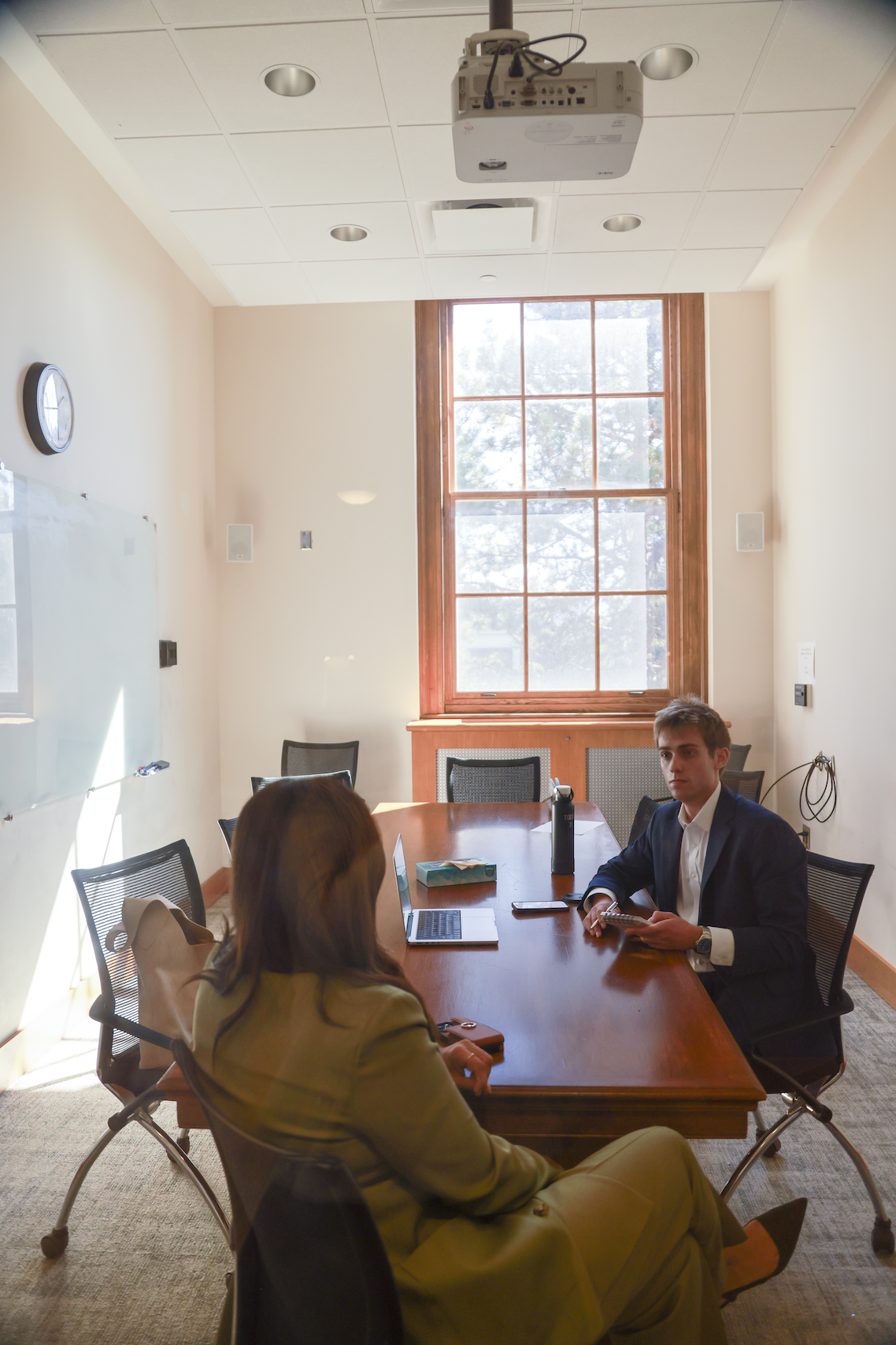
Many people predict the imminent death of journalism, but Nawaz believes that the field will instead evolve with changing times. “Literally every year in my career, someone's talking about the death of journalism,” she said. “And yet, there is more journalism and more news and information content making its way out to people on this planet than at any other time in our history of humankind.” Read More