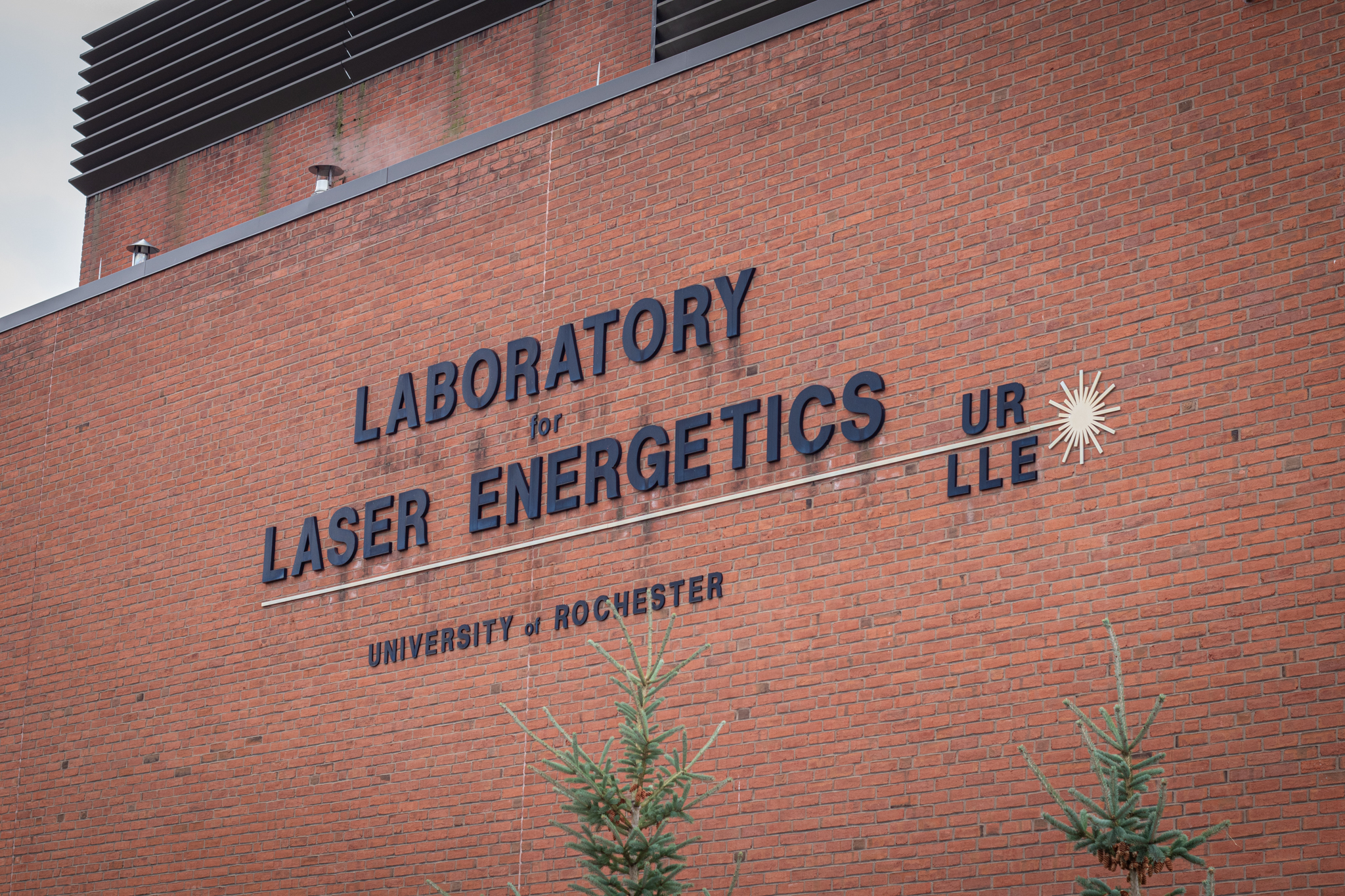
The University of Rochester is home to more than a world-renowned music school and premier programs in optics and research. Just a short drive away from River Campus is the world’s largest academic laser. That’s right, the Laboratory for Laser Energetics (LLE) here at URochester is home to the OMEGA Laser System. This year, the LLE received a record $111 million in funding, the largest annual funding in its history. This funding will allow the lab to significantly modernize its operations and extend its lifespan, ensuring it remains operational and reliable into the 2040s. Additionally, the LLE received $13.7 million to enter the final design phase for the U.S. National Science Foundation Optical Parametric Amplifier Line (NSF OPAL), to make it an even more powerful academic laser facility.
Sophomore Sonia Eddolls, who is currently conducting research on upcoming experiments planned for the NSF OPAL laser facility, shared that a notable feature of the laser is its size.
“The OMEGA laser system at the LLE is the size of a football field,” she said. This size allows the laser to contain the 60 beams it directs toward a tiny target to create the extreme conditions needed for experiments.
Eddolls is currently working on validating a model for stimulated photon-photon scattering. Understanding how photons interact with one another could help scientists investigate fundamental questions about light and quantum electrodynamics, expanding our understanding of how light behaves under extreme conditions.
However, the LLE’s importance extends beyond the experiments themselves. “The LLE is an academic facility, which distinguishes it from national labs,” Eddolls explained. Unlike facilities where research is primarily conducted by established scientists, the LLE provides students with opportunities to participate directly in large-scale scientific research. She compared URochester’s OMEGA system to the National Ignition Facility (NIF) at Lawrence Livermore: “The NIF fires its laser once a day, but at the LLE, we fire the laser an average of 10 shots a day.” She noted that this greater rate of shots gives students more experimental opportunities. “Students have way more opportunities to use the laser, which is so unique.” For undergraduate and graduate students, this means contributing to experiments that attract researchers from across the world, while gaining experience with a technology unavailable at most universities.
The proposed NSF OPAL facility will further expand these opportunities. With a more powerful laser system, researchers can conduct new experiments and investigate questions that current facilities cannot fully address. For students like Eddolls, this means the chance to contribute to research still being developed, even before the facility is completed.