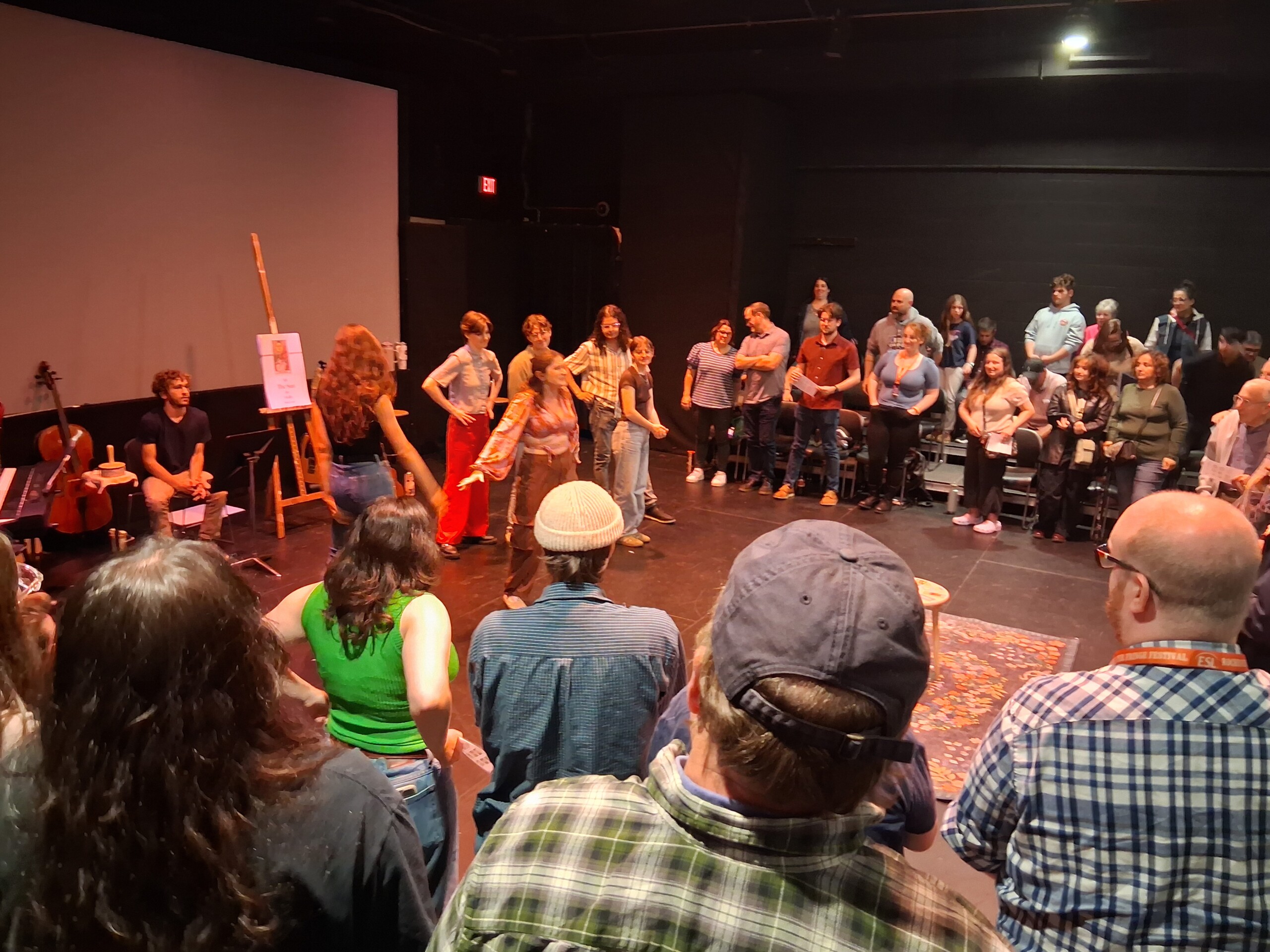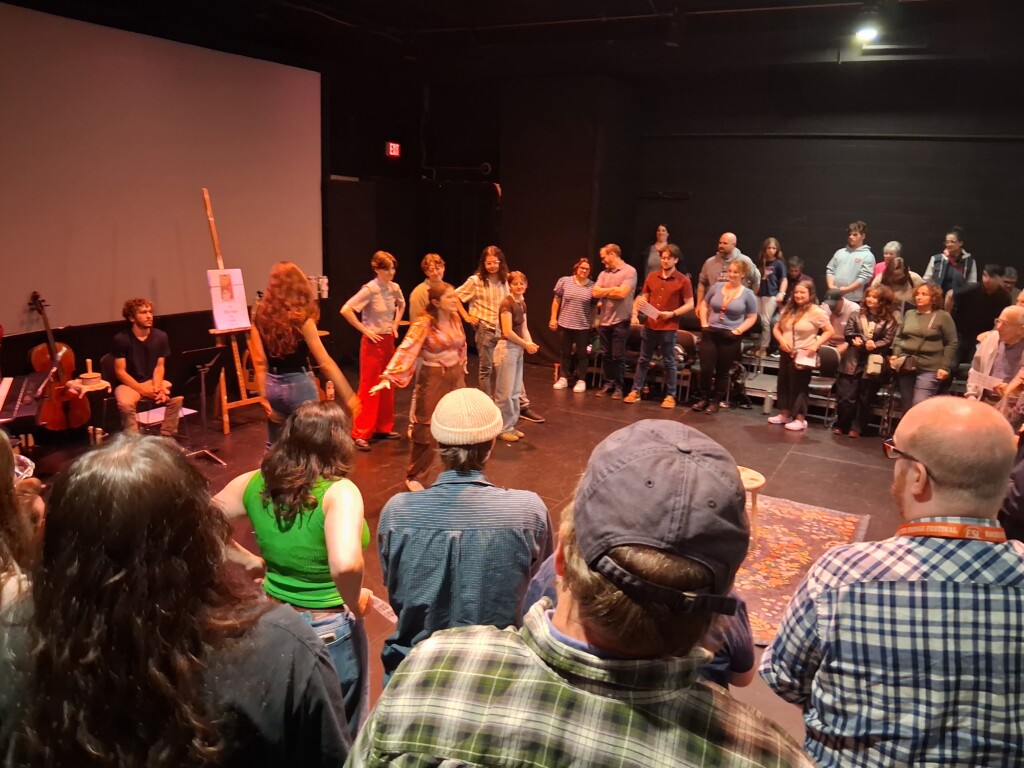
This Fringe Fest had many wonderful events, but my favorite was “Tarot Cabaret” performed by the Sunday Stages Theater Group. For “Tarot Cabaret” the audience pulls 11 cards out of a tarot deck, and the group performs a song that is related to each card, leading to a completely random performance each night.
“Tarot Cabaret” was performed three times this Fringe Fest, on Aug. 17, 18, and 25. I went to the final one, and I honestly wish I had gone to the earlier performances as well. The performance took place in the Black Box Theater in the School of the Arts, which is right downtown next to the Memorial Art Gallery. The room was small, with three sides filled with bleachers, and the fourth back wall being where the actors and musicians were mingling. There were two main musicians, brothers Joseph and Michael Janover, though both also sang on occasion. The main cast was made up of Michaela Buckley, Ian Canníoto, Charlie Cowan, Jocelyn Coburn, Reece Gurell, Kayta Janover, and Tiffany Thompson.
When we entered the room, we were given the opportunity to write our intentions, thoughts, or questions for the cards on little slips of paper, and then put them into a communal bowl. Once we all found our seats, Buckley mixed the bowl thoroughly and asked five audience members to pull a slip of paper and read it. These were our “questions” for the Tarot deck.
For those who don’t know, Tarot cards are an intention-based divinatory tool. Some believe that they are magical in and of themselves, but for those more skeptical, there is a sort of science behind them. Tarot cards work by the user asking a question — usually an open-ended question — and then pulling one or more cards, each with their own meanings and connotations, that “answer” the question. Through these open-ended questions and open-ended answers, the user makes their own connections through their subconscious. The questions selected were as follows: “Why does loss happen at random?” “Seeking balance,” “How can I feel like a force of creative energy again?” “I intend to be in the moment and soak in Fringe,” and “Any thought provoking albums you’ve listened to lately?” These questions and intentions set the tone for the show, and for how the cast interacted with the audience, as well as how the audience interpreted the cards.
Buckley then asked the 11 people who were given blank cards as they entered the room to mark that they were participants to come to the middle of the room and form a circle around a small table, which had the Major Arcana — otherwise known as the “named” cards, such as “The Fool” — of the Tarot deck spread out upon it. One by one, they traded in their blank cards and grabbed one of the 21 face down cards on the table. The extra cards were cleared, then, participants placed their card in any of the 11 marked spots on the table. This was the determination of the set list. Each card had an associated song, and their placement on the table determined which order they were sung in.
- “The Emperor.” This was the first card played, and so the first song. This card is described as the “Divine masculine” and a healthy masculine figure. It can mean strength or action, or fatherliness. The song for this card was “Falling Slowly” by Once, sung by Katya Janover and her husband Joseph Janover as a duet while he played guitar. It was a sweet song, very slow and high, and being able to see Joseph Janover’s face, an example of healthy masculine love, while they sang made it so much more impactful for “The Emperor.”
- “The Hermit.” This card is very emotionally reflective. It pushes self reflection and awareness, and inward contemplation. Buckley, Katya Janover, Coburn, and Thompson sang a quartet for this card, to the song “To the Mountains” by Lizzy McAlpine. The number started as a duet between Buckley and Thompson across the circle table, and then a duet between Janover and Cobern across the other way, and then a quartet to end it as they all walked in a circle around the table. This song is all about going up into the mountains (as the title implies) and taking time to think and reflect, all on your own, which is truly what “The Hermit” symbolizes.
- “Judgement.” Though this card sounds foreboding, truly what it symbolizes is looking back after an era; it is reaching the end of something and reflecting on it. Gurell sang a solo for this card, a section of the song “How It Ends” by Big Fish. Their voice was so smooth and clear for this solo, it was fantastic, and really pulled me into the longing and the reflection of the song.
- “The Empress.” The other half of “The Emperor,” this card is the “Divine feminine,” or the healthy feminine figure. It leans more towards the nurturing and the caring aspects of life. The song for this card was “Grow” from “The Great British Bake Off Musical,” and despite what “The Great British Bake Off” brings to mind, this song almost made me cry. Coburn sang it as a solo, and the emotion they poured into the lyrics truly made me tear up. “Grow” is about a woman who learns to bake from her Italian grandmother, and yearns to be, but struggles to become, a mother as she grows up.
- “The High Priestess.” Magic, mysticism, and faith are the main core parts of this card, and the associated song was “The Song of Purple Summer” from the musical “Spring Awakening.” The entire cast sang. This I felt, though technically impressive, with all of the overlapping harmonies, was one of their weaker numbers. There was no clear way this song symbolized the card, or the intentions we presented at the beginning of the show. The execution was definitely there, but the context was a little weaker. It sounded gorgeous though.
- “Temperance.” This card is about balance and self-fulfillment, and the song they chose for it was “For Good” from “Wicked.” Canníoto and Thompson sang this song as a duet, and it was very playful and chill. It had more banter than the other songs did, but it began the lead up to the more high energy songs.
- “The Magician.” While “The Hermit” focuses more on inward reflection, “The Magician” is about outward reflection and action. It is about being the change you want to see in the world, and making things happen. The song for this card was “Louder Than Words” from “Tick, Tick… Boom!” The song was very much a call to action, to fight oppression and cages, and to do good in the world, not just for you, but for all.
- “The Wheel of Fortune.” When this card was revealed, all the cast laughed, and we found out why when we reached this card in the performance. “The Wheel of Fortune” is about luck, karma, and fate. It is about dealing with what it dealt to you as you get it, and fittingly, the song chosen here was “We Didn’t Start the Fire” by Billy Joel. This song was the most high energy, and focused more on audience participation than vocal techniques. As a consequence it was a little weaker in the singing aspect, but the dancing vastly made up for it. The whole cast was jumping about, and near the end of the song they invited the audience on stage to participate in a conga line and to jump around with them. We were also invited to sing. This high energy song came at exactly the right time in the set, as it hyped the audience back up, and helped everyone keep up the energy until the end.
- “The Devil.” A lot of people have preconceived ideas about this card, but in Tarot, it just means transformation and recognition of the things that aren’t helping you anymore. The song for this card was “When the Chips Are Down” from “Hadestown.” It very much channeled the recognition aspect of the card: realizing when you are at your lowest and how you must transform and change to get out of that situation. Katya Janover, Canníoto, and Coburn sang this song, and did a fun little dance number with it.
- “The Moon.” This card, similar to “The Empress” is more feminine. It deals also with dreams, shadows, and wonder. Thompson sang a solo for this card, with the song “Wondering” from “The Bridges of Madison County.” It was a very reflective song, and a little slower too, but it didn’t feel too out of place as the second-to-last song.
- “The Sun.” I believe this card was possibly the best we could have had for the last song. “The Sun” as opposed to “The Moon” is a very positive card. It is hopeful, it is energetic, and it is abundance and optimism all wrapped in one. The song chosen for this card was “The Ladies Who Lunch” from “Company.” Canníoto sang this song as a solo and put so much energy and passion into it. It was a little more interactive, and very punchy. The last lines of the section of song they sang, were “Everybody rise,” with full gestures to the audience on all sides. It was a fantastic way to end the show, as we were all already standing and could then applaud all of the cast, musicians, and crew.
“Tarot Cabaret” was an overall fantastic show, and one I would gladly attend again, especially because the order and experience would change. The Sunday Stages Theater Group’s production quality is very high, and I have no complaints about any of the voices in the group, or the choreography. All were wonderful and high quality and most importantly, very fun.