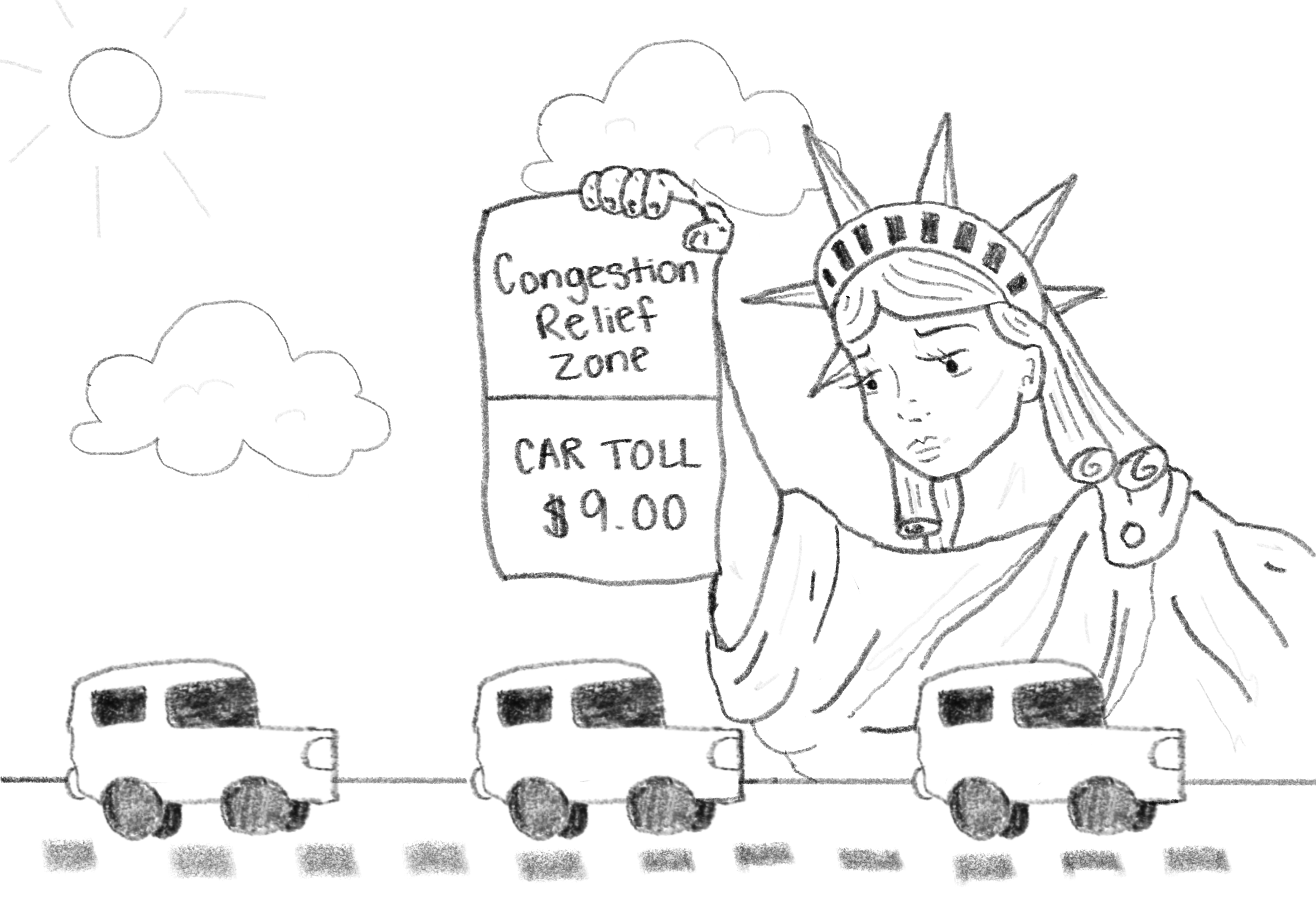
New York City finally implemented its much-debated congestion pricing program at the beginning of 2025, and began tolling vehicle entries into Manhattan below 60th Street. Newspapers like the New York Post ran story after story about the despicable cash grab being forced on NYC’s unfortunate, exploited drivers by the corrupt and bloated Metropolitan Transportation Authority (MTA). Melodramatic quotes, like “neighborhoods closest to the 60th Street tolling zone are expected to be upended with nightmarish gridlock,” abounded, but the numbers are in after a full year of tolls and they paint a much different picture.
Congestion pricing aimed to mitigate four major problems: air pollution, noise pollution, traffic, and poor transit service. On each of these metrics, it has unambiguously succeeded.
Air pollution was perhaps the smallest win. Despite concerns that peripheral neighborhoods would see air pollution increase from traffic diverted by the toll, MTA measurements showed no increase in pollutant levels outside the congestion zone, with a noticeable drop in pollution inside the congestion zone. The core of Manhattan, famous for its non-stop car noise, is now also significantly quieter. Vehicle noise complaints to the city’s hotline have dropped by 17% in the congestion zone.
Traffic mitigation, the main goal of the congestion relief program, has been an inarguable and impressive success. The major bridge and tunnel crossings into the tolled area of Manhattan saw an astounding 23% average decrease in rush hour travel time, ranging from 6.7% on the Manhattan Bridge all the way to 51% in the Holland Tunnel. In 2025, 11% fewer vehicles entered the congestion zone directly because of the toll, contributing to faster commutes, faster deliveries, and record low pedestrian and cyclist fatalities. These benefits weren’t limited to Manhattan — major roadways entirely outside the congestion zone still saw significant congestion declines. Reduced traffic significantly sped up buses (after multiple years of decreasing average speeds), which helped accommodate the 8-9% increase in transit ridership into the congestion zone. All of these wins caused a significant improvement in quality of life across the entire city.
But at least the Post’s vitriolic op-eds could still be right about the decrease in business profits in the congestion zone, right? After all, customers are paying $9 more to drive into Manhattan, and the delivery trucks that stores get merchandise from are also tolled. In fact, because pedestrian traffic and transit ridership increased so significantly and the entire congestion zone became safer and more pleasant, total sales tax revenue collected from businesses in the zone increased by 6.3%. The last argument from toll-critics is that the MTA is a pit that absorbs taxpayer money and delivers no results. But while the MTA’s construction prices are famously ridiculous, simply underfunding vital transportation infrastructure is not the answer. By increasing transit ridership and improving transit service, congestion pricing creates a larger constituency of voters invested in the success of the MTA and thus greater motivation for the MTA to fix its issues. In the meantime, the approximately $550,000,000 generated by the program in 2025 alone are already contributing to critical maintenance and construction, including station accessibility, state-of-good-repair projects, new vehicles, and improved signals — all of which, long-term, will make the MTA cheaper to run.
It should be clear by now that congestion pricing has been a great success for the city. It has achieved results that would typically require hundreds of millions of dollars and take funding away from other critical projects, all the while generating hundreds of millions in funding for the city’s other transportation needs. It’s well-past time local governments across America take New York as an example, and look into their own potential congestion tolls. It is a now proven answer to improving quality of life and tackling car-dependency and traffic fatalities.