You are staring down a blank page. 5,000 words to go. You are well aware that your computer can write this thing for you. To use AI or not to use AI? That is the question.
ChatGPT garnered 100 million users only two months after its launch, quickly surpassing TikTok which did not reach this figure until nine months post-launch. The rapid development of ChatGPT and other AI tools has led many people to question their impacts on academic life — one example being this UR press release weighing the potential consequences of AI on academia.
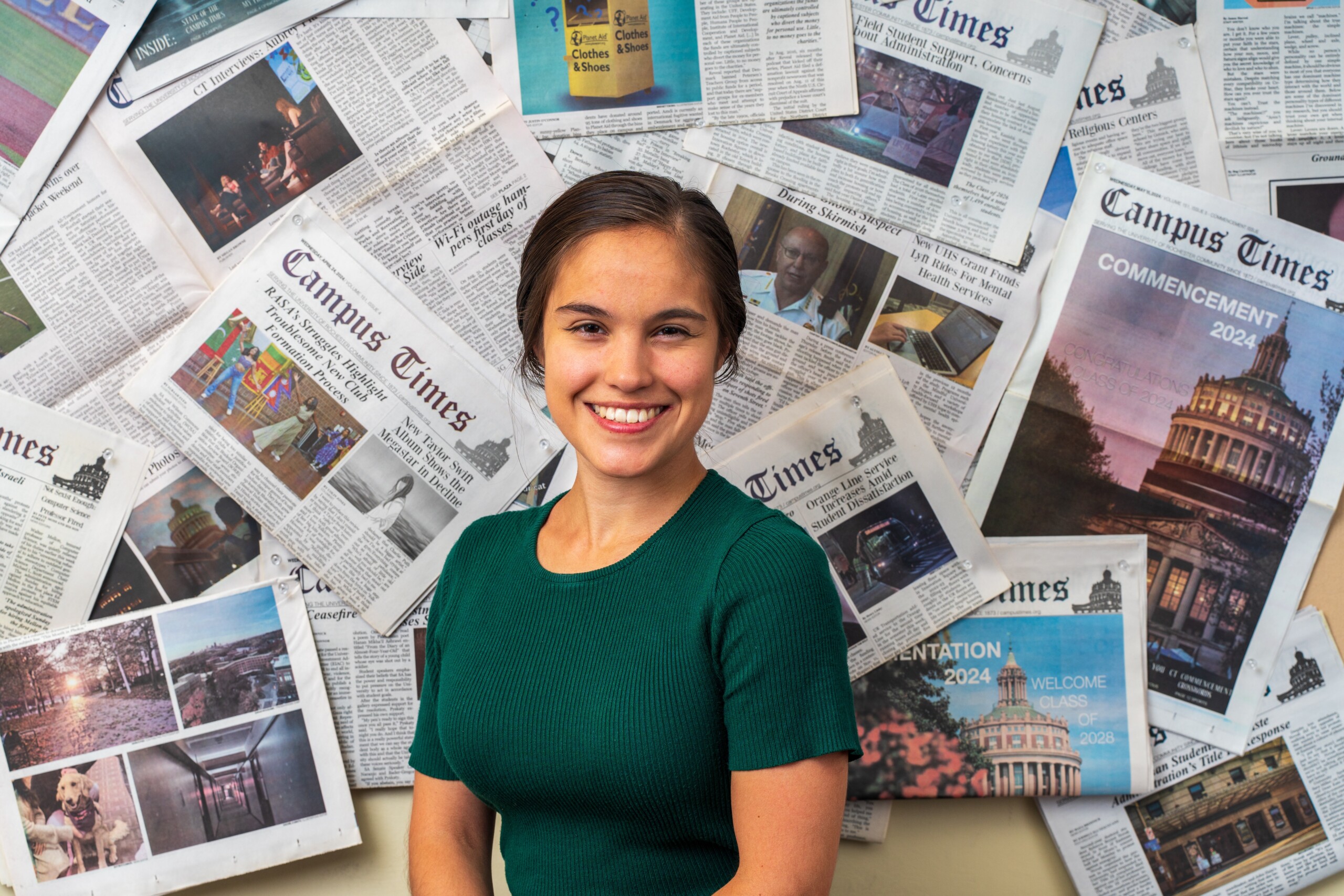
During an event to educate students about AI and academic integrity, senior Emily Bonanno, chief justice of UR’s All-Campus Judicial Council (ACJC), emphasized that, although AI as a common tool is a recent development, its impacts on academic honesty are already clear.
“People are using it practically like Google,” Bonanno said. “People run into issues where you make assumptions and say, ‘Oh, I’m just going to use it’ or ‘It doesn’t really matter, it’s just a little paragraph.’ But it does matter.”
ACJC, the judicial branch of the University’s student government, is responsible for hearing individual cases relating to breaches of academic integrity.
The AS&E Academic Honesty Policy defines academic honesty as “Acting with truthfulness and sincerity in carrying out all aspects of our individual and collaborative work, maintaining ownership over our work and acknowledging our debt to the work of others.” The use of AI tools in completing assignments may constitute a breach of academic integrity if it violates this policy, Bonanno said.
She explained that using AI without the explicit permission of an instructor may be considered receiving or using unauthorized aid under the Academic Honesty Policy. Additionally, using AI tools without properly citing them may be considered plagiarism.
The use of AI tools is not a breach of academic integrity in and of itself, however. A 2022 document called AS&E Instructors’ Guide to Using ChatGPT/AI in the Classroom explains that, although AI poses a risk for breaches of academic integrity, the use of AI is a valuable skill to learn and should not be completely forbidden.
“In a postgraduation professional landscape, the question is not if students need to know how to navigate AI tools or make good choices about using them—it is when,” the document states.
Although many instructors prohibit the use of AI in their classrooms, some use it and encourage their students to use it as well.
Professor Whitney Gegg-Harrison of the Writing, Speaking, and Argument Program, for example, is teaching a course this semester called Writing About and With Artificial Intelligence. The course examines the role that AI can play in writing and will involve using AI tools to better understand how to write with them, according to the course’s description on Workday.
Regardless of whether an instructor allows or forbids the use of AI, their rules should be laid out clearly in the syllabus, Bonanno said.
Anyone with questions about academic honesty can send a direct message to the ACJC’s Instagram at @allcampusjudicialcouncil.
Note: This article has been updated with the corrected spelling of Chief Justice Emily Bonanno’s name. A previous version had misspelled her name as Bonnano.