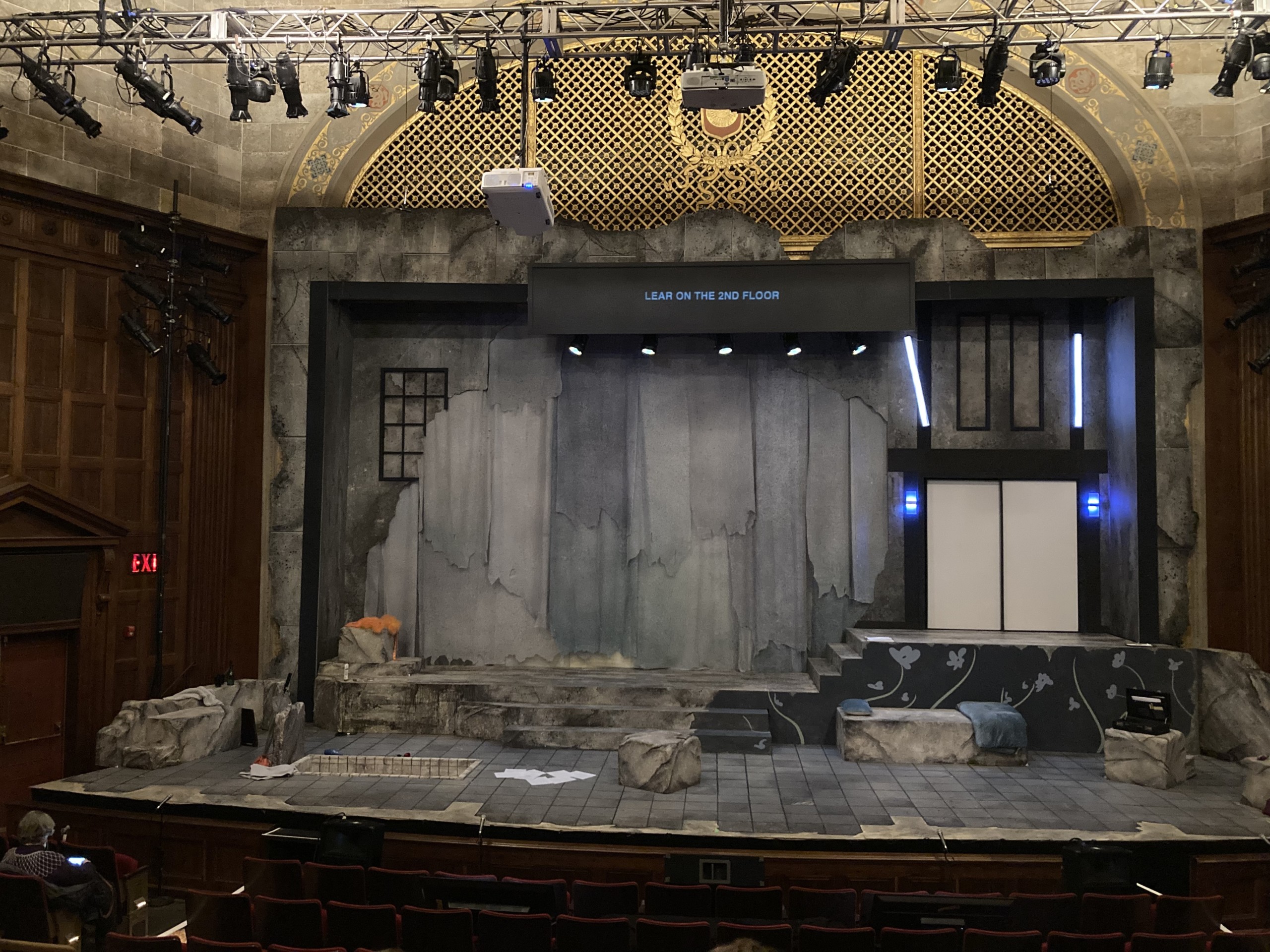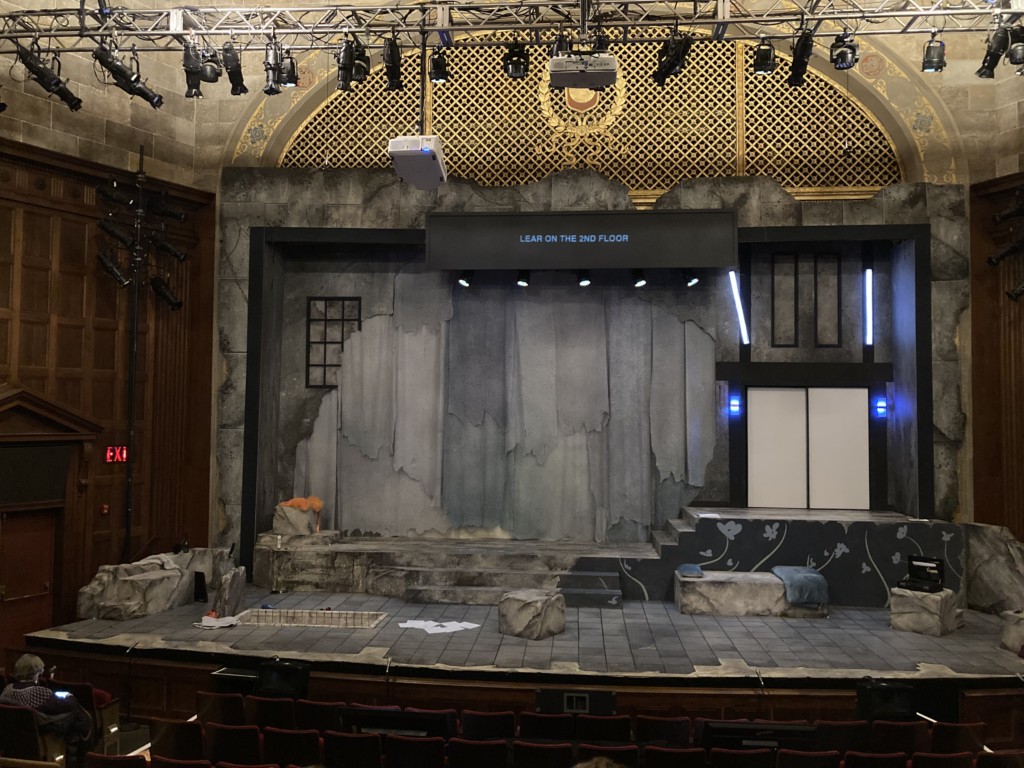
To preface: This article is written by a plebeian who has only seen an opera or two in their life. I am not often one with an affinity for the avant-garde or overly obscure, and I tend to enjoy plotlines that are not only straightforward, but relatable. Eastman Opera Theatre’s ‘Lear on the 2nd Floor’ is none of those things.
“In ‘Lear on the 2nd Floor,’ a contemporary inversion of Shakespeare’s ‘King Lear,’ a prominent neuroscience researcher in her late 50s or early 60s (Dr. Nora Lear) is suddenly beset by dementia,” the show synopsis reads in the playbill. “As Nora loses her bearings and her autonomy, she is quickly at the mercy of her three quarreling but loving daughters […] Nora’s dead husband Mortimer, throughout, is her constant escort as she walks through a vortex of memory, guilt and human sensibility.”
Reading this, I — and a friend of mine, who is one of CT’s beloved Illustrations Editors — was immediately intrigued and concerned. If your protagonist has dementia and you are forced as a viewer to see everything through her eyes, how much of the show is going to make sense? As it turned out, everything made just enough sense to have a logical throughline, but just enough to feel as if I was going crazy. Maybe that was the point, and to that, props to libretto writer Allan Havis for making me contemplate whether my brain was just making up half the words that were being sung throughout the show.
When it comes to the libretto, many of the references felt weirdly modern for an operatic adaptation of a Shakespeare show (for example, the oldest daughter, Jenna, is first introduced via an online sex cam advertisement — very “hot singles in your area” — as her mother attempts to give a college presentation) which is something I often find jarring about modern renditions of older shows. There is a fine line between making content more relatable and making it modern for the sake of being modern, and in the case of Shakespeare, his shows feel relatable as is. That’s what has made them relevant and timeless.
The highlight of the show truly is the skill of the performers — as someone who does sing in college, I cannot imagine memorizing any of the music for ‘Lear on the 2nd Floor’ due to its only vaguely-memorizable melodies, which jump around similarly to Dr. Lear’s thoughts (which I have to assume is intentional, given that composer Anthony Davis did once win a Pulitzer Prize for music). The show was double-cast, and the cast I was lucky enough to see really showed me how incredible Eastman students can be. In particular, I was very taken by sophomore Guo Wu, who played Nora’s Mind. Wu was on stage almost the entire performance — if not the entire performance — and thus had to consistently act and occasionally make unnerving yet beautiful vocalizations for over an hour. In addition, the harmonies between the Lear sisters (played by juniors Faith Dowley and Emma Unkrich, and senior Lauren Case) were an absolutely gorgeous respite from feeling nearly unable to hang onto a melodic line for most of the rest of the show. In addition, the orchestra felt perfectly enmeshed with all of the other elements of the show; props to conductor Timothy Long for that.
Overall, I can’t necessarily say I enjoyed ‘Lear on the 2nd Floor,’ but I’m glad I went, if only to enjoy talented performers and get my mind absolutely unraveled.