As the new school year rolled around, thousands of students on campus found themselves trying to adapt to the “new normal” of interacting with other students while six feet apart and wearing a mask.
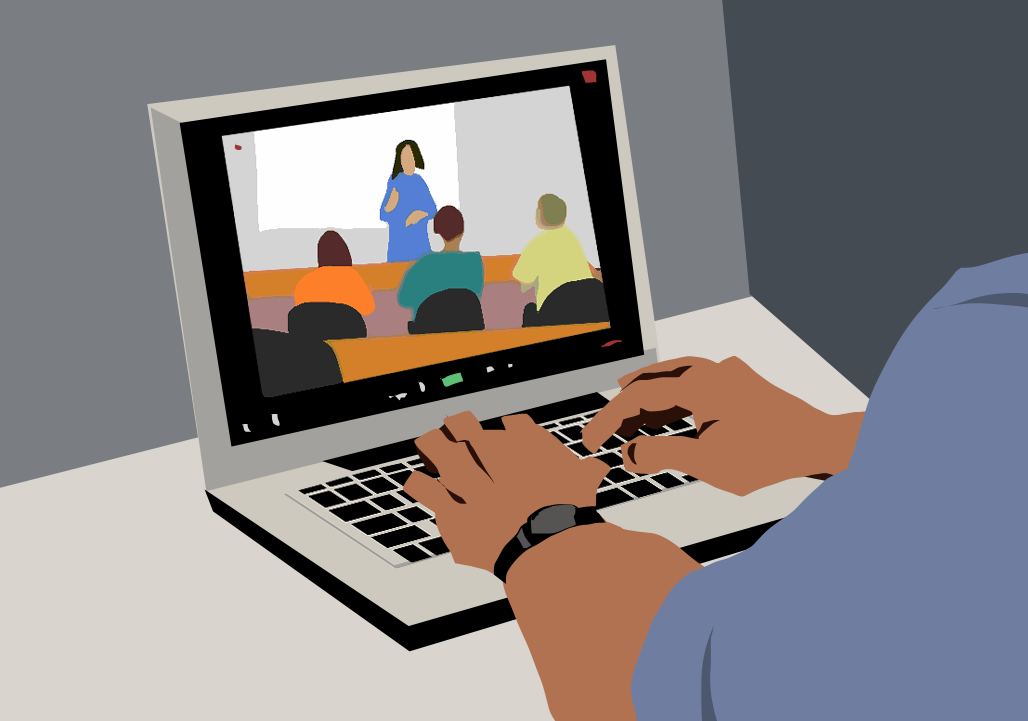
However, students who weren’t able to make it to campus this semester have been trying to adapt to a different situation — learning entirely remotely. For first-years Rilee Alverson, Nicole Smith, Miraz Sadi, Adrija Bhattacharjee, and Nhuja Maharjan, the experience has come with a number of challenges.
One of the main downsides most of these students have learned to deal with online is, unsurprisingly, technological issues. Smith reveals that while all components of her class were entirely online, poor internet connectivity forced her to “watch recordings instead of attending synchronous meetings.”
Bhattacharjee reported similar frustrations with wifi, especially the all-too-familiar problem of receiving the “unstable internet connection” message from Zoom.
Sadi said that the recordings for lectures often had bad audio quality, and suggested that TAs who conduct workshops “should be equipped with better gadgets that will allow all participants to discuss concepts over the screen.”
For some hybrid classes, especially smaller ones like recitations or workshops, online students often feel left out. As one of the only online participants for his recitation session, Maharjan said that it has been extremely hard for him to “engage with both his TA and the other participants who were attending it in person,” and that he felt as if he were “disturbing the flow of conversation” on the few occasions when he did speak up.
Luckily, his other professors have found innovative ways to ensure that in-person and remote students can interact with each other. Maharjan’s chemistry professor, Dr. Hafensteiner, has been utilizing a platform called Yellowdig, where students earn points every week by holding chemistry-related discussions.
While the logistics of holding class discussions online have a heavy impact on remote learning, remote students also reported struggling with the lack of in-person connection.
Alverson said that although her experience with online learning has been decent so far, it has also been “incredibly isolating and lonely” because she doesn’t have a group of friends who she can talk to or rely on for support, which has led to problems “staying motivated enough to attend Zoom meetings or finish schoolwork.”
Thinking about the fact that many of her classmates are probably meeting other students on campus or enjoying first-year activities makes Bhattarcharjee’s mood drop. She often finds herself feeling upset when she realizes that being at Rochester in person would have allowed her to “make much better impressions of herself.”
Remote learning isn’t ideal, but Bhattacharjee remains hopeful for future in-person classes at UR. “The faculty and [in-person] students will do their best to welcome remote students when all of this is over,” she said.
Kali Tam is a member of the Class of 2024.