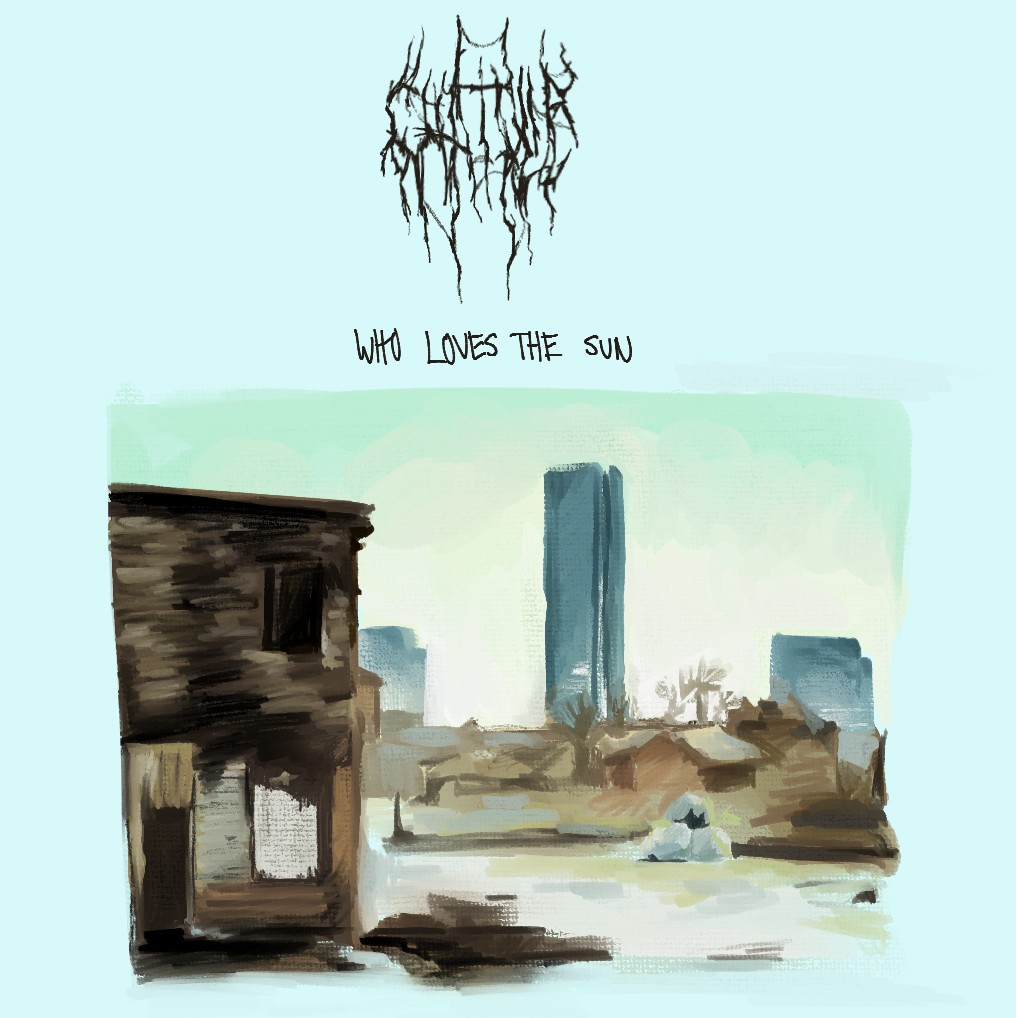
Few bands feel as sonically reflective of the 2020s as Chat Pile. On any given song you will find coal-black humor, soporific murmurs of defeat, and pained shrieks of agony. Since their breakout album “God’s Country” released in 2022, I have had my eye on these guys. I even reviewed their last solo record, “Cool World,” for the Campus Times when it came out. Seeing as I was a first-year when “God’s Country” dropped and I now walk the hallowed halls of URochester as a masters student, it’s fair to say that I have gotten to see Chat Pile’s development over the years. The only thing more shocking than the excellent quality of their music is the rapidity of its release; “Cool World” was released less than two years ago, and last October the band unveiled a collaborative effort with guitarist Hayden Pedigo. It is surprising to see the band back in action so quickly with a new full-length album, titled, “Who Loves The Sun.” What’s even more surprising is how good it is.
For those unfamiliar, Chat Pile trades in varying strains of metal and rock that evoke the filth and horror of human suffering. Sludge metal and noise rock combine with the melody of gothic rock and the bounce of “nu metal” to brew the band’s concoctions. Chat Pile is replete with both familiar and new ideas with this album; Across its 43 minutes, “Who Loves The Sun” shifts from tuneful gothic rock (“Same Rules”) to bludgeoning noise rock (“Influence”) and the album excels at everything it tries. The band still maintains their twisted sense of humor with some occasional amusing lyrics — “It’s time to jerk off under the stairs again” — providing an undercurrent of levity to their mire of loathing.
Opening track “Creature” reminds us that this is the Chat Pile we’ve come to know: calcified bleakness in musical form. Some melodic lead guitar moments are buried under doomy riffs from the rhythm guitar and churning bass as the drums rise to the occasion, creating a menacing groove. The song sports not one, but two breakdowns, the band switching gears and allowing some mosh-friendly moments amid the gloom. The lyrics, as always, are chillingly aware of the mess humanity is in; “Please don’t say we couldn’t stop this/And please don’t feed me all that bullshit/’Cause this is what you’ve always wanted/An empty world, vast and haunted.” Lead single “Deep Blue” laments our descent into AI hell and social media isolation as vocalist Raygun Busch intones, “You move deeper into screens.” It is a lyric that might feel corny in the hands of a lesser band, but Busch’s dead-eyed clarity with which he delivers each and every line on this album makes it serious.
Ironically, the most serious moment of the album is the song “PEN I S MALL,” an explosive diatribe against capitalism that easily takes the title of the band’s heaviest song to date. While Chat Pile has always trafficked in metal, this song feels like their most wholehearted embrace of the genre’s aggression, with pummeling riffs and an absolutely demented vocal performance from Busch. The song lyrically details his time working as a maintenance man at a mall. The song hits a catchy groove for the prechorus, “Simon says maybe next time/Simon says get in the subfloor,” before switching into a nasty, cymbal-hammering stomp as Busch bellows, “This was mine but the world is full/Of hallowed halls of degradation/Hard to think that your whole life can pass/As a series of acts of subordination.” The song collapses in on itself as it progresses, slowing down into a shambling breakdown as audio of a bong hit plays over the chaos. The song grinds to a terrifying halt as it concludes, contrasting its energetic opening. If nothing else, please listen to this song. It is perhaps Chat Pile’s finest work to date.
Perhaps more than anything, this album excels as a true mission statement of Chat Pile’s unique identity in the music scene. No one really sounds like them, writes like them, evokes like them. There’s something oddly comforting about their music, chaotic and depressing as it is —perhaps because it is so point-blank, so acutely aware of the current moment. The band is anything but escapist. On closing track “October All The Time,” Busch paints a vignette of a world in which humanity has gone extinct, and the world moves on, albeit in a damaged state from pollution; “Everything will be fine/The sun will continue to shine/Everything will be fine/October all of the time.” It’s almost beautiful in a twisted way, imagining the Earth’s slow recovery from the stain of humanity. One can even imagine an alien visiting our abandoned planet, listening to a scratched Chat Pile CD, and seeing how horrible humans really could be.