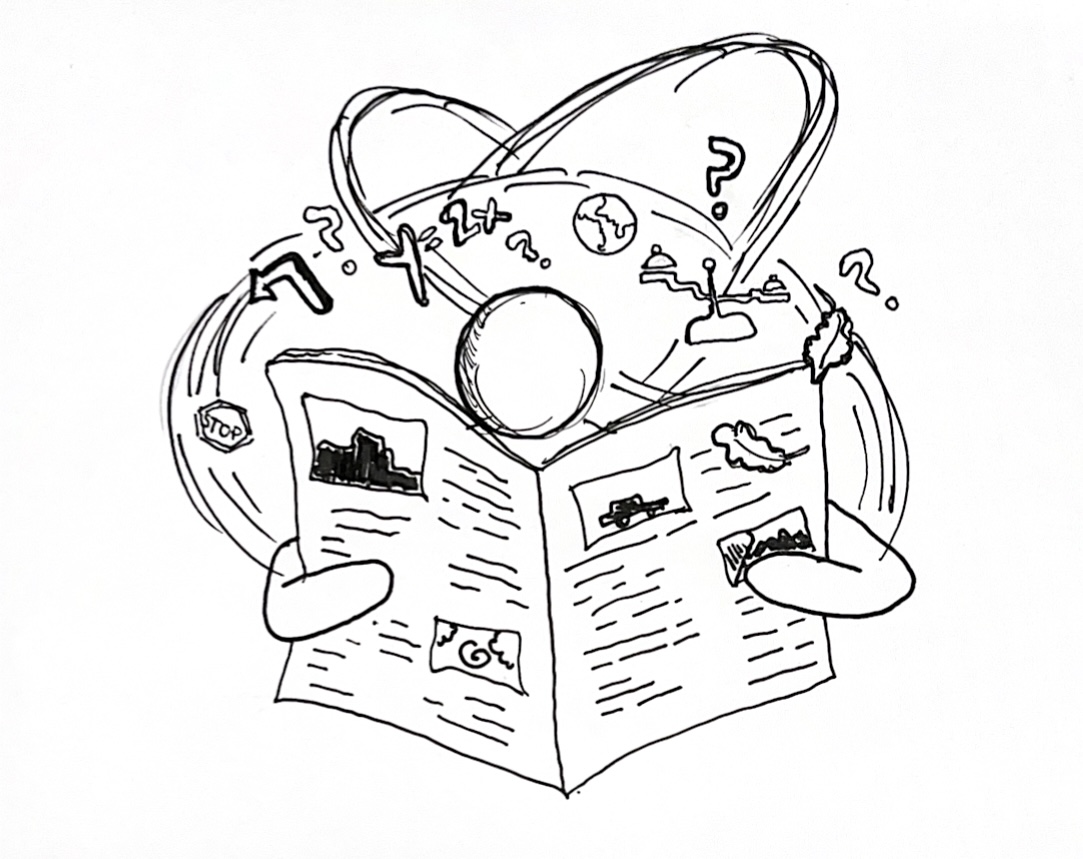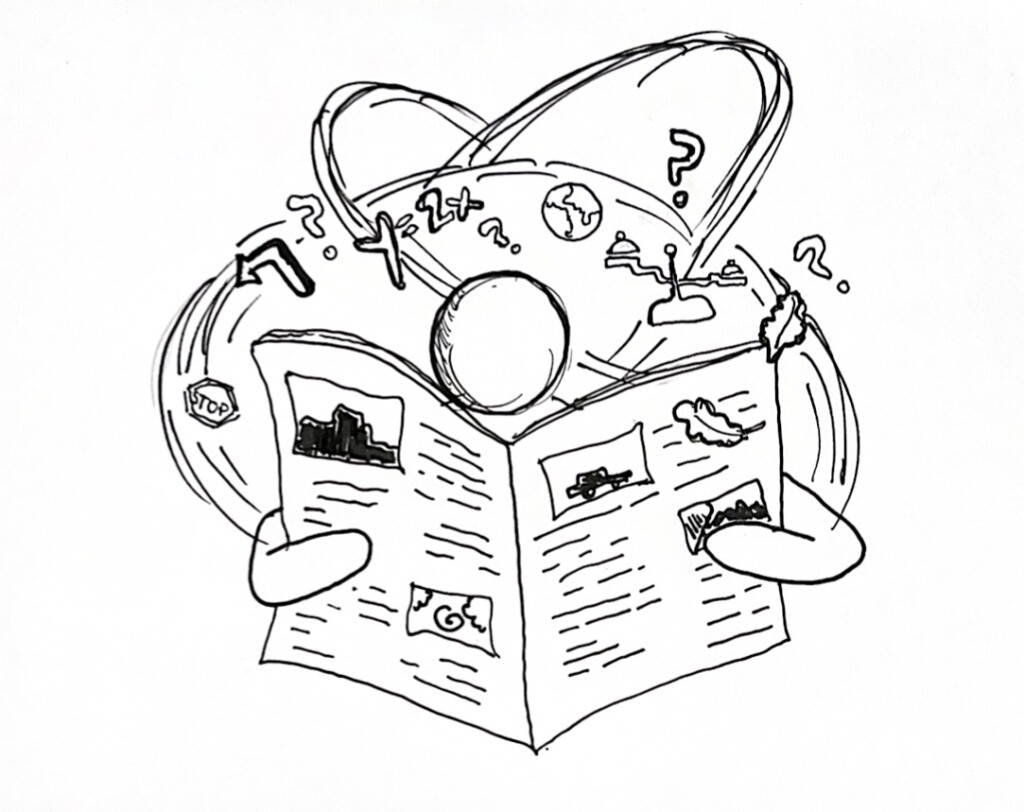
This is my tenth op-ed for this paper. Over the past few months, I have written about climate policy, NASA funding, endangered research programs, and how to talk to your family about science at Thanksgiving. Some of you have read every piece. Others have skipped them entirely. Some of you have wondered: Does any of this actually matter?
It is a fair question. In an age of misinformation, algorithm-driven news feeds, and endless hot takes, the op-ed can feel like a relic. Yet another voice in the endless noise.
The answer, I think, comes down to a single distinction: interpretation versus gospel. Op-eds exist because facts do not speak for themselves. A scientific paper can report that temperatures reached record highs this year. But besides a few words, it might not tell you what that means for your community, your policy priorities, or your vote. A government report lays out data on air quality trends; it’s not there to tell you whether the tradeoffs in a proposed regulation are worth it for you. This is where opinion writing comes in. The job of a science-based op-ed is to take information that exists in the public record and offer a perspective on what it means, why it matters, and what we should do about it. Science does not speak for itself, and most people cannot, on any given week, read a stack of federal dockets or parse a dense supplementary table from a new climate study. There is a growing gap between what science shows and what people understand, and in that gap you get missteps, half-truths, and oversold claims.
With no opinions, there is silence, which is just as dangerous, because the science stories that reach the public rarely arrive in complete form. We saw that with the “life on Mars” headlines: The actual research used words like “potential biosignature,” but the headlines leaped to certainty. That rush created a cycle where excitement became confusion, and confusion became distrust. An op-ed, written well, has the time to slow everything down. It can walk through why a rock sample matters without saying it means life. It can remind readers that “possible” is not “proven,” and that “not proven” is not “disproven.” That small bit of honesty protects the science better than any oversold headline ever will.
This is not the same as doing the research. When I write about greenhouse gas regulations, hurricane patterns, or NASA’s budget, I am reading the work of people who have spent decades building expertise in those fields. I am synthesizing their findings, interpreting their implications, and offering my own view on the path forward, grounded in my own research and background. That is a legitimate role, but it is not the same as being the source. The trouble starts when op-ed writers forget this distinction, when someone writes as though their interpretation is the final word, when they tell you what to think instead of giving you the tools to think for yourself.
This happens often: Someone declares that a new study “proves” something, when the actual paper is far more cautious. A pundit claims that “the science is clear” on a policy question that involves not just science but economics, ethics, and politics. An advocate insists that anyone who disagrees with their conclusion is denying reality. This is not an interpretation. This is gospel, and gospel is dangerous. It short-circuits the process that makes knowledge reliable. Science works through replication, correction, and debate. Policy works through compromise, tradeoffs, and revision. When an op-ed writer claims to have the final answer, they are not just overstating their case. They are undermining the very institutions that produced the knowledge they claim to defend.
Op-eds work when they protect nuance, not bury it. That is why they become important every time science and policy collide. Policy cannot wait for perfect certainty. However, if the public hears only certainty or only doubt, with nothing in between, they miss the part that actually matters: what we know well enough to act on, what we are learning, and what choices carry the most significant risks. A good op-ed gives that to the reader without pretending to close the case.
Here is the hard truth: I cannot give you certainty. No op-ed writer can. The world is complicated, the evidence is often incomplete, and reasonable people can disagree about values and priorities even when they agree on facts. If someone tells you they have all the answers, they are selling you something. The best I can offer is a framework for thinking through the issues, a summary of what the experts have found, and my honest assessment of what it means.
That is why I try to end my pieces with calls to action that go beyond “agree with me.” Read the reports yourself. Look up the studies. Contact your representatives and ask them hard questions. Visit the facilities. Use the data. Check whether a claim matches multiple independent datasets, or whether a policy proposal has actually looked at full costs, or whether the person making the claim is skipping steps. The goal is not to create followers. The goal is to create informed citizens who can engage with these issues on their own terms. Some will say this is a cop-out — that opinion writers should take strong stands and defend them. I agree, up to a point. I do take stands. We should fund the Mars sample-return mission, keep the Endangerment Finding, and restore support for planetary data archives. These are real positions with real implications. However, I hold them provisionally based on the best evidence I have access to, and I explain my reasoning so readers can evaluate it for themselves.
The alternative is to treat readers as passive consumers who need to be told what to believe. That is not respect. That is condescension. Moreover, it is simply a bad strategy. People can tell when they are being talked down to. They push back, they tune out, and they become more skeptical of legitimate expertise in the process. The rise of science denial is not just a failure of education. It is also a failure of communication. When experts and advocates overstate their case, they erode the trust that makes public engagement with science possible.
People sometimes wonder if op-eds still matter when anyone can post a thread or video. I argue that they do. Threads and videos usually reward speed; an op-ed rewards clarity. It gives you enough space to walk through an argument without rushing. It makes you justify your reasoning, rather than shout it. It gives the reader time to think. That is not nothing.
Op-eds matter when they are honest about their limitations and point to evidence rather than replace it, when they invite readers into a conversation rather than lecturing them from above. When they say, “Here is what I think and why — now go find out for yourself.”