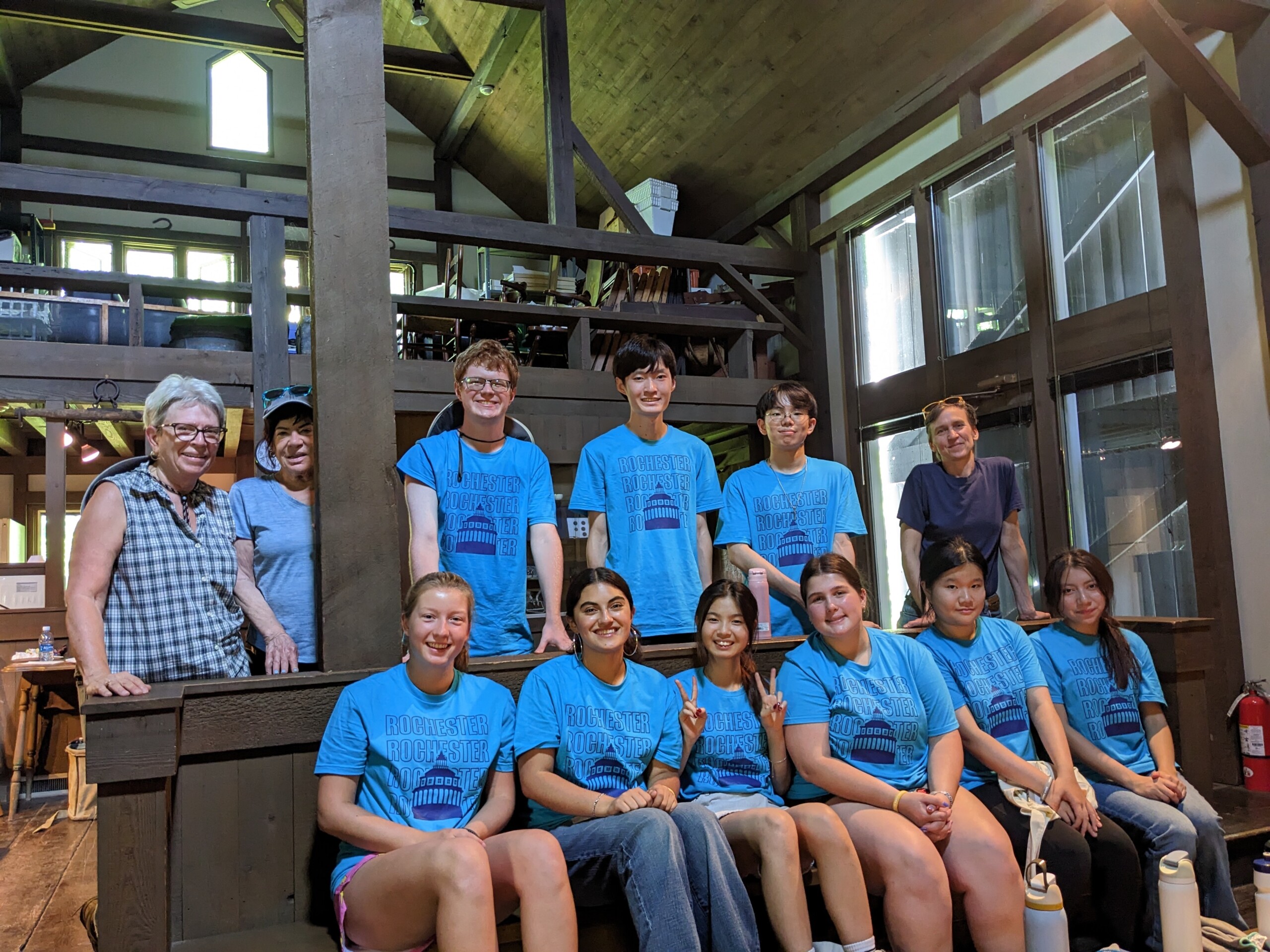
The annual Wilson Day of Engagement, a non-mandatory Welcome Week tradition at the University of Rochester, has faced a decline in student engagement: this year less than half of the registered students showed up.
Wilson Day, held Aug. 22 this year, aims to immerse new students into the local Rochester community and introduce volunteering as an important part of the undergraduate program.
Ke’Juaine Sayres, the program manager in Center for Community Engagement (CCE), said that collaboration between the University and the community is what makes Wilson Day unique.
“We tend to work with over 70 plus community partners as well as a full class of first-year students,” he said.
Sherlyn Hernandez Ponce, a first-year student, had a positive experience of Wilson Day.
“Having the opportunity to do it within the city of Rochester and not just within the school,” Ponce said, “it was just incredible.”
The community partners that the University works with for Wilson Day are usually small nonprofit organizations that don’t have enough money for staff members. Andrew Gold, an associate director at the CCE , explained that “for [the community partners] to have the students that are coming into the city of Rochester to do ideally meaningful work is something that really helps them throughout their entire year.”
Gold believes that student engagement was the biggest challenge of Wilson Day this year. He said that around 680 students registered for the event, but only 247 students attended.
He recalled that the buses were already lined up for volunteers, and students were still not showing up.
“We only had 10 minutes to resolve a lot of those quick issues,” he said. “We got to make sure at least seven minimum students go to a site that requested 20.”
The multiple choice system could not guarantee that the volunteer would be assigned their preferred location because the organizations vary every year. Many students who participated this year said they were not matched with the activities that they ranked higher on the signup form.
Aria Banks, a first-year student, said that her activity didn’t relate to her interests in particular as the groups were sorted at random.
“For a lot of people I think the activity didn’t really resonate with them so it didn’t really push them to give further community engagement from that,” Banks said.
However, she still thinks they managed to help the local community despite the lack of participants: “We did, in a matter of hours, what would have [maybe] taken [the Taproot Collective] a few days to do.”
Banks said showing the broader impact of Wilson Day to first-year students could improve the experience. “Wilson Day has a huge impact … but I didn’t really get to see or hear about what some of the other groups did,” she said. “That would be cool to hear.”
Last year, students had the opportunity to choose a project that interested them from the line-up of community organizations that were divided according to interests, known as “buckets.” However, this year, the CCE decided to move away from this approach due to capacity reasons, assigning each volunteer a project before Wilson Day.
Simona Tewoldemedhin Debru, a first-year student, sees last year’s approach as a better way to lead the event, namely labeling the activities to let students choose the organization they would like to volunteer for.
Reflecting on the experience, CCE Program Manager Ke’Juaine Sayres said: “We can see students who are more engaged and inclined to participate when they can choose which project they’d like to go in and do for the day.”
The CCE used different methods to evaluate the day, including surveys, direct feedback, and word of mouth. Another way they assessed its success was the lack of calls about student health.
Gold said: “What I really was proud of is that [the CCE] didn’t really receive any phone calls that were alarming to us.”
Despite the reduced participation, many students still consider Wilson Day a meaningful experience. Sherlyn believes that “giving each student like a small glimpse into it is a great introduction, and it’s likely to … lead people into participating even more and engaging with their community.”