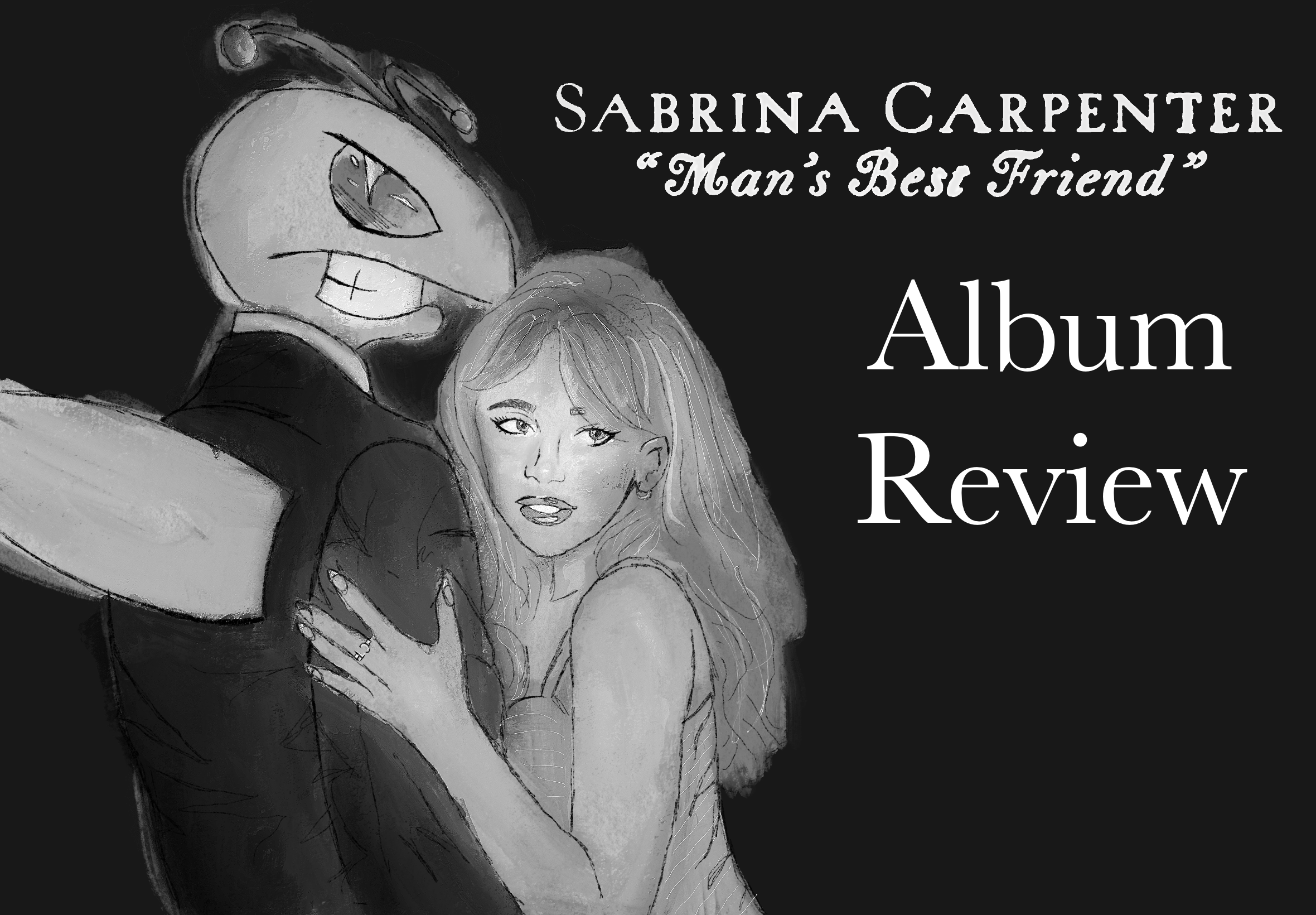
Sabrina Carpenter’s “Man’s Best Friend” dropped on Aug. 29, attempting to drag summer into September with its combination of disco-pop and synth production along with Carpenter’s iconically high-pitched and breathy vocals. Just a year after her sixth studio album “Short n’ Sweet” achieved “universal acclaim” according to Metacritic, fans and reviewers alike held high hopes for the album that was hot on its heels.
“Man’s Best Friend” has received generally favourable reviews, with its lead single “Manchild” charting at number one in markets worldwide, including the U.S. and the U.K.
Now, you can’t accuse Carpenter’s latest work of being off-brand. Throughout the album she sticks to her overtly-sexualized guns with phrases that my lovely editors are unlikely to allow me to publish. (Editor’s note: the CT does not censor sexual language.) Although innuendo and suggestion are now classic tools in Carpenter’s kit, a notable shift in lyrical style in many songs on the new album may leave listeners searching for undertone and substance that simply is not there. By leaning so heavily into the idea of being “Man’s Best Friend,” Carpenter’s irony and satire becomes unstable and muddy. Even in “When Did You Get Hot?,” in which old Carpenters might hear a beat harking back to her 2019 album “Singular Act II,” desire for physical intimacy takes the stage. The shock factor that Carpenter reaches for is achieved, but, like the memory of her latest album, it fizzles out.
However, this could be an attempt to push to the forefront a conversation about how female desire is discussed. How many male artists talk about their desire for physicality with women? The Weeknd is stereotyped as making songs for sex playlists, but, as of Sept. 3, has the second highest number of monthly listeners on Spotify. Are we, by reducing “Man’s Best Friend” to a purely sexy soundtrack, playing into the very social problem that she is combating?
This is reflected in the controversy of her album cover. It was criticized by TikTok and X (formerly Twitter) users as anti-feminist, as playing too far into female submission, and as damaging in a society where domestic violence is still very much a problem. Carpenter’s short dress and the hand holding her hair in the cover have caused discomfort, which may well have been her intention.
But listeners do not know Carpenter’s intention. They post on social media and decide that artists ought to act in a way that they think is right. Yes, singers create a consumable product that they are ultimately trying to sell, but they are also creating art with which to express themselves. Self-expression should not be policed or degraded — something we find ourselves doing when we criticize Carpenter’s new album for being too surface-level.
Maybe, as listeners, we need to reorient what we ask of our favorite singers. Instead of demanding depth, perhaps it’s time to accept a delivery of fun material. Rather than bashing her salacious lyrics, maybe listeners ought to appreciate her disregard for the rising trend of female conservatism and simply enjoy “Tears” for the bop that it is..
“Man’s Best Friend” doesn’t rank among my favourite albums, and likely won’t be appearing in my downloads on Spotify. I do, however, believe that much of the criticism that she receives originates from her divergence from the growing trad-wife trend.