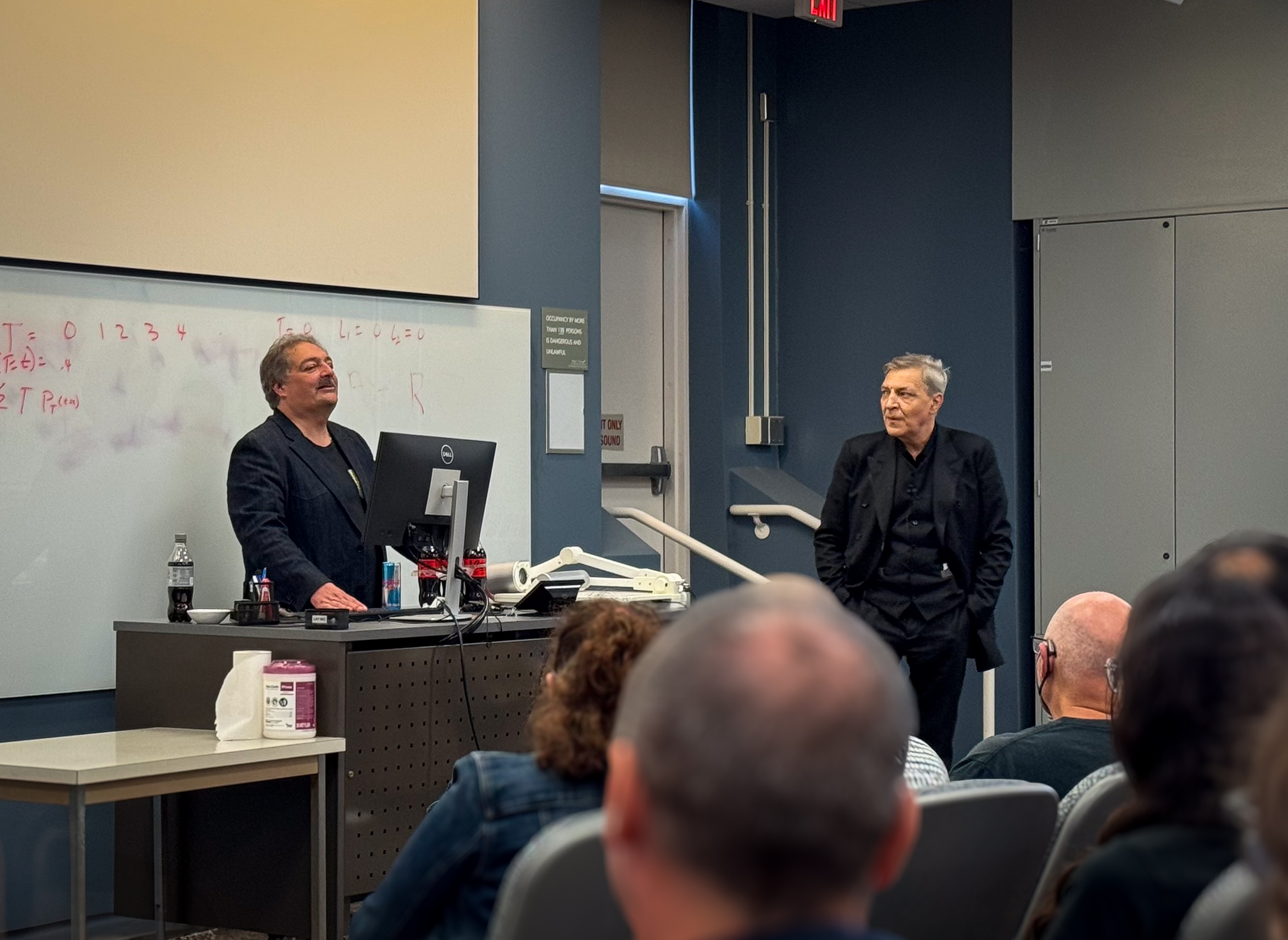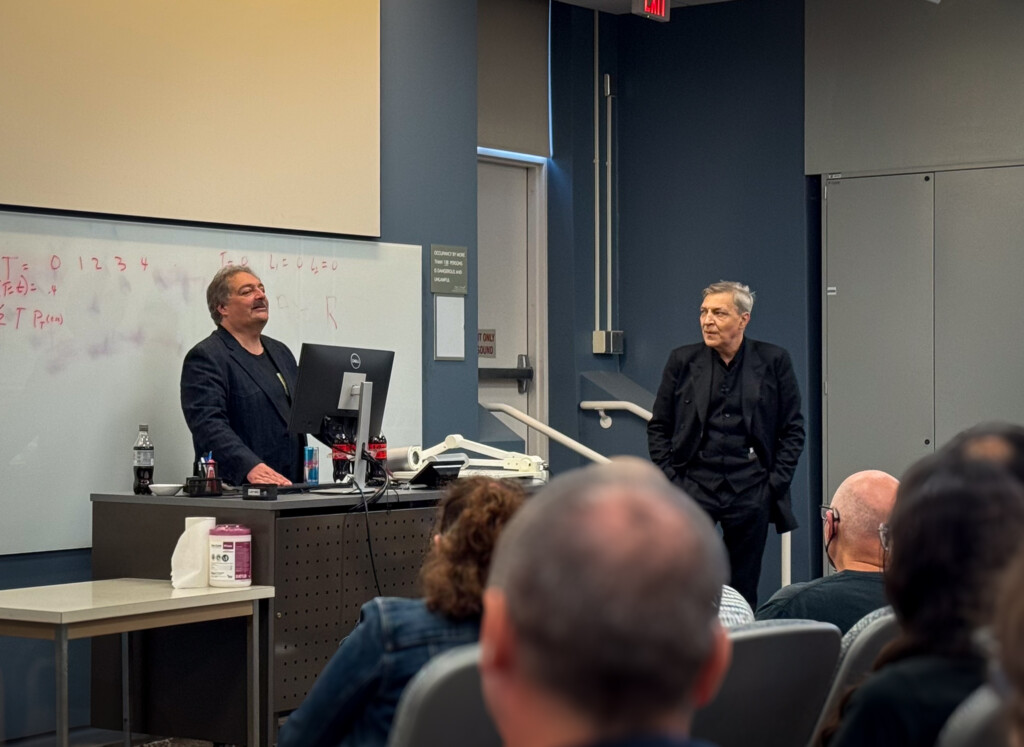
Exiled Russian journalist Alexander Nevzorov delivered a lecture titled “Is Russia Redeemable?” in Morey Hall on the afternoon of Tuesday, Oct. 1. Visiting Assistant Professor in Russian Professor Dmitry Bykov translated for him.
Nevzorov rose to fame for hosting the nationalist television program “600 Seconds,” a radical and controversial series beginning during the end of the Soviet Union’s “glasnost” (openness) period and lasting until shortly after its dissolution. The end of the program came when government censors took it off air, largely due to Nevzorov’s opposition to Russian leader Boris Yeltsin.
In “600 Seconds,” Nevzorov sought to shock viewers with rapid-fire coverage of strange, scandalous, and often salacious news. In 1993, Nevzorov was a fervent nationalist with dreams of reuniting the Soviet Union. He was elected to the Duma, one of the branches of Russia’s legislature, subsequently serving there for 14 years.
As recently as 2012, Nevzorov supported Vladimir Putin’s return to the Russian presidency. However, he would soon renounce his previous views and would come to oppose Russia’s annexation of Crimea in 2014. In the years since, he has become an outspoken critic of Putin and the Russian government, leading to his escape from the country under threat of imprisonment in 2022.
Now an enemy of the state, Nevzorov spoke about the mythologies created by the Putin regime to justify its atrocities, including but not limited to the imprisonment of political rivals, assassination of dissidents, and the invasion of Ukraine.
To do so, Nevzorov referred to the 13th century “Battle on the Ice,” in which Russian folk hero Prince Alexander Nevsky and the Eastern Orthodox forces defeated crusading Catholic armies. Unsurprisingly, this battle became a symbol of Eastern Orthodox pride in the centuries following. This battle, said Nevzorov, has been dramatized and distorted to create exaggerated feelings of pride. He later went on to say that much of Russian culture was like the “Battle on the Ice” — exaggerated at best, and falsified or stolen at worst.
The talk paused for questions and eruptions of laughter from the older Russian-speaking portion of the audience, who evidently found Nevzorov’s quips amusing.
Pacing around the room, Nevzorov proclaimed that any semblance of reform is absent in Russia today. In fact, he claimed that the country was continuing to spiral into madness rather than curing itself.
Again turning to the topic of Russian culture, Nevzorov said, “We see the results of Russian culture in Mariupol and Bucha,” referring to two of the Ukrainian cities ravaged by Russian attacks.
Nevzorov used the analogy of a circus, where he’d worked previously, to explain how animals cannot become tame or sane once they have been subject to sustained cruelty. The same, he believed, could be said of the Russian people.
Nevzorov’s opinions of Vladimir Putin are apparent: Putin had “no understanding of the real world” and called him “boring, monotonous, and out of touch.” He added on saying, “You can be nothing and still be a mass murderer.”
A final question about if Tsarism would return to Russia prompted a joint response from Nevzorov and Bykov: “What do you mean? It’s already here!”
Author’s Note: Special thanks to Arsen Kariazov for translating certain details.