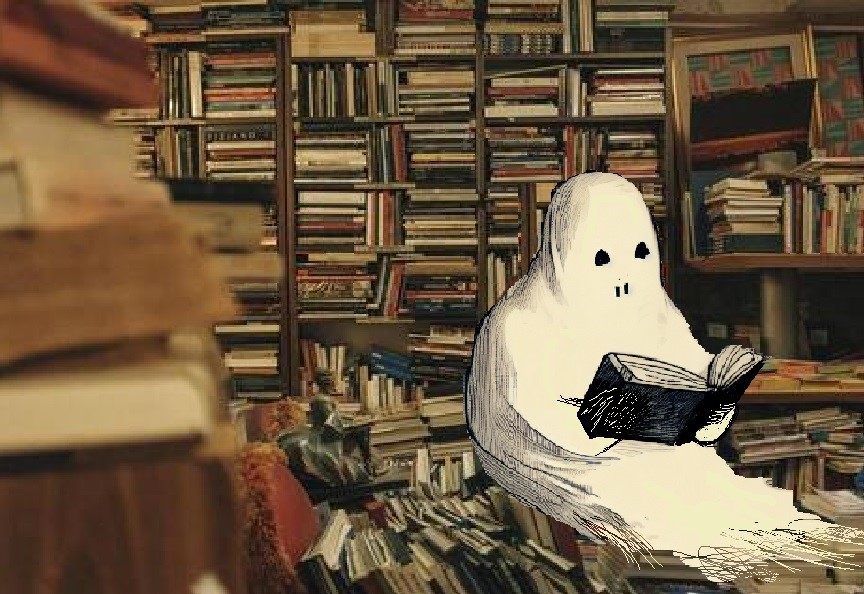
Where have all the readers gone? The ones who read purely for pleasure? The ones who, in their free time, pick up a book they’re genuinely interested in and spend hours indulged in reading?
A survey conducted by the Pew Research Center in 2021 showed that 23% of American adults hadn’t read a book in the previous year. In addition to this, 19% of adults aged 18-49, 39% of adults with a high school diploma or less, and 25% of adults living in suburban neighborhoods hadn’t read a book in the past year. Overall, reading amongst adults has become less and less popular.
Reading for pleasure amongst children has also declined. The National Literacy Trust held a survey in 2023 that showed fewer than one in three children aged eight to 18 read for enjoyment each day. Even with schools pushing independent reading sessions during English classes to encourage children to read for enjoyment, less children are reading for fun.
As someone who aspires to go into publishing when I graduate, this news is very disheartening. Why dedicate my life to editing and giving feedback on great pieces of literature that barely anyone will read? I’ve noticed that it’s especially difficult for me to find people around my age that read for enjoyment.
All of this sounds pretty depressing, and if you’re an avid reader like me, you’re probably wondering: what can we do? To be honest, there isn’t a simple solution to this problem. The best we can do is encourage those around us to pick up a book by recommending our favorite reads. So to do my part, here are some great books I highly recommend:
“Murder Your Employer: McMaster’s Guide to Homicide” by Rupert Holmes (fiction, humor, mystery thriller).
“Tokyo Ever After” and the sequel “Tokyo Dreaming” by Emiko Jean (fiction, young adult, contemporary romance).
“Mika in Real Life” by Emiko Jean (adult fiction, romance).
“The Woman in the Library” by Sulari Gentill (fiction, murder mystery, thriller).
“The Lost Apothecary” by Sarah Penner (historical fiction, mystery).
Of course, I don’t mean to make it sound like there isn’t anyone who reads for fun. Take the BookTok community for example — a community of readers on TikTok who share and recommend books they’ve read. The increasing popularity of BookTok has catalyzed the success of multiple books and series, such as “A Court of Thorns and Roses,” the first book in a series by Sarah J. Maas. The series has become a New York Times bestseller and is in talks for possibly getting its own Hulu show.
But can BookTok really save the decline in readership? Well, not really. First of all, it isn’t guaranteed that children are on TikTok, let alone getting their book recommendations there, so it’s up to parents and teachers to encourage children to read. Summer reading programs where kids get free books after they read a certain number of books is one great way to do this. Our very own bookstore in College Town has a program like this that runs during the summer.
Another issue with BookTok is that there’s widespread negativity amongst the community. Books that have tightly packed pages with minimal line spaces are criticized for having “too many words”; books with complex plots are often deemed as “confusing”; and characters with unique names are often described as easily forgettable. A lot of BookTokers favor shorter books with less words on the pages, simple plots, and a lot of suggestive content.
All is to say, I don’t feel like BookTok has significantly increased readership. While it’s a small step in the process, we still have a long way to go. I hope that more people can discover and spread the joy of reading. If you haven’t read a good book recently, you’re seriously missing out!