After a long day of classes, reading, and writing, my friends and I decided to take advantage of the opportunities Rochester has to offer and went to the recurring Symphony at Eastman off the cuff. For Eastman students, it’s not just an off-the-cuff opportunity, though; it’s an assignment, an opportunity to showcase the talents they hone every day.
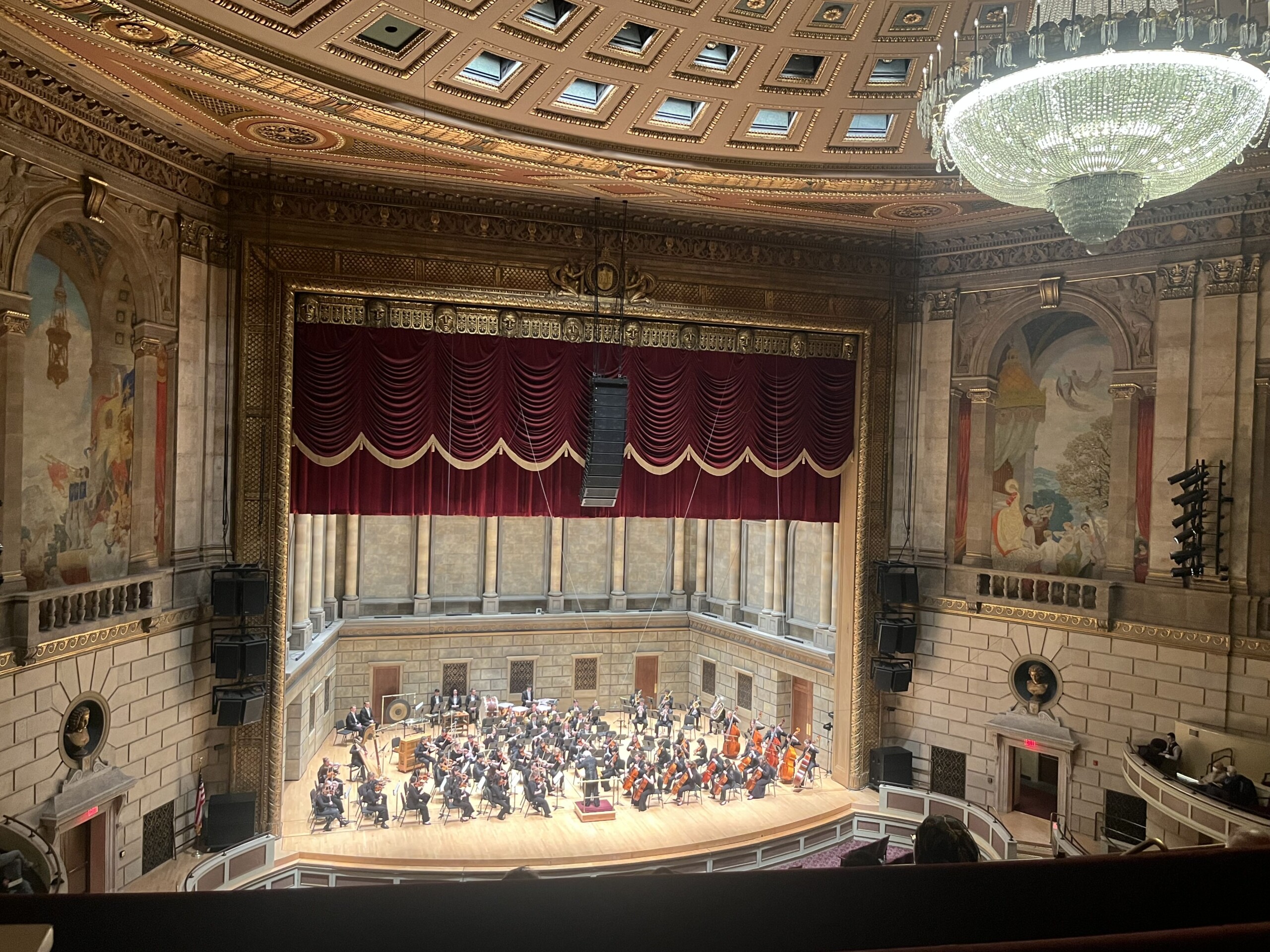
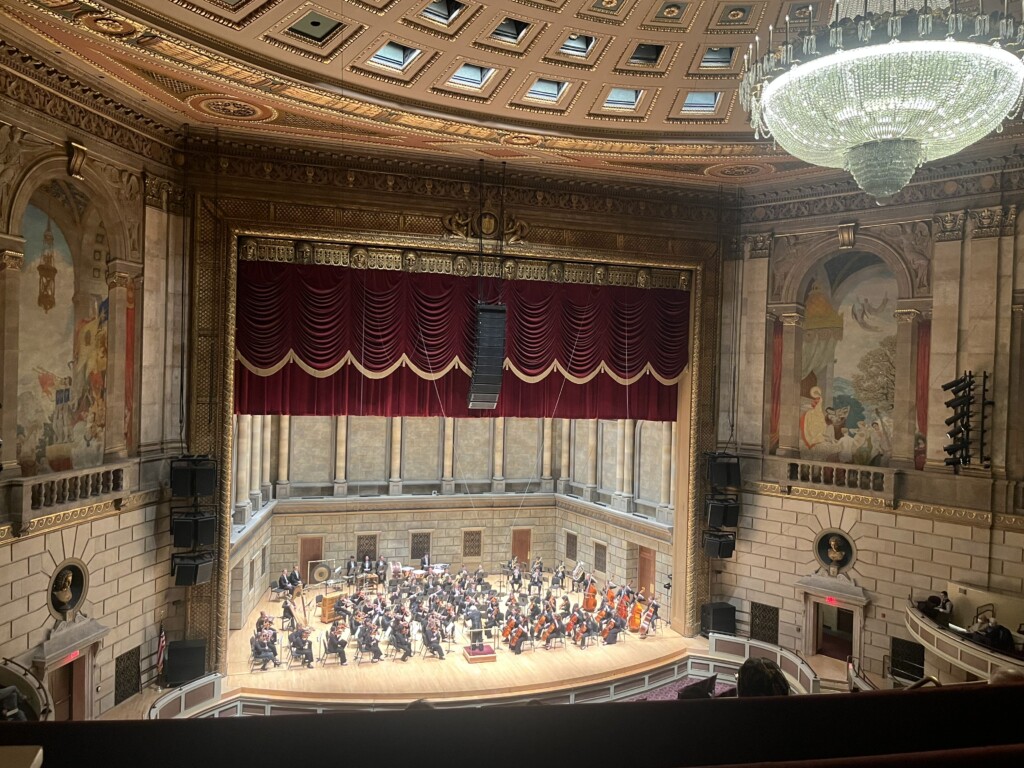
We showed up late to Kodak Hall, hearing the violins through the door. When we entered the theater, we took note of the ornate golden decoration and fresco along the walls, the sweet sound of the violins now traveling around us and through the room. We ran up the stairs — because you can’t enter the Orchestra area during a performance — and got to the balcony just in time to catch the rest of the first song.
I was fascinated by the sight of the students clad in black, each note they played elegantly yet powerfully delivered. Watching the violinists’ arms firmly striking the strings, moving like the music took control of their bodies, was striking –– part of me forgot that these were people my age.
They performed a range of symphonies, including the “Russian Easter Overture, Op 36,” composed by Nikolai Rimsky-Korsakov and conducted by Neil Varon, “Symphony No. 2 Op 132 (Mysterious Mountain),” composed by Alan Hovhaness and conducted by Rebecca Bryant Novack, and lastly “Concerto for Violin in A minor, Op 82,” composed by Alexander Glazunov and conducted by solo violinist Katherine Cheng and Yonatan Dvir. Each time the conductors finished their piece, the hall waited until the lingering ringing of the very last instrument faded, and erupted into stomps and applause.
The mass of Eastman students who sat in the corner of the balcony showed the most spirit for their kindred classmates. They howled, chanted, and applauded their phenomenal performance, knowing they’d give just as good a performance themselves in a few weeks. Others migrated around the balcony between performances, shifting seats to get closer, up until the last performance, a solo with our soloist Katherine Cheng.
Cheng walked onto the stage in a sparkly pink dress, with part of her hair pulled back and her violin at her side. According to the program, Cheng has been playing the violin since she was three years old and has performed in a multitude of orchestras since then. She took her place before the violins, her stance firm and ready. When the conductor lifted his baton, the room filled with bewildering and beautiful melodies. The symphony would grow quiet, and Cheng would showcase her talent–– her movements were quick and soft, bending and flowing like a reed in the wind along with the music. The most enchanting part of her performance was when she made two two-notes sound like two separate violinists.
They finished with the circling of the baton, letting the room sit in the resonance until we registered that they had performed the last symphony. The room slowly erupted in applause, and Cheng received two bouquets of assorted flowers. Everyone stood and applauded until the lights brightened through the large glass chandelier, signaling the performance was over.