Writing news articles about this University is a pain in the ass. You can’t rely on Freedom of Information Act requests, you always bump up against “confidentiality concerns” and “sealed records,” and, believe it or not, UR’s Office of Communications isn’t always a huge fan of communicating.
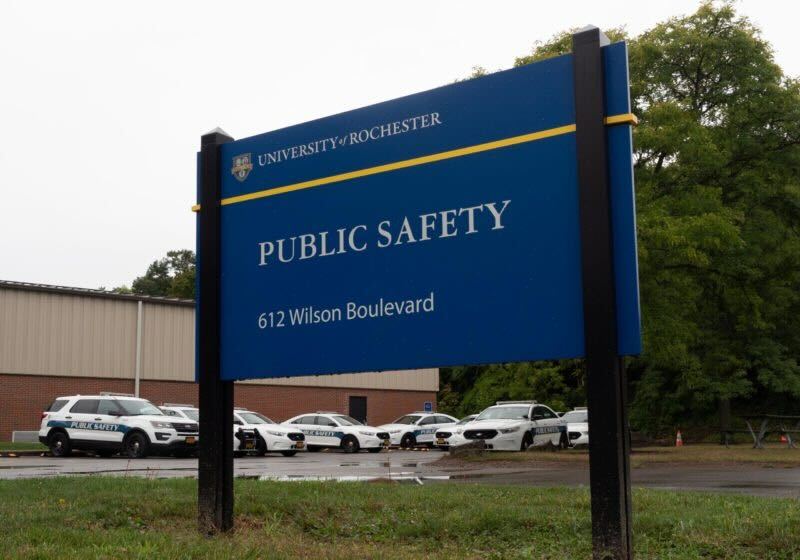
This place is mired in secrecy. Despite knowing this all too well, last week I jumped at the chance to cover two public input sessions being held concerning consulting firm Margolis Healy’s ongoing review of the University’s Department of Public Safety (DPS). The sessions were advertised as being limited to 15 students each, and there was also another session held back in June (you know, when almost no one was on campus).
This obviously warranted Campus Times coverage. Without an article, a maximum of 30 students would know what was said in those rooms, and one of the sessions was being held right in the middle of many students’ Thursday classes. To top all of this off, it’s needless to say that any process relating to the DPS — the University’s private, hardly-accountable policing system — needs to be brought into the public awareness.
Immediately after learning about them, I emailed Associate Dean for Student Affairs Emily Fehnel that I would be attending both sessions but not participating because I would be reporting on them for the Campus Times. And, in one of the politest acts of press censorship I’ve ever read, she took two days to send me this:
“I think it’s fine for you to attend a session to participate. It’s important to acknowledge that this may be a sensitive topic for some participants. We want students to provide their honest and open opinion and would prefer not to have someone capturing their opinions for publication. Not all participants may be comfortable with your presence as a reporter to capture their feedback.”
And I get her argument. Policing can be a charged issue, and, as a journalist, I genuinely don’t want to distort the event via my presence. However, I wouldn’t be able to cover the event if I attended as a participant.
So, I proposed a hybrid arrangement, asking if we could make an announcement of a CT reporter’s presence at the start of the event and allow students to approve or disapprove of their names being included in an article at the end of the session. To be clear, the University is not entitled to this accommodation. I chose to play ball.
But they didn’t. I got no response from Fehnel, and the story doesn’t exist.
This is how many private universities stay unaccountable. Local press doesn’t cover them because they assume the campus paper has it figured out, and campus papers are left begging administrators and student government reps for scraps of information. This isn’t even the worst case of access-throttling censorship faced by the CT alone in our illustrious 149-year history.
But I don’t want to give them the luxury of no article. Every time I face this kind of thing, I want the administration to know that an Opinions piece like this will be written detailing exactly how students were shut out from access to objective coverage concerning something that is in their interest.
Whether it’s outright, blatant censorship or a seemingly-innocuous lack of concern for the utility of the student paper (as in this case), I’m gonna make it publicly known — because it’s bullshit and I’m done playing ball.