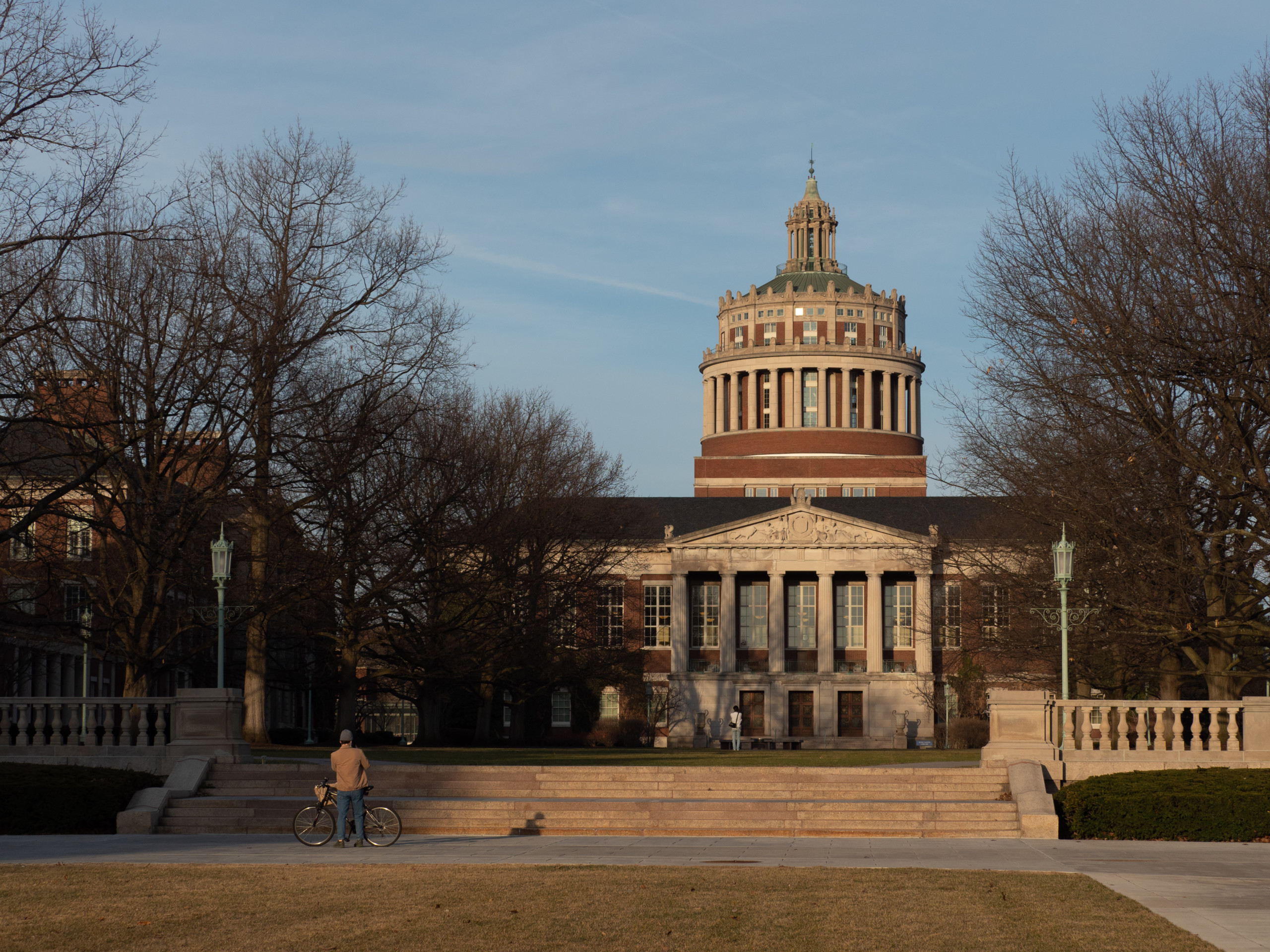
Undergraduate students will be returning to UR’s campus this semester under strict social distancing guidelines, according to an email sent yesterday by Provost Robert Clark.
The University’s plan is subject to change pending its accordance with a set of yet-to-be-released guidelines from New York Governor Andrew Cuomo. Clark writes that a comprehensive plan will be posted to UR’s Restart and Recovery website when those guidelines become available. The current plan was created by UR’s Coronavirus University Restart Team (CURT), which is co-chaired by Director of Environmental Health and Safety Mark Cavanaugh and Vice Provost for Global Engagement Jane Gatewood.
The College of Arts, Sciences, and Engineering (AS&E) and the Eastman School of Music plan to host students on campus and hold some in-person classes until Nov. 24, when Thanksgiving break begins. After Thanksgiving break, all students will remain at home and all classes will continue virtually. Fall break has been canceled to reduce the number of students traveling. Students will be able to remain at home for the whole semester and take classes online if they feel uncomfortable or are incapable of returning to campus.
All Medical Center education — except research, clinical learning, and “small classes” — will be conducted online. The Simon Business School will adhere to the AS&E and Eastman schedule for its undergraduate classes. Clark writes that graduate classes at Simon will be taught in-person “to the extent that circumstances permit” for the full fall semester, with other classes online either as live sessions or prerecorded lectures. The Warner School of Education will teach all classes online for the entirety of the fall semester.
Undergraduate arrivals will be staggered to ensure that all students can be tested for COVID-19 either before or after arriving at the University. There will be more single rooms and fewer students per residence hall.
Dr. ChatBot, a daily health screening program already in use at the Medical Center,will be extended to the entire UR community. Lectures for large classes will be held remotely, with students meeting in smaller groups for “in-person study sessions and recitations,” according to Clark. Clark noted that the Office of Disability Resources will meet with any students who require accommodations.
Classrooms and other indoor shared spaces must allow a minimum of 40 square feet per person. Dining hall capacity has been reduced by 50%, up by 15% from CURT’s initially proposed 35% capacity. Students, faculty, and staff must wear face masks “anytime there is more than one person in a given space” while indoors, and whenever it’s impossible to maintain six feet of distance while outdoors.
All students, faculty, and staff must complete COVID-19 training before returning to campus. This training will be on MyPath for faculty and staff, and on Blackboard for students.
Editors Note 6/23/2020: An earlier version of this article said classes for AS&E would be held in-person until Nov 4. Actually, classes will be held in-person until Nov 24.