What do the words “Free Hong Kong” mean? Is this hate speech, as alleged?
It is the direct opposite. It is a declaration of love, empathy, and compassion. It is an affirmation of the fundamental human dignity of those under siege struggling to breathe as you read these words.
It is a refusal to acquiesce to the systematic oppression and silencing of seven million people. It is a reminder to students on campus whose loved ones are living in fear that they are not alone.
The words “Free Tibet” mean the world to the UR student unable to focus in class because they’re unsure if they’ll ever be able to play in the playgrounds of their childhood. In a world so consumed by hate and intolerance, love is the most radical act.
I come from a country where freedom took a backseat to economic development. I have always seen the U.S. as a bastion of free speech despite its many systematic flaws and long history of suppressing the sovereignty of the global South. In particular, the University campus highlights commitment to protecting the freedom of opinion, a commitment to creating an environment where everyone belongs and can partake in the enriching experience of learning.
The events I’ve seen this weekend have filled me with both pride and shame. I have seen an incredibly deep reservoir of love bubble forth to the surface when students organically united to fill the tunnels with positive messaging. It was a beautiful sight. Music from all over the world played and, while the words were lost on me, I didn’t need to know the language to comprehend the spirit of solidarity. People from far and wide, speaking different languages, carrying different political ideologies all came together to show our friends in the struggle that we care. Never in my three years at this university did I feel as self-actualized as in that moment.
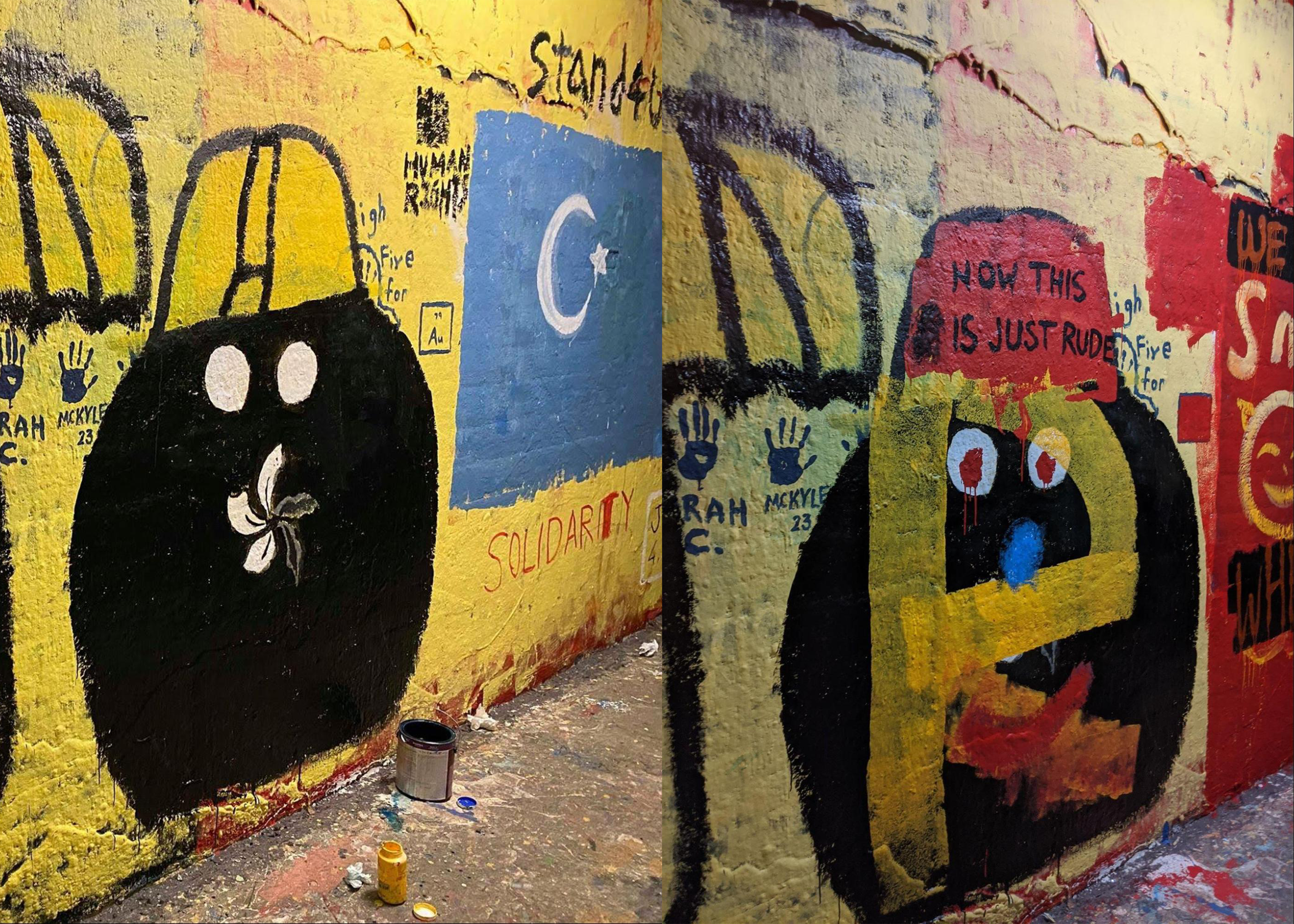
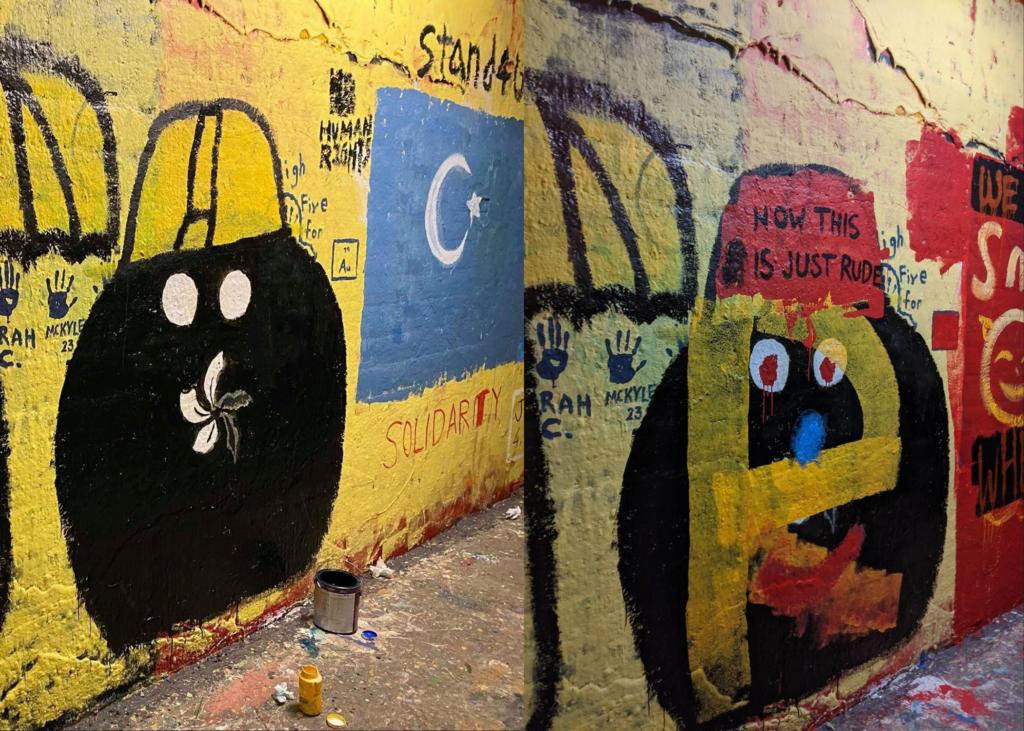
The aftermath was upsetting, to say the least. Messages that were labors of love were painted over with crude caricatures. “Free Hong Kong” became “I love Pandas,” “Free Palestine” became a solid block of paint, “Stay Safe” became a wall of black, and “Free Uyghur” became “I love China. I’m from Xinjiang.” A Hong Kong avatar wearing a hard hat became a racist caricature of an Uighur Muslim wearing traditional headgear.
Using one’s freedom of expression to silence and erase the voices of others is immoral. The inability of the administration and student government to condemn censorship is regrettable.
Despite the best efforts of some to say otherwise, there are clear culprits, and enough evidence to take definitive action. A club on campus organized the cover-up, and the evidence is on their own YouTube page, touted as a totem of pride. The next steps to take are clear to anyone with a modicum of sense. Unfortunately, I have little faith in our representatives and administrators to take them.
What I’ve learned from all this is that you should not rely on others to model the values that matter to you. Take them into your own hands, in the form of a paintbrush and a heart bursting with love.