About 3000 years before Jesus of Nazareth was born, the Sumerians formed their own system of characters and put them down in a defined pattern on soft clay, letting it set to perfection. These clay tablets are now referred to as cuneiform tablets, after the Sumerian system of writing.
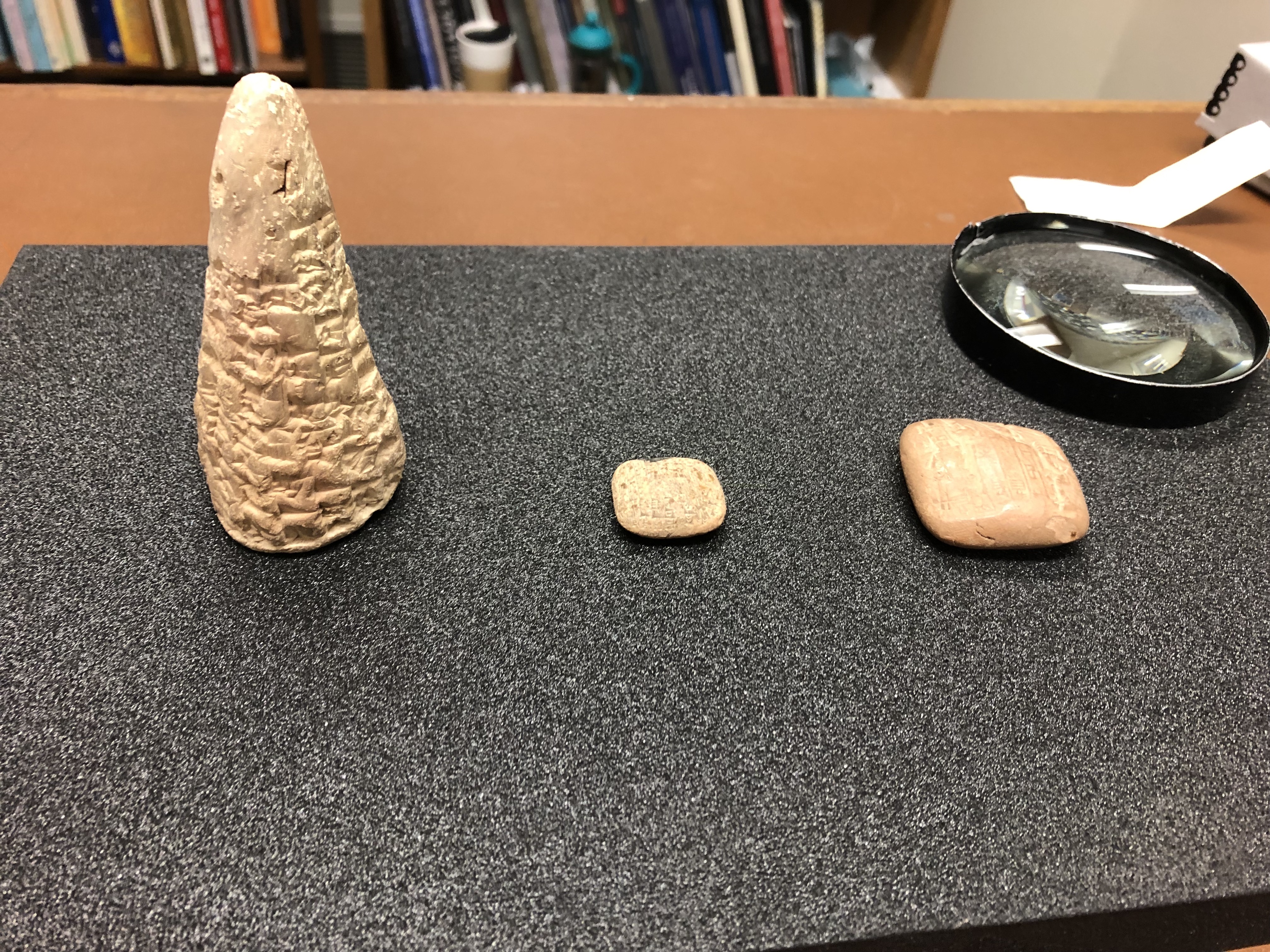
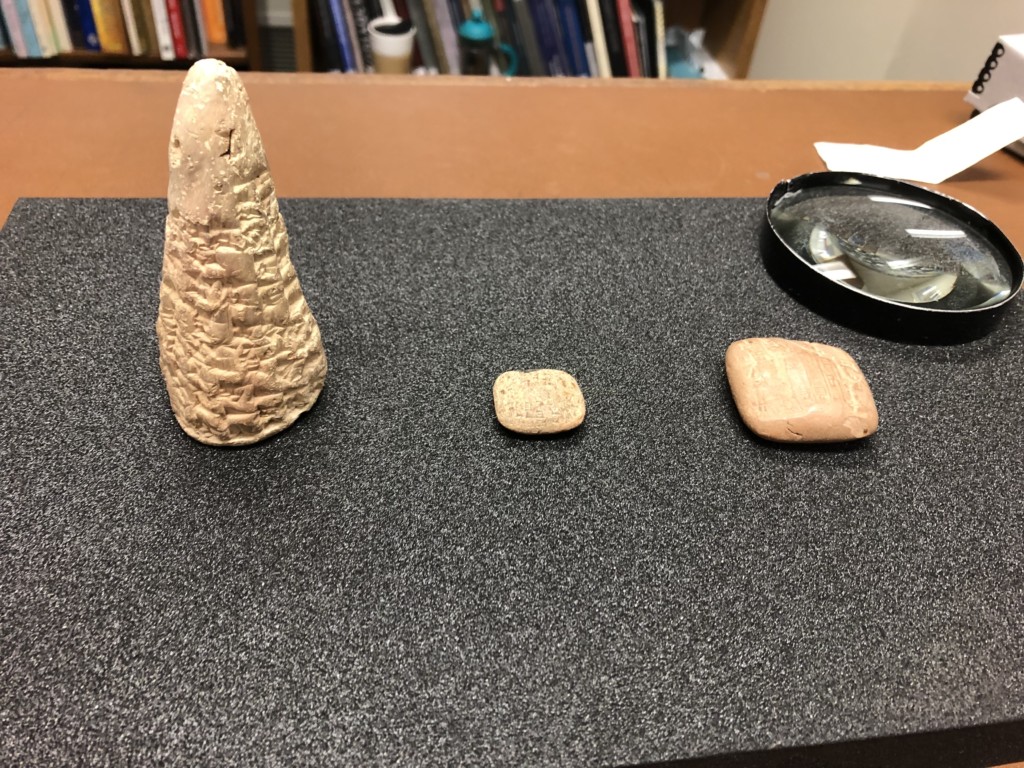
In Rare Books and Special Collections at the University, there is a set of three of these artifacts, dating back to around 2000 B.C.E. The first — from the reign of Litpi Istar — is a cone-shaped tablet, an inscription that was set into a wall. It is a written ode to Istar’s accomplishments. The other two tablets are possibly records of grocery stores and other everyday things, or perhaps just notes that people wrote to each other. Interestingly, on one of these tablets, the scribe’s fingerprints remain.
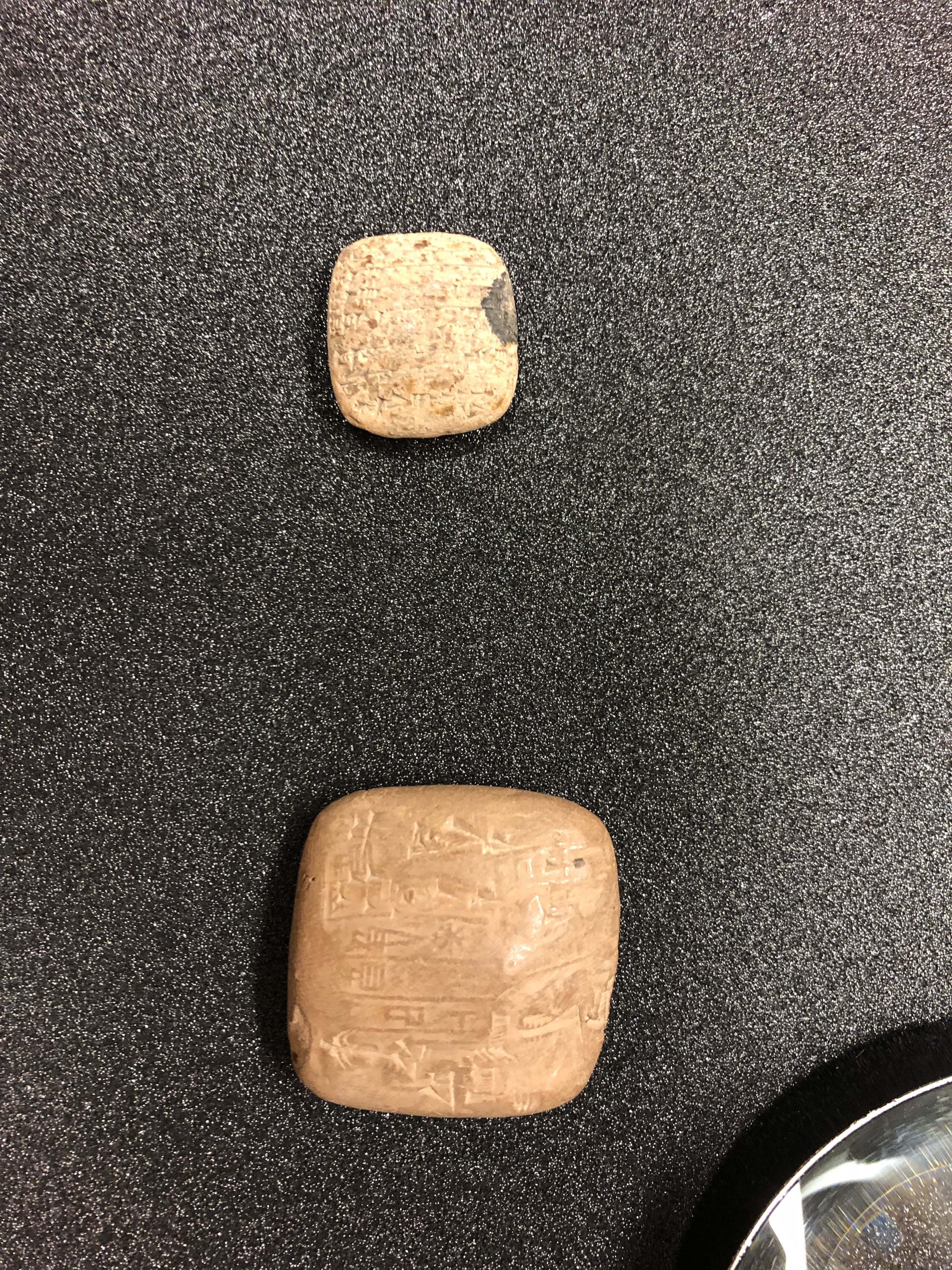
What these tablets exactly say remains a mystery. Parts of them have given way to the ravages of time, and what survives is tough to decipher.
To Anne Larsen, who is in charge of the special collections, these tablets are a way of making the past more accessible: thinking of it as not just a distant idea we end up studying but a very personal way of interacting with our ancestors through the articles they left behind.
With every imprint left on these clay tablets by people of the past, we get a glimpse of what it was like to live in this very world a few thousand years ago. These little pieces of clay display eras of time with utmost skill and creativity that we might not appreciate at first glance. Putting characters identical to each other on clay requires a lot of practice, which is evident in these collections.
“We often think about skill in terms of a great painting by Michelangelo,” Larsen said, “But we don’t think about the skill it takes to create the everyday.”