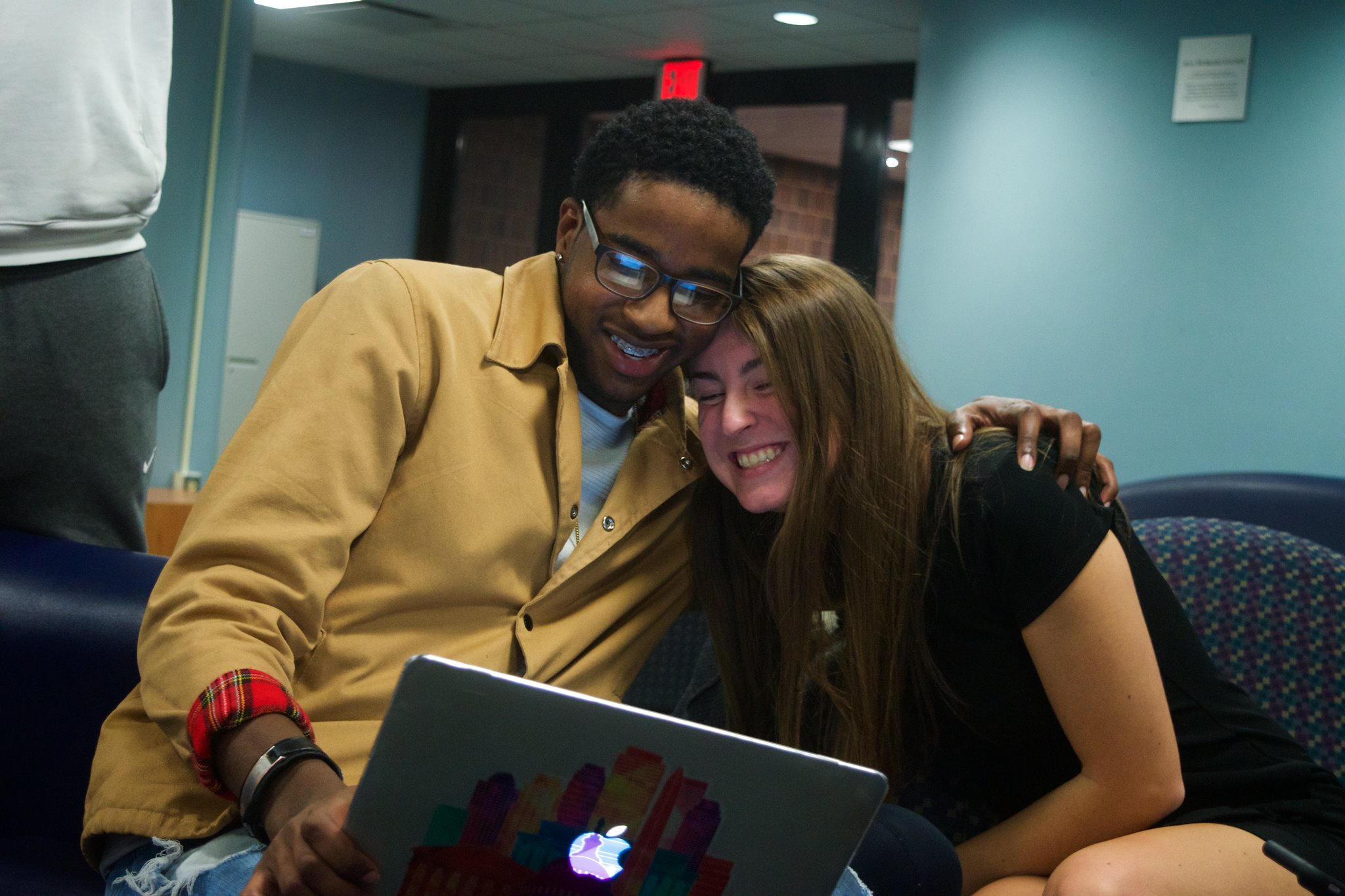
Junior Beatriz Gil and sophomore Jamal Holtz won the uncontested SA presidential and vice-presidential election last Friday with an unofficial count of 1,402 votes.
“We’re extremely happy,” Gil said shortly after seeing the results.
Added Holtz: “More happy to see that a lot of people turned out to vote.”
Almost 2,100 students voted in the overall elections, according to the unofficial results, a slight decrease from last year’s total.
The duo knew they would likely win the race — it was the first empty field since 2013 — but were concerned turnout might be low. They also didn’t want to win only because they were unopposed.
“We still continued to meet with groups,” Holtz explained, saying the two spoke with around 30 student and other groups, which helped shaped their focus.
As Gil said when asked about what the ticket wanted to accomplish as president and vice president: “It’s more like, what do the students want?”
Gil and Holtz plan to spend the rest of the semester laying the groundwork for their return in the fall. And once that comes around, one of their first goals will be to meet with a representative of every group on campus “to express their concerns and to see what they want to get out of SA,” said Holtz.
The two are particularly interested in meeting with cultural groups.
“To see in what way we can help them to actually achieve integration,” Gil said.
Much of Gil’s career as an SA senator — both she and Holtz have served two terms — has homed in on international students and their concerns, perhaps to no surprise: She is from Spain.
And she may be the first international student elected SA president. Associate Dean of Students Anne-Marie Algier and Assistant Dean of Student Life Operations Laura Ballou — SA Government’s advisers — said they couldn’t recall any elected in their 20 years at UR.
“I’m beyond proud,” Gil said, “because one of the things I’ve been working really, really hard on is to increase international student representation. I think that this is a great achievement, and I’m extremely, extremely happy about it.”
Holtz, who is black, agreed that international students are underrepresented on campus and said minority students are, too.
“Seeing those two [groups as the] two faces of student government, it sheds light to it, but it also gives students in those communities hope,” he said, explaining that his and Gil’s election could inspire other students from those communities to run for SA Government.
With the passage of the widely-publicized amendment to the SA Constitution, which was also on the ballot, the pair plans to assemble a working group next semester to start implementing the waiver process for gendered, SA-affiliated groups. They want to meet with individuals affected by the waivers and make sure they are represented on the working group.
As they prepared to leave the Ruth-Merrill Center the night of their election, though, things were simpler.
“I’m excited,” Holtz said as the two hugged.
“Me too,” said Gil.